



Oak Luggage Stand
An oak luggage stand offers sturdy, low-profile utility for guest rooms, keeping bags elevated and accessible.
Oak Luggage Stand
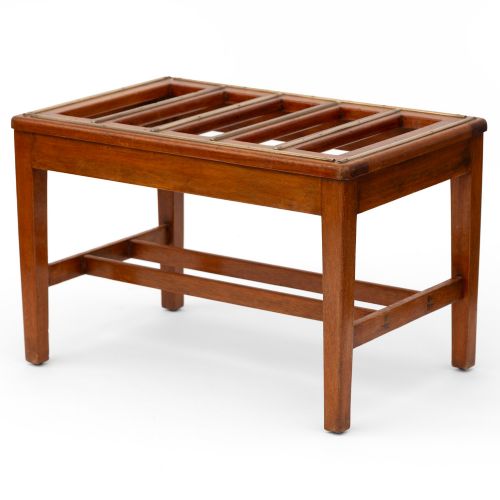
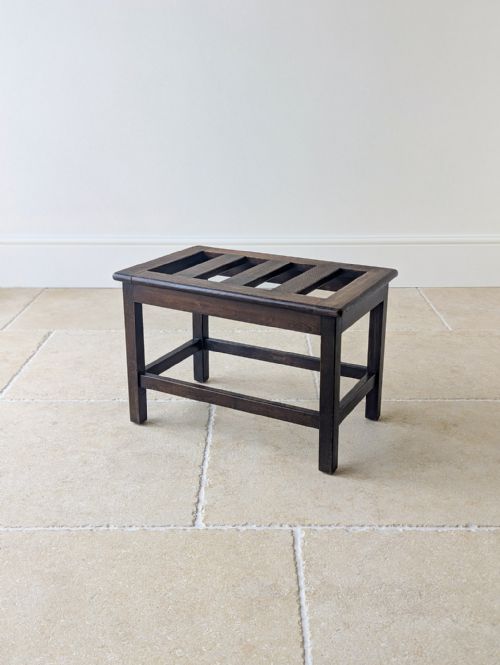
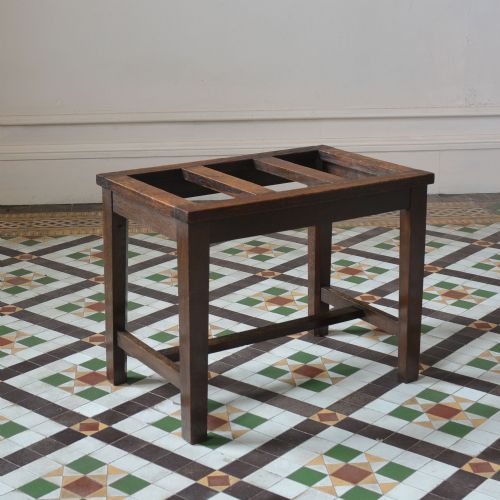
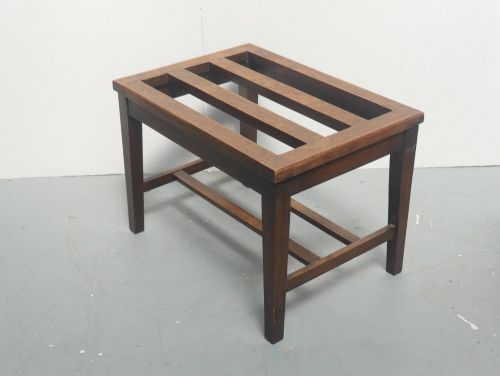
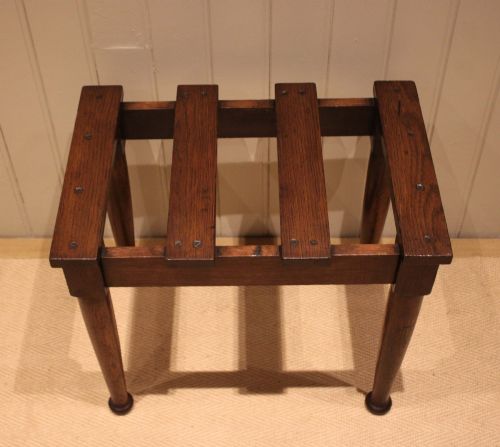
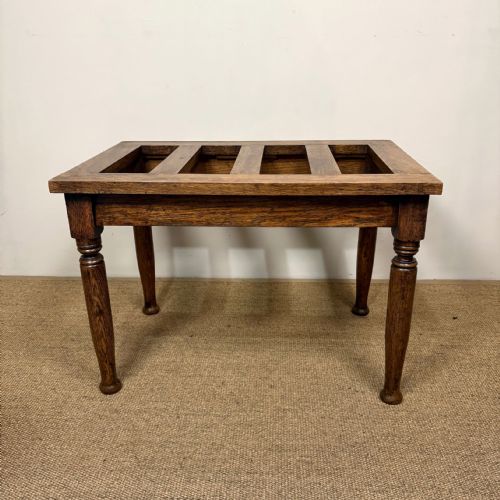
An oak luggage stand is a practical bedroom or hallway accessory designed to hold suitcases, trunks and overnight bags off the floor. When searching for an oak luggage stand, buyers encounter pieces primarily originating from the nineteenth and early twentieth centuries, spanning the Victorian and Edwardian periods.
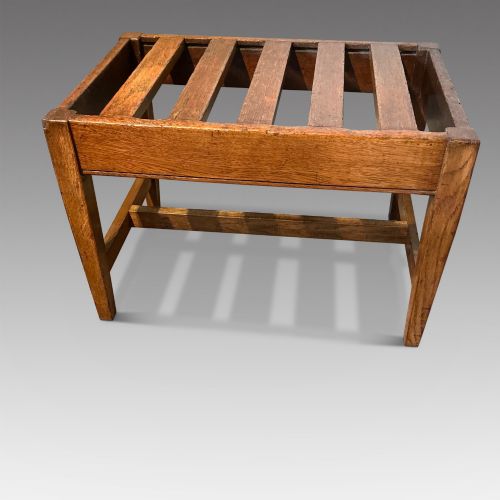
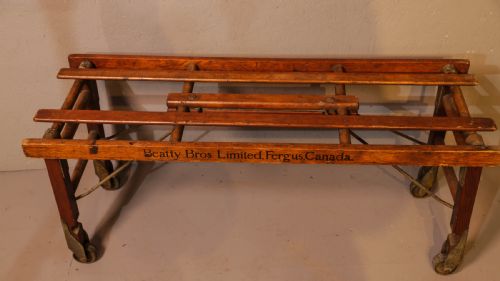
These stands commonly take the form of folding or rigid racks constructed with slatted tops and occasionally lower shelves for shoes or extra storage. Examples range from simple domestic furniture to commercial hotel furnishings and specialised pieces bearing maker stamps.
Most items on this page reflect British country house or Edwardian interior aesthetics, though occasional international origins such as Canadian manufacturing also appear in the historical record. Their primary purpose remains unchanged: providing a clean, stable platform for luggage at a convenient height.
Materials and construction
Solid oak serves as the primary structural material across these pieces, frequently accompanied by secondary woods such as ash or finished with limed or polished treatments. Cabinetmakers selected quartersawn timber for its strength and distinctive grain pattern, ensuring the frame could support heavy trunks.
Metal components play a functional role, incorporating brass and iron for corner brackets, hinges, or decorative mounts that reinforce the joints. Joinery methods prioritise rigidity and durability under heavy loads, combining traditional wood joints with metal hardware where folding mechanisms require extra support.
Several stands doubled as impromptu nightstands when the spare room ran out of surface area for midnight reading.
Judging quality and character
Quality in these stands rests on the robustness of the timber and the crispness of any decorative carving or metalwork detail. Finer examples display select golden oak, thoughtful proportions, and robust folding mechanisms that operate smoothly without slackness.
Provenance and maker attribution elevate certain pieces, particularly those stamped by notable cabinetmakers or associated with notable institutional origins like West End hotels. The condition of the original polished or limed finish and the integrity of the structural joints further distinguish standard domestic pieces from superior workshop productions.
Beatty Bros Fergus Canada·Waring and Gillow·Howard and Sons·Wadham and Sons
The Oak Luggage Stand Glossary
- Luggage stand
- A low support frame designed for holding suitcases and trunks in bedrooms or hallways. These objects often feature slatted tops to support bags securely.
- Edwardian
- A stylistic and historical period spanning the reign of King Edward VII until the First World War. Furniture from this era often exhibits lighter proportions than heavy Victorian pieces.
- Arts and Crafts
- A design movement valuing handcraftsmanship and honest material expression over mass production. Pieces from this tradition often emphasise the natural grain of oak and simple structural forms.
- Limed oak
- A wood finishing technique that fills the open pores of oak with a whitish pigment to lighten the tone. This finish creates a pale, contemporary look popular in early twentieth-century interiors.
- Quarter sawn
- A method of milling logs that produces planks with a straight grain pattern and durable wearing qualities. This cut minimises warping and exposes attractive medullary rays in oak.
Oak Luggage Stand: Frequently Asked Questions
How were oak luggage stands used?
These stands were placed in guest bedrooms and hallways to elevate heavy leather suitcases and canvas trunks, saving guests from bending down to floor level.
They also served as temporary bedside tables or clothes holders when guest rooms required flexible furnishings.
Can these stands support modern heavy luggage?
Solid oak frames and sturdy joints allow most vintage stands to easily handle the weight of contemporary suitcases and travel bags.
Heavier Victorian and Edwardian constructions offer considerable stability, though checking the movement of hinges or folding braces is sensible before heavy loading.
How do I date an oak luggage stand?
Dating relies on stylistic markers, construction methods, and hardware styles associated with Victorian, Edwardian, or later twentieth-century manufacturing periods.
Maker stamps, brass fittings, and specific finishes like limed oak provide precise clues for narrowing down the decade of production.
Where should I place a luggage stand at home?
Guest bedrooms remain the traditional location, providing visiting friends and family with a convenient spot for unpacking bags.
They also function effectively in boot rooms or hallways as temporary drop zones for parcels, shoes, and everyday carry items.