


Vintage Portmanteau Stand
These vintage portmanteau stand pieces combine sturdy timber luggage racks with coat and hat storage, offering a practical hallway addition.
Vintage Portmanteau Stand
A vintage portmanteau stand serves primarily as a combination piece for holding travel bags, overcoats, and hats in an entrance hall or bedroom. When you search for a vintage portmanteau stand, you encounter substantial furniture items designed for heavy daily use.
The selections span the nineteenth century through the early twentieth century, taking the form of floor-standing luggage racks or wall-mounted brass brackets with hooks. English country house and Victorian examples sit alongside French provincial wall-mounted portmanteaus featuring mirrors and scalloped hooks.
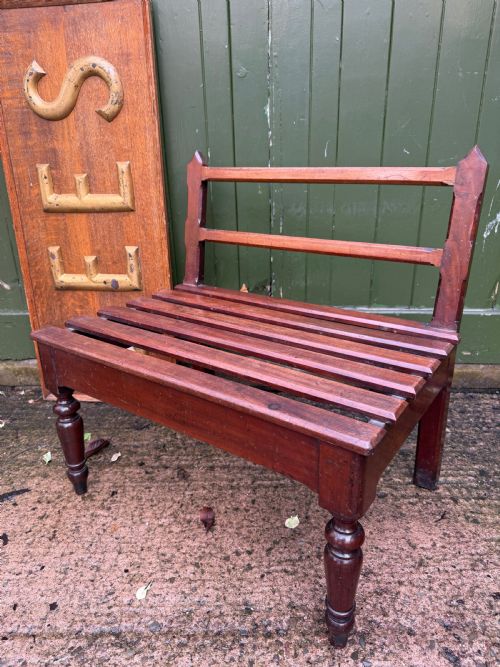
Floor-standing versions often incorporate raised rear upstands or deep proportions to secure trunks and suitcases properly. Wall-mounted variations utilise brass brackets and original glass plates to combine coat storage with a hallway mirror.
How they were made
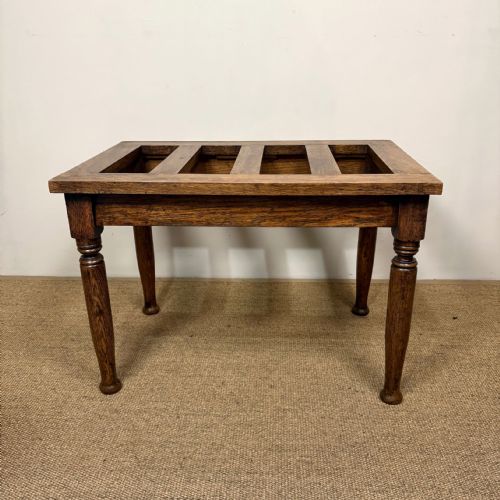
Cabinet makers constructed these stands using dense hardwoods such as solid oak, mahogany, and ash to support the heavy weight of travelling luggage and winter coats. Joinery methods focused on durability, utilising solid timber frames and sturdy bracing to withstand daily domestic loading.
Metalwork played a crucial structural and decorative role, incorporating solid brass brackets, hanging rails, and ornate hooks. Wall-mounted French portmanteaus integrated original glass mirror plates secured within the wooden or metal framework.
The documented styles span Victorian, Edwardian, French provincial, and English country house traditions.
What varies in quality
Quality rests significantly on the selection of timber and the substantial nature of the proportions. Dense, figured mahogany or solid oak frames with deep proportions and raised rear upstands represent superior construction compared to lighter utility pieces.
The refinement of the metal hardware dictates the distinction between standard and finer examples. Cast brass brackets with detailed scalloped hooks and original untouched mirror plates elevate the decorative merit of wall-mounted items.
The Vintage Portmanteau Stand Glossary
- Portmanteau stand
- A combined furniture piece designed to hold travelling luggage alongside coats and hats. These items range from floor-standing luggage racks to wall-mounted bracket assemblies.
- Upstand
- A raised barrier at the rear of a luggage stand frame. This feature prevents suitcases from sliding backward against the wall.
- Luggage rack
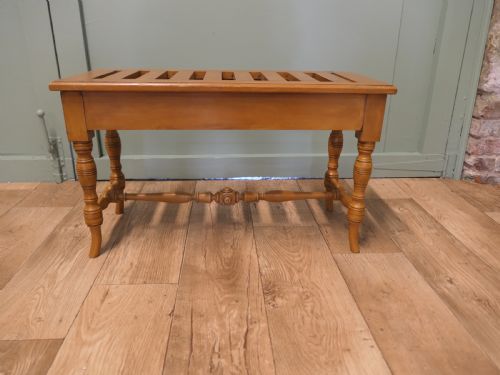
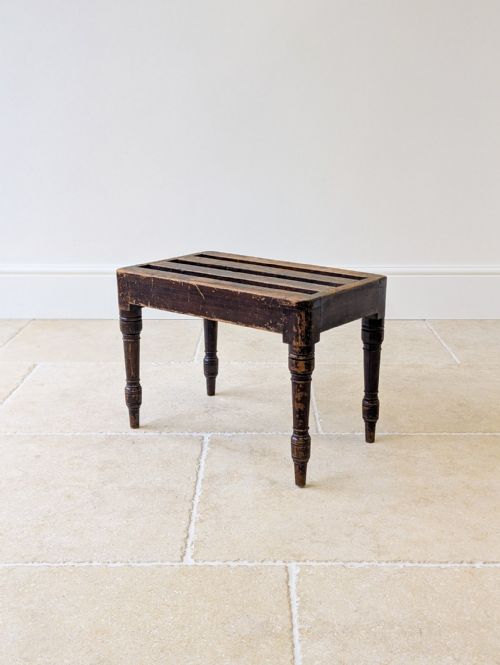
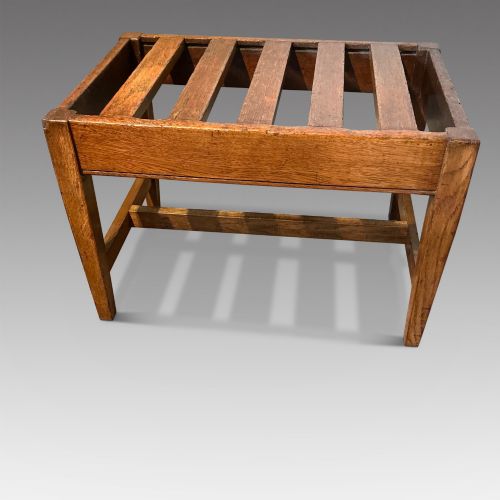
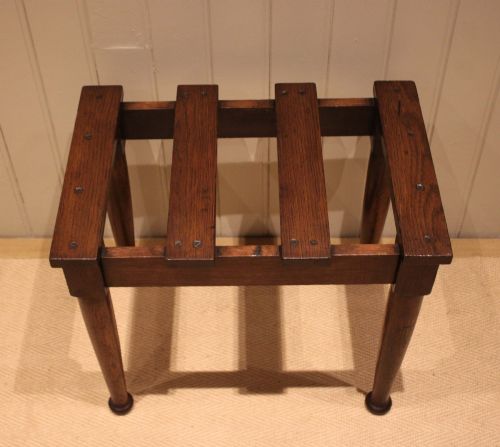
- A low wooden stand featuring slatted top rails for supporting travelling trunks and bags. They appear in nineteenth-century domestic settings for guest bedrooms.
- Plate glass
- Flat glass manufactured for mirrors, seen in original condition within period wall-mounted portmanteaus. The survival of the original plate adds authenticity to the piece.
- Scalloped hooks
- Coat hooks finished with an ornamental shell-like curve at the base or top. They appear frequently on French brass portmanteau brackets.
Vintage Portmanteau Stand: Frequently Asked Questions
What is a portmanteau stand?
A portmanteau stand is a functional hall or bedroom furnishing designed to hold travel luggage, coats, and hats. These pieces combine wooden racks with hanging hooks and sometimes mirrors.
They originated to accommodate heavy nineteenth-century travel trunks and guest belongings in large houses. Today they serve practical storage roles in modern hallways and boot rooms.
How do I date a luggage stand?
Dating relies on examining the timber species, joinery techniques, and overall proportions of the frame. Victorian and nineteenth-century examples often feature heavier timbers like solid mahogany and ash.
Turned wooden supports, hand-cut joinery details, and the style of the brass hardware help distinguish mid-nineteenth-century pieces from later Edwardian versions.
Were these used in hotels or homes?
These stands served both domestic households and hospitality settings during the nineteenth and early twentieth centuries. Country house bedrooms utilised floor-standing luggage racks for visiting guests.
Wall-mounted brass portmanteaus provided convenient coat and hat storage in hallways and reception spaces. Their robust construction suited environments with heavy daily traffic.
How do I clean wooden luggage racks?
Maintenance involves gentle dusting with a dry lint-free cloth to protect the historic polish and timber surface. Applying traditional beeswax periodically helps nourish dry hardwoods like oak and mahogany.
Avoid using modern chemical sprays or excessive water on antique wood and brass components. Original glass mirror plates require standard glass cleaner applied to a cloth rather than directly onto the glass.