
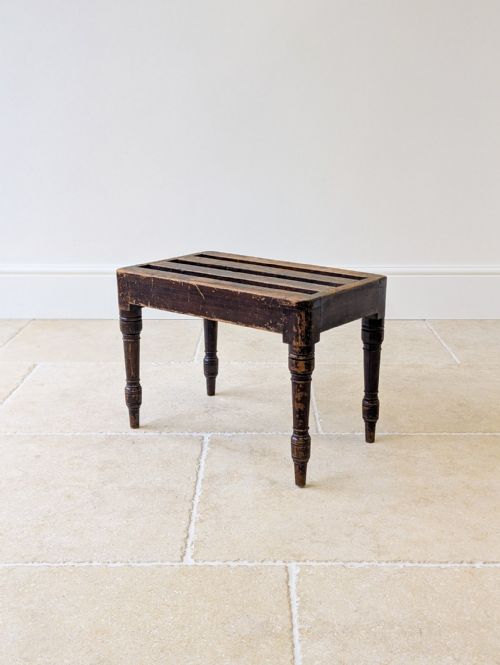
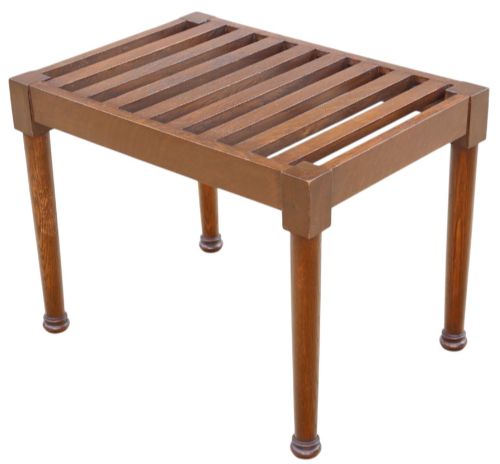
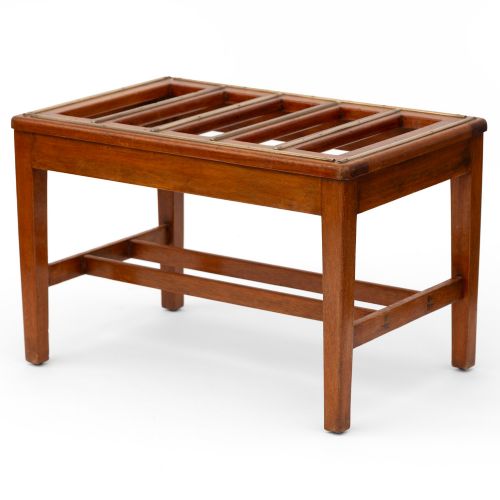
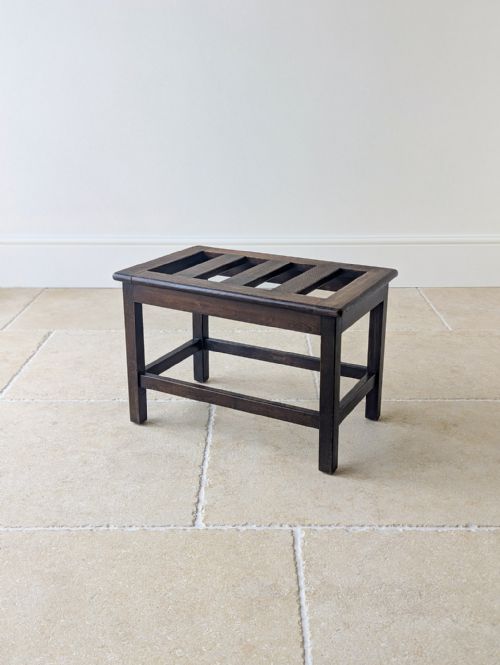
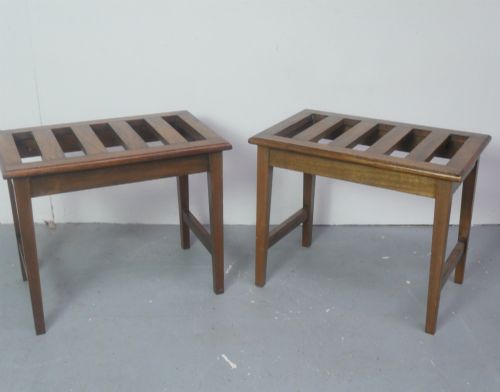
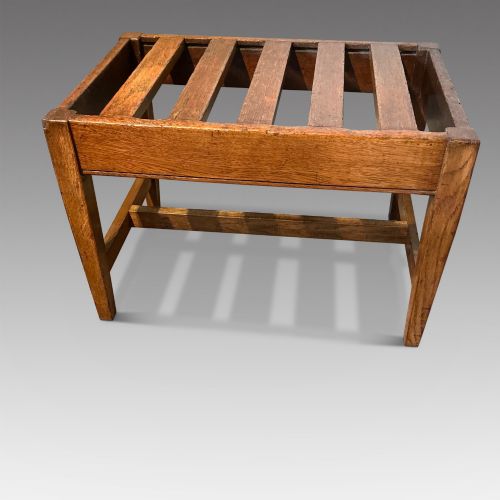
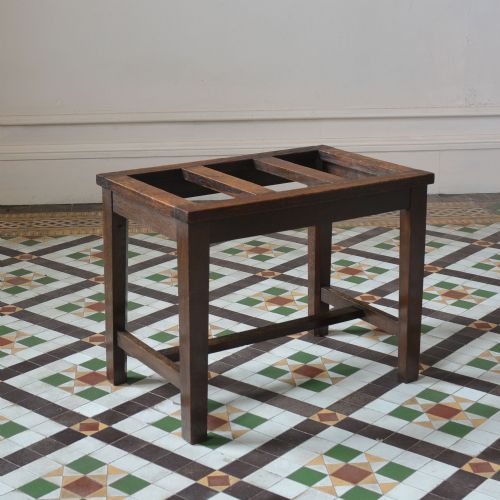
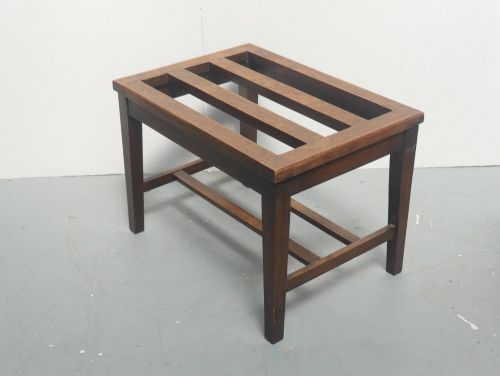

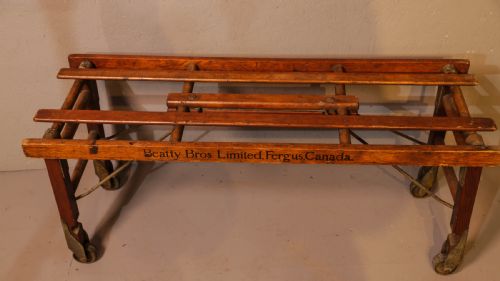
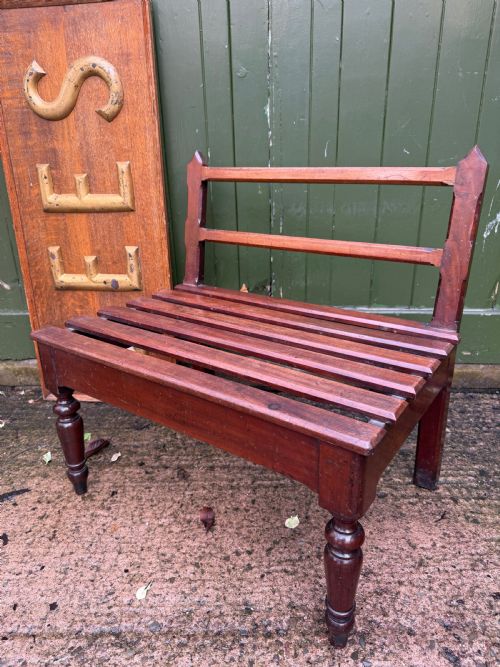


Brown Wooden Luggage Rack
These brown wooden luggage rack pieces are sturdy folding stands built for holding travel bags, offering practical utility and period character.
Brown Wooden Luggage Rack
A brown wooden luggage rack is a purposeful piece of furniture designed to support travel bags at a convenient height, drawing on nineteenth-century and early twentieth-century origins. These items appear in formats ranging from simple folding stands to substantial hotel pieces and railway accessories.
The versions most commonly met on this page date from the Victorian and Edwardian eras, alongside pieces from the 1920s and mid-nineteenth century. They frequently feature folding frames, slatted tops, and occasional raised rear supports to keep cases in place.
Originating in domestic country houses, hotels, and railway carriages, these stands served travellers by keeping heavy trunks off the floor. Today, buyers utilise them in guest bedrooms and boot rooms for the same practical purpose combined with period charm.
What varies in quality
Quality in a brown wooden luggage rack rests on the selection of timber and the robustness of its folding mechanism. Dense hardwoods like mahogany or oak and tighter joinery distinguish superior workshop production from simpler utility items.
Design details also separate standard examples from finer pieces, such as carved rails, raised rear upstands, or railway and hotel provenance. Original brass hardware and smooth-acting folding hinges contribute further to a piece's standing.
Listings feature oak and mahogany most frequently, alongside walnut, beech, elm, and yew across Victorian and Edwardian periods.
Beatty Bros Fergus Canada·Brown & Lamont·Waring & Gillow
The Brown Wooden Luggage Rack Glossary
- Upstand
- A raised barrier at the rear of a rack designed to prevent luggage from sliding backward against a wall.
- Scissor action
- A folding cross-frame mechanism that allows the stand to collapse flat when not in use.
- Railway collectable
- An item originating from a train company or station, often marked with railway company initials.
- Country house style
- A domestic aesthetic favouring utilitarian practicality combined with solid hardwood construction.
- Slatted top
- A surface composed of parallel wooden laths that reduces weight while supporting heavy bags.
Brown Wooden Luggage Rack: Frequently Asked Questions
What were luggage racks originally used for?
These stands were placed in guest bedrooms, grand hotels, and railway carriages to hold heavy leather luggage and travel trunks. They kept bags at a convenient height for unpacking while protecting bedroom floors and furniture from dirt.
Over time, their sturdy folding design made them indispensable for hospitality and domestic travel alike, bridging the gap between portable utility and permanent furniture.
How do I date a wooden luggage rack?
Dating relies on timber choices, construction methods, and stylistic cues from specific eras such as the Victorian period or the 1920s. Earlier nineteenth-century examples often feature deeper proportions and richer mahogany or yew timbers.
Edwardian pieces tend to utilise quarter-sawn oak and simpler turned members. Maker stamps or railway company markings also provide precise chronological anchors.
Are these racks strong enough for modern suitcases?
Most antique stands were built from dense hardwoods like oak, mahogany, and elm to support heavy leather travel trunks. This robust construction makes them more than capable of holding modern luggage and weekend bags.
Checking the stability of the folding mechanism and the tightness of the joints ensures safe everyday use in a modern guest room.
Where should I place a luggage rack at home?
These pieces fit naturally in a guest bedroom, dressing room, or boot room where visiting friends and family need a convenient spot to unpack. Their compact folding footprint allows them to be tucked away when not in use.
They also function well as low display stands or blanket holders in living spaces, adding traditional wooden texture to a room.