

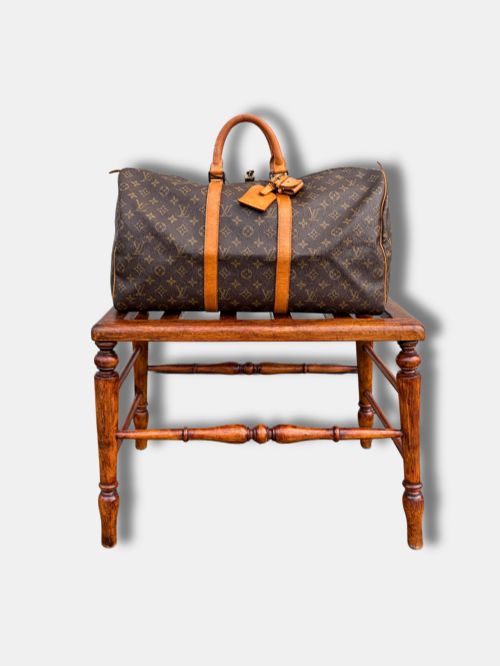
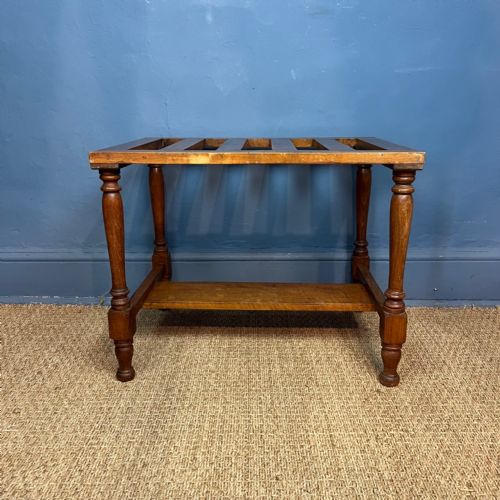
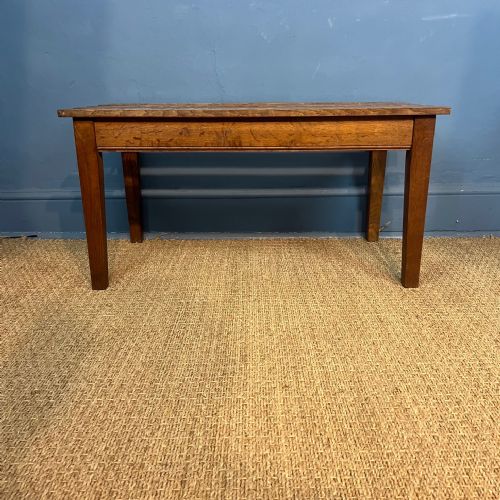
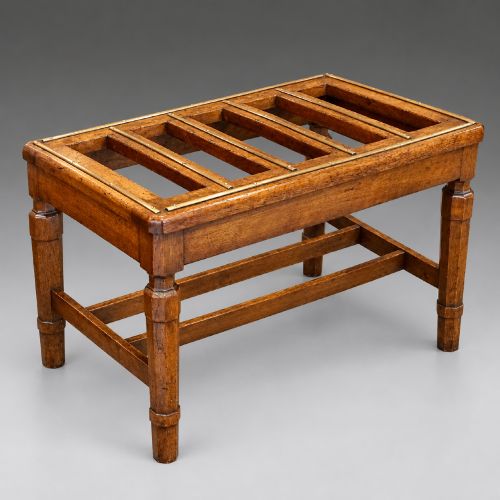
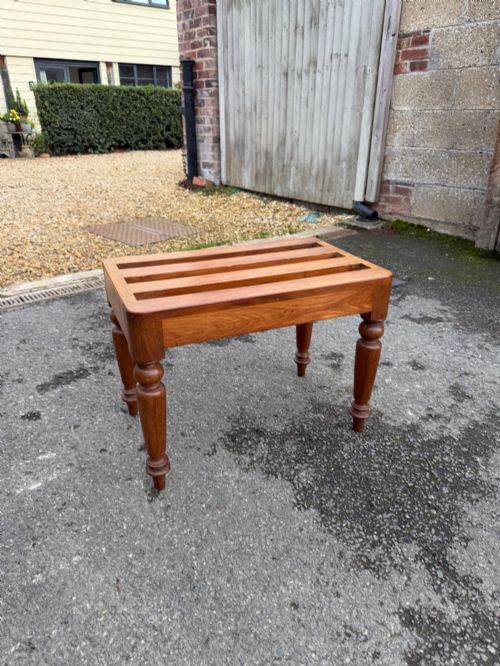
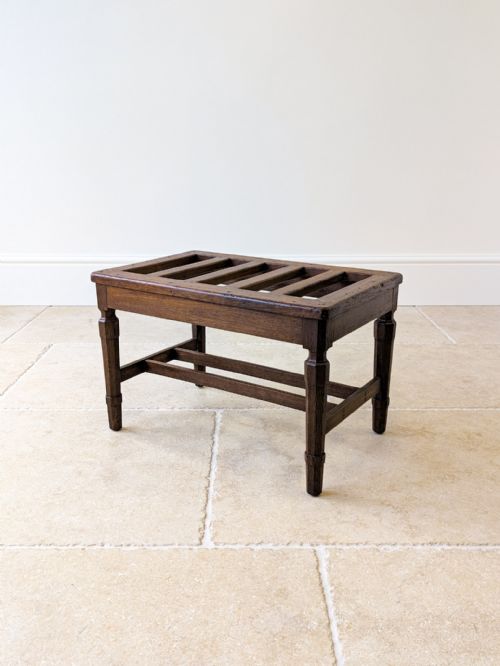
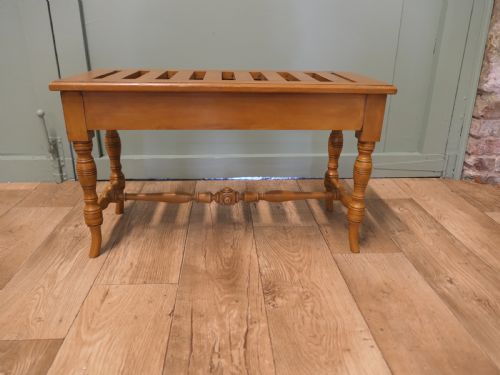
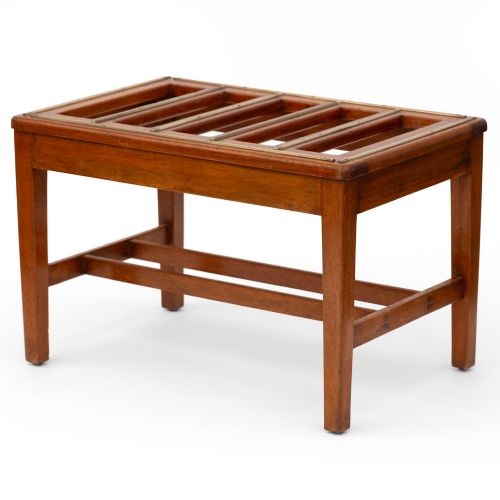


Vintage Suitcase Stand
These vintage suitcase stand designs turn utilitarian hotel and guest room furniture into practical bedroom surfaces.
Vintage Suitcase Stand
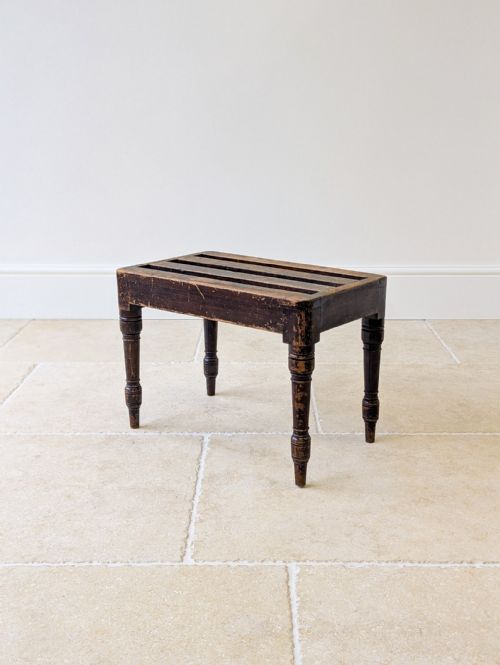
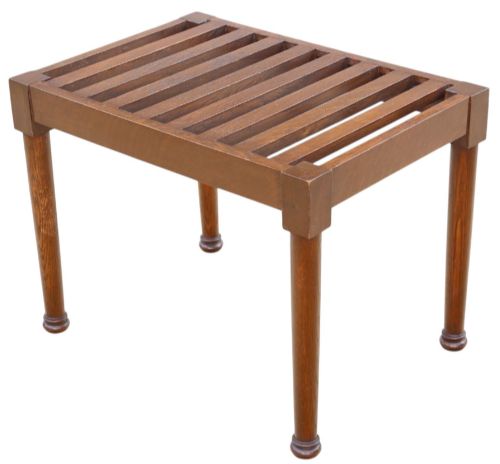
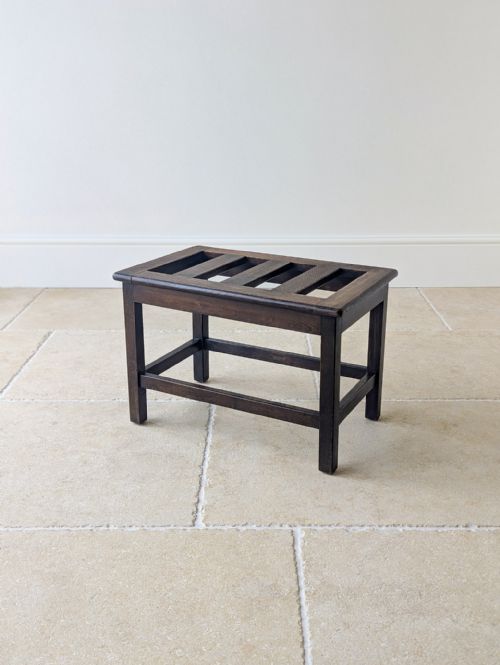
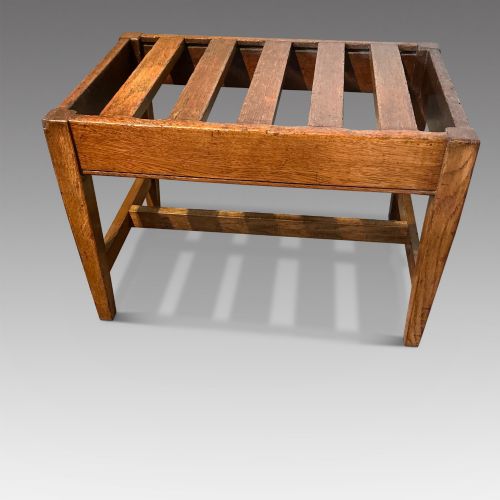
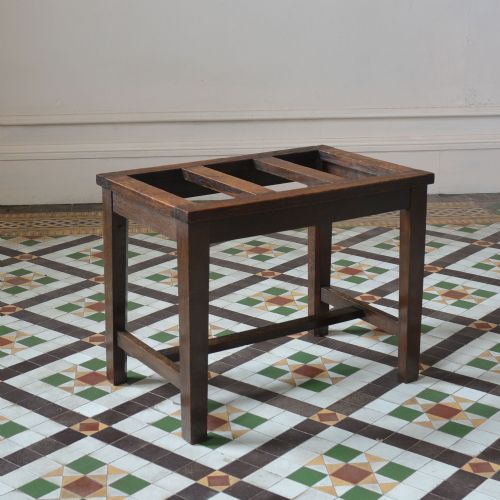
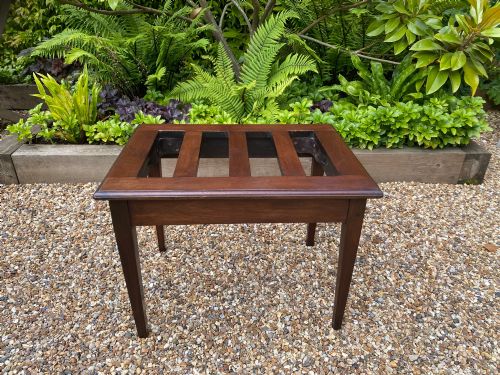
A vintage suitcase stand provides a sturdy, elevated surface for holding bags and trunks off the floor. When browsing for a vintage suitcase stand, buyers encounter luggage racks and stands originating from the Victorian, Edwardian, and mid-century periods.
The pieces on this page appear in various utilitarian forms, including folding wooden frames and fixed stands with slatted tops. Woods such as oak and mahogany dominate the selection, alongside occasional examples in walnut, beech, ash, and painted pine.
Origins range from domestic English country houses to commercial settings like the West End hotels and Canadian workshops. Pieces span the nineteenth and early twentieth centuries, offering practical furniture for modern guest bedrooms.
How they were made
Cabinetmakers constructed these stands using hardwoods such as oak, mahogany, walnut, beech, and ash to support heavy luggage. Joints relied on traditional carpentry methods to withstand the daily weight of travel trunks and suitcases.
Vintage Suitcase Stand Retail Price Guide 2026
Typical asking prices for vintage suitcase stand among the pieces listed under this phrase on Sellingantiques today, from the lower quarter to the upper quarter. They describe what is for sale here now, not the wider market.
Listings feature woods including oak, mahogany, walnut, beech, ash, and pine, paired with brass and iron hardware across Victorian and Edwardian periods.
What varies in quality
Construction substance distinguishes heavy-duty hotel and country house models from lighter domestic pieces. Deeper proportions and raised rear upstands alter the utility and visual weight of individual stands.
Timber selection and finish depth separate standard production items from superior examples made with figured mahogany, carved oak, or branded workshop stamps.
Beatty Bros Fergus Canada·Brown and Lamont·Waring and Gillow
The Vintage Suitcase Stand Glossary
- Luggage stand
- A low wooden or metal furniture piece designed to support a suitcase at a convenient height for packing or unpacking. These items often feature slatted tops and folding mechanisms.
- Luggage rack
- An alternative term for a stand, historically utilised in guest bedrooms and hotel rooms to keep bags elevated. They appear in fixed and folding configurations.
- Upstand
- A raised vertical barrier at the rear of a stand designed to prevent luggage from sliding backward against a wall. This detail appears on deeper nineteenth-century country house models.
- Slatted top
- A surface constructed from parallel wooden laths that reduces overall weight whilst maintaining structural strength. This design allows air circulation around travel cases.
Vintage Suitcase Stand: Frequently Asked Questions
What is a vintage suitcase stand used for?
These stands provide an elevated surface in guest bedrooms for holding suitcases and overnight bags. They lift luggage off the floor to make packing and unpacking easier.
Historically, hotels and large country houses placed these pieces in guest quarters for visitor convenience. Today, they serve a similar practical function in residential homes.
How do I date an Edwardian luggage rack?
Edwardian pieces typically date from the decade either side of nineteen hundred and feature oak construction. Stylistic markers include simpler lines compared to earlier Victorian furniture.
Examining the construction methods, hardware, and timber finish helps distinguish Edwardian examples from nineteenth-century or later mid-century pieces.
Are these stands strong enough for heavy bags?
Most stands utilise durable hardwoods such as oak, mahogany, walnut, and ash designed to bear the weight of heavy travel trunks. Solid wooden frames and metal reinforcements provide the necessary structural integrity.
Substantial Victorian and hotel-grade examples offer particular robustness for modern luggage use.
Where were these luggage stands originally used?
Many examples originated in domestic English country houses for the convenience of visiting guests. Others served commercial spaces, including West End hotels and Canadian establishments.
Commercial pieces often bear maker stamps or hotel provenance, reflecting their heavy-duty working origins.