


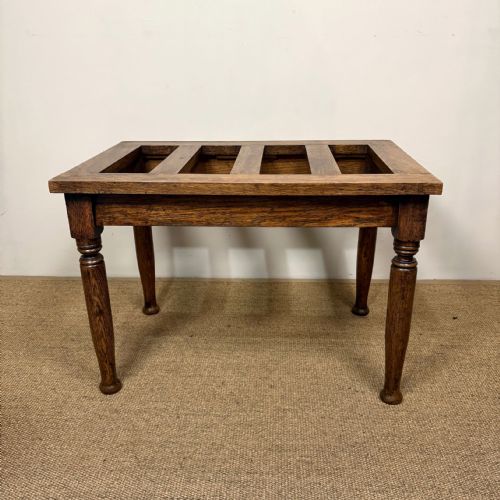


Edwardian Oak Luggage Rack
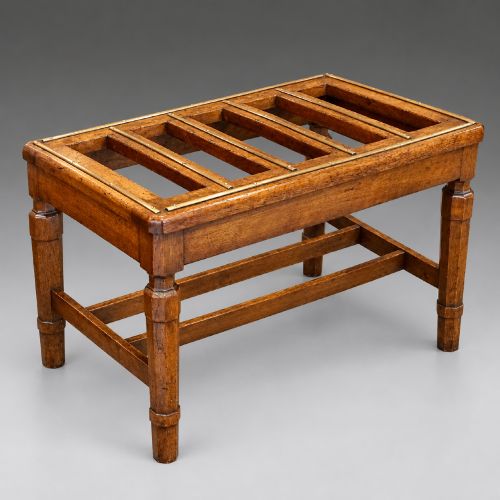
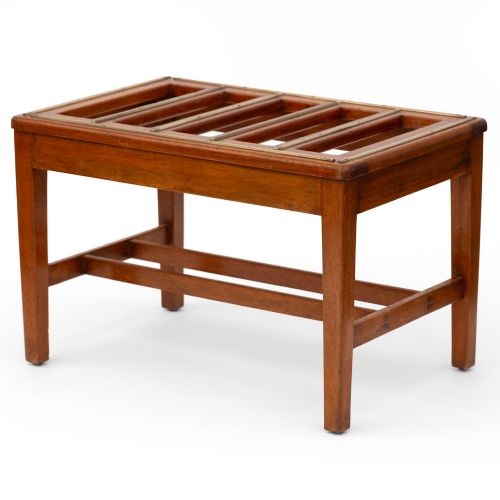
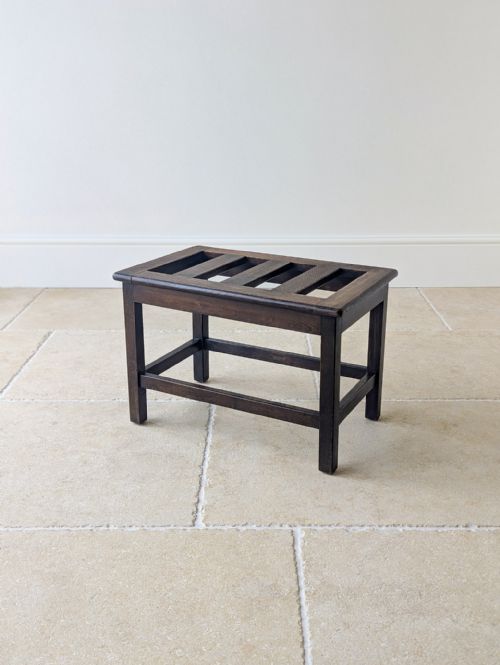
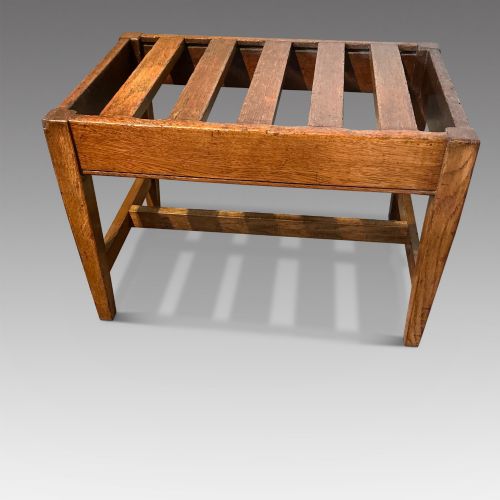
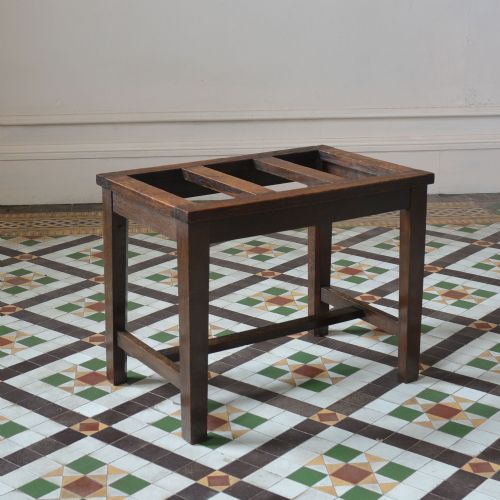
An edwardian oak luggage rack brings practical hospitality to a guest bedroom, constructed in solid timber with period metalwork.
Edwardian Oak Luggage Rack
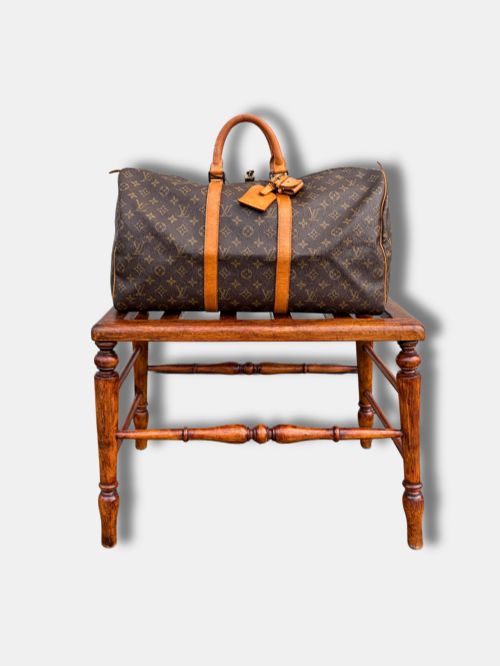
An edwardian oak luggage rack is a sturdy folding or stationary stand designed for holding suitcases and travelling bags at a convenient height. These pieces appear primarily from the Edwardian period, alongside items from the nineteenth century and the early decades of the nineteen hundreds.
The form frequently serves in a bedroom or hallway, and occasional examples derive from hotel or railway station contexts. Most pieces emerge in solid oak, occasionally finished in a limed tone or polished surface.
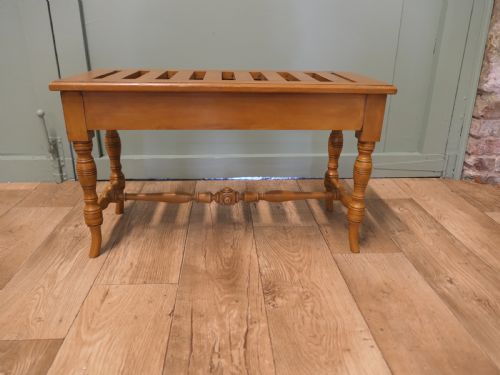
Makers and workshops of the era produced these stands to endure heavy use by travellers, resulting in resilient frames that survive in domestic settings today. The standard configuration incorporates a slatted top and a lower shelf for shoes.
How they were made
Craftsmen built these pieces using solid oak, selecting timber for its density and durability under load. Surfaces received polish or light liming to protect the grain while maintaining the natural colour of the wood.
Brass fittings, including brackets, mounts and occasional maker stamps, provide structural reinforcement and functional contrast to the dark or light timber frames. Joints were joined firmly to withstand the repeated folding and weight associated with heavy luggage.
Edwardian Oak Luggage Rack Retail Price Guide 2026
Typical asking prices for edwardian oak luggage rack among the pieces listed under this phrase on Sellingantiques today, from the lower quarter to the upper quarter. They describe what is for sale here now, not the wider market.
Listings combine oak and brass across Edwardian, nineteenth-century, and early twentieth-century periods.
What varies in quality
Quality rests upon the heft of the timber and the integrity of the joints, where finer examples display tighter joinery and heavier gauge brass hardware. Pieces originating from notable furnishing houses or commercial establishments like hotels demonstrate superior commercial construction.
Carved details or distinctive finishes such as limed oak or stamped maker marks separate standard workshop output from higher grade commissions. The proportion of the frame and the condition of the slatted surfaces dictate the overall desirability of an individual rack.
Waring & Gillow
The Edwardian Oak Luggage Rack Glossary
- Edwardian
- Pertaining to the reign of King Edward VII, spanning from nineteen hundred to nineteen ten, characterised by lighter furniture forms than the preceding Victorian era.
- Limed oak
- A wood treatment involving a white or pale pigment rubbed into the grain of the oak to produce a lighter, decorative surface finish.
- Luggage stand
- A low wooden frame designed to keep travel bags elevated off the floor in domestic bedrooms and hospitality spaces.
- Maker stamp
- A brand or mark pressed into the timber by the manufacturer to identify the producing firm or retail establishment.
Edwardian Oak Luggage Rack: Frequently Asked Questions
Where should I put a luggage rack?
These stands fit naturally in a guest bedroom or hallway to hold bags and small items.
They also function as occasional seats or low display tables in domestic spaces.
Are all luggage racks folding?
Many examples fold flat for easy storage when not in use by travellers.
Other configurations remain rigid as stationary stands or benches.
What wood are they made from?
The primary timber found in these pieces is solid oak.
Finishes range from polished surfaces to limed oak treatments.
How old is an Edwardian rack?
Pieces date from the Edwardian period around nineteen hundred to nineteen ten.
Related examples extend into the nineteenth century and the nineteen twenties.