

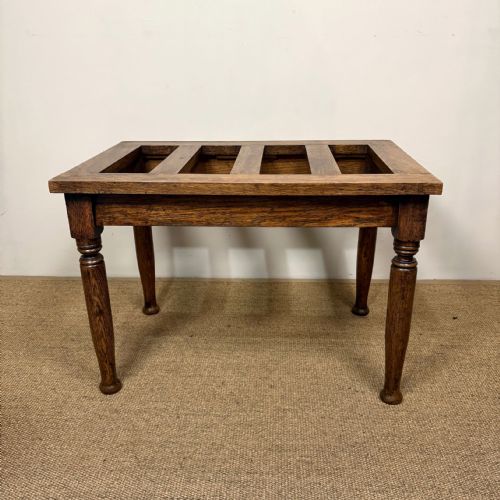


Guest Room Luggage Stand
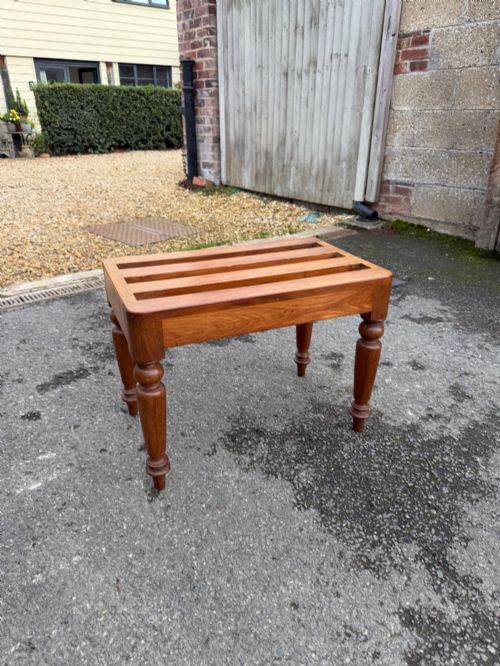
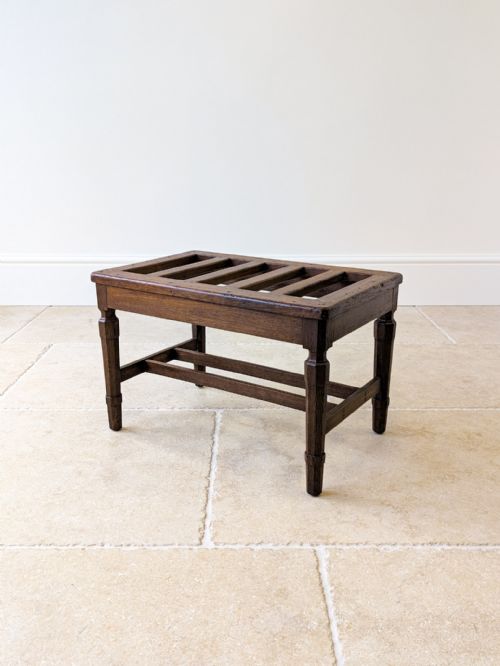
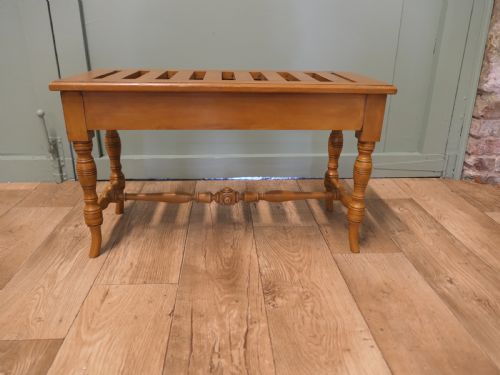
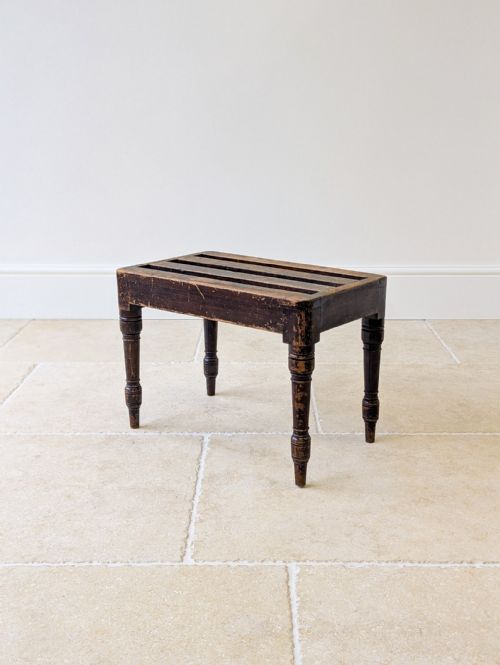
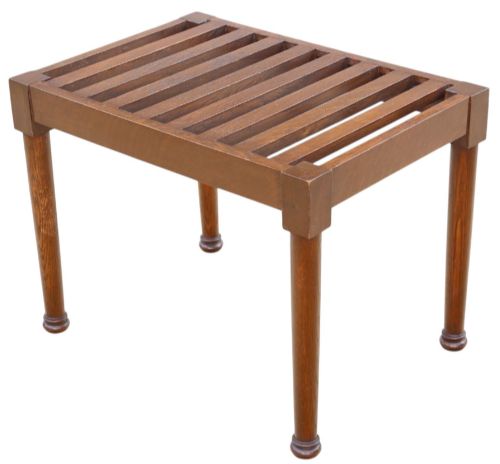
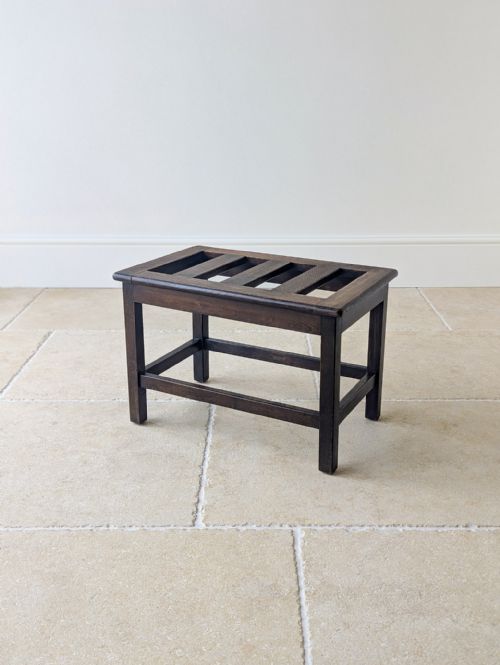
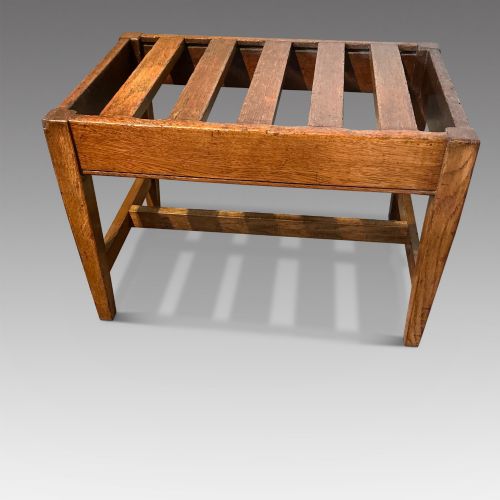
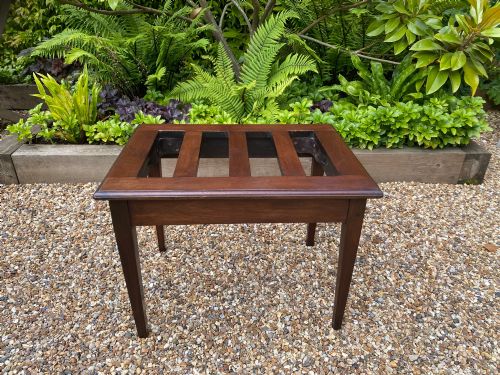
These guest room luggage stand pieces offer a practical surface for cases, appearing in woods like oak and mahogany.
Guest Room Luggage Stand
A guest room luggage stand is a dedicated furniture form designed to hold bags and cases off the floor at a convenient height. The versions met most often on this page take the form of luggage stands and luggage racks originating from the 19th century, Edwardian era, and the 1920s.
Makers shaped these pieces from various timbers including oak, mahogany, walnut, teak, and yew wood. Stylistic influences span Victorian, Edwardian, English Country, and Mid-Century Modern periods.
How they were made
Cabinet makers utilised solid hardwoods such as oak, mahogany, and walnut to build these functional stands. The construction relies on sturdy wooden frames designed to support heavy travel bags.
Metal components like brass fittings appear alongside wood to reinforce joints and folding mechanisms. Selected items also display painted pine surfaces.
Guest Room Luggage Stand Retail Price Guide 2026
Typical asking prices for guest room luggage stand among the pieces listed under this phrase on Sellingantiques today, from the lower quarter to the upper quarter. They describe what is for sale here now, not the wider market.
One remarkably unusual specimen turns up in yew wood.
What varies in quality
The choice of timber creates a distinct difference between standard utility pieces and finer examples. Dense woods like yew wood and figured mahogany elevate the visual presence of the stand.
Construction robustness dictates the overall calibre of the rack. Stronger frames built with precise joinery distinguish higher grade items from simpler utilitarian versions.
The Guest Room Luggage Stand Glossary
- Luggage stand
- A low wooden frame designed specifically for holding travel bags in a bedroom. These pieces keep suitcases elevated for easy packing and unpacking.
- Luggage rack
- An alternative term for a stand, often featuring folding or fixed wooden slats. They appear in materials such as oak, walnut, and teak.
- Edwardian
- A stylistic period spanning the reign of King Edward VII up to the First World War. Pieces from this era often feature lighter proportions than their Victorian predecessors.
- Yew wood
- A dense, highly figured timber prized by cabinet makers for its rich grain patterns. It imparts a distinctive decorative quality to furniture.
Guest Room Luggage Stand: Frequently Asked Questions
What is a guest room luggage stand used for?
A guest room luggage stand provides an elevated surface for visitors to unpack their bags without bending down to the floor.
These stands sit neatly in a spare bedroom and fold away or remain static depending on the specific design.
How do I identify an Edwardian luggage stand?
Edwardian pieces typically date from around 1901 to 1910, often displaying lighter timber tones and refined proportions compared to earlier Victorian furniture.
Look for construction details and wood types characteristic of the early twentieth century to confirm the era.
What woods were used for luggage racks?
Cabinet makers utilised a range of hardwoods including oak, mahogany, walnut, teak, and yew wood for these stands.
Painted pine also appears among the listings alongside traditional polished timbers.
Where should I place a luggage stand?
Position a luggage stand in the corner of a guest bedroom or against a spare wall where visitors have easy access to their bags.
The compact footprint ensures it fits comfortably without crowding the room.