




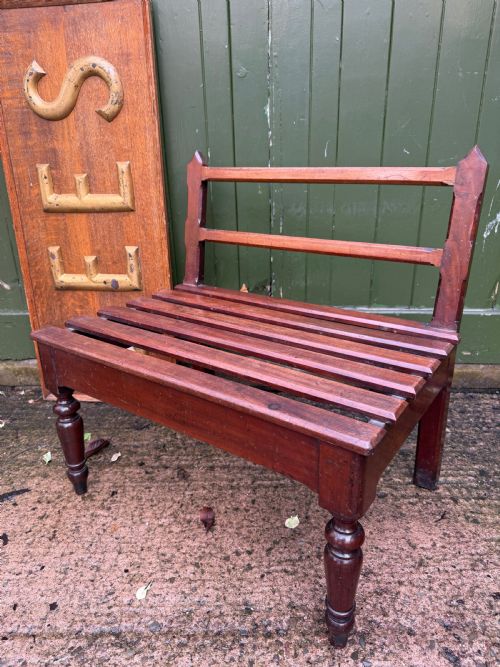


Slatted Luggage Stand
Slatted luggage stand pieces are practical bedroom furnishings designed to hold trunks, offering sturdy timber frames and defining the classic English country house look.
Slatted Luggage Stand
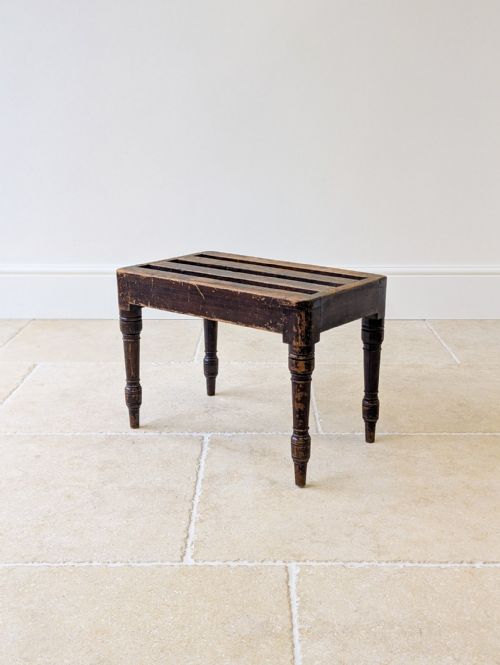
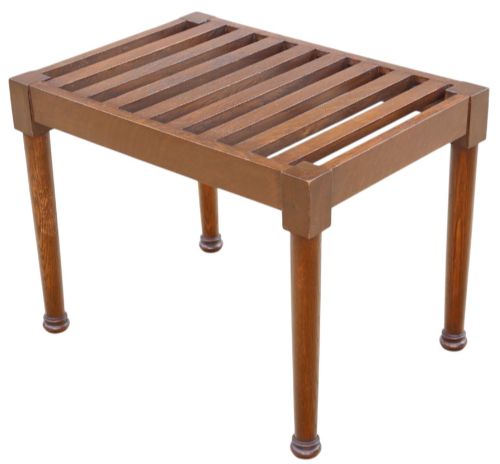
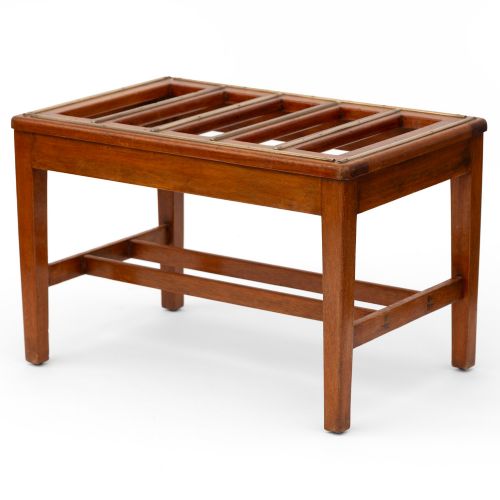
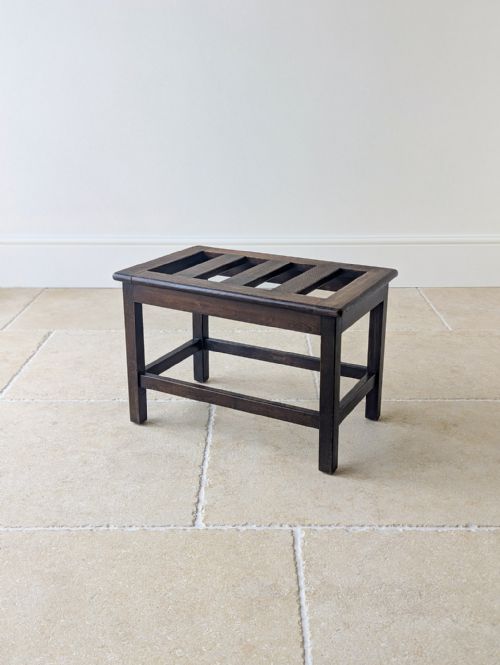
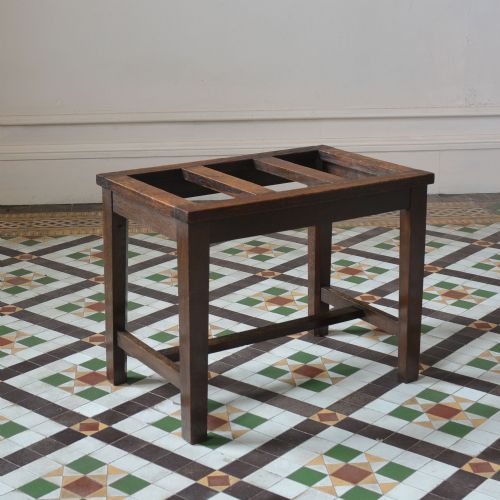
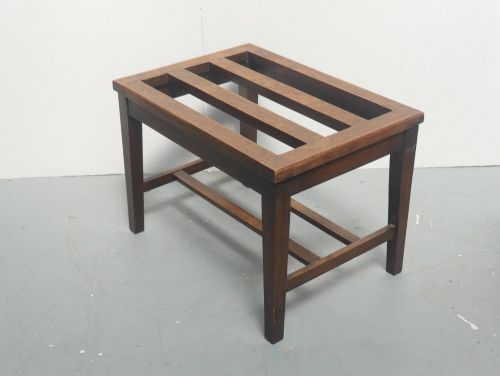
When you search for a slatted luggage stand, you are looking at utilitarian furniture built to support heavy travelling chests at a convenient height. These pieces appear primarily as low folding or fixed stands featuring horizontal timber slats across the top surface.
The versions you are most likely to meet on this page date from the Victorian and Edwardian periods, constructed in standard woods like oak and mahogany. Examples range from simple hotel fittings to refined domestic furniture with raised rear upstands.
Originating in the nineteenth century for guest bedrooms, these stands served both domestic households and commercial hospitality venues. Their straightforward design prioritised strength and accessibility for travellers unpacking heavy baggage.
Materials and construction methods
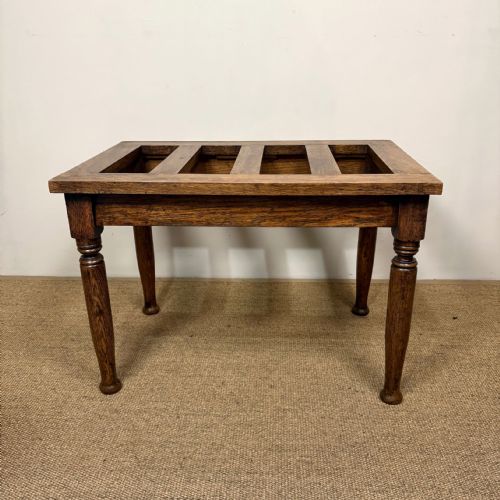
Makers utilised dense hardwoods such as oak, mahogany, walnut, ash, beech, yew wood, and painted pine for the primary frames. These timbers provided the necessary structural rigidity to bear the considerable weight of nineteenth-century trunks.
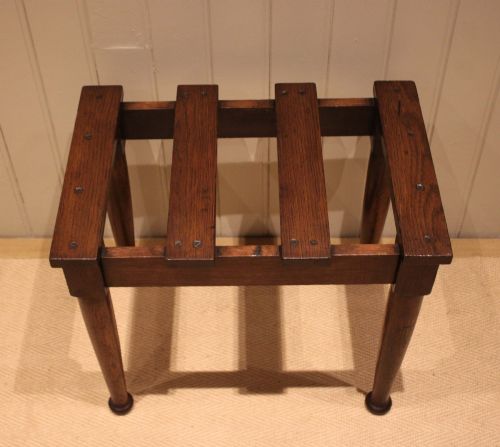
The top surfaces are formed from parallel wooden slats joined securely to the side rails, often complemented by brass or iron hardware for folding mechanisms and reinforcement. Some variations incorporate canvas or leather elements alongside the timber structure.
Some pieces retain hotel registry ghosts, having once supported the heavy belongings of weary Edwardian travellers in West End establishments.
Distinctions in quality
Quality in a slatted luggage stand rests on the selection of timber and the integrity of the joinery rather than ornate decoration. Superior pieces employ dense, well-figured mahogany or quarter-sawn oak with tight, precise joints that withstand regular folding and weight.
Proportion and detailing separate utilitarian items from higher-status furniture, such as those featuring raised and raked rear upstands or specific maker stamps. Finer examples display careful attention to edge moulding and polished finishes rather than purely functional planing.
Beatty Bros Fergus Canada·Brown & Lamont·Waring & Gillow·Louis Vuitton
The Slatted Luggage Stand Glossary
- Slatted top
- A surface composed of parallel wooden strips spaced apart to reduce weight while maintaining strength. This construction allowed air circulation around damp travelling trunks.
- Upstand
- A vertical or raked barrier rising from the rear edge of the stand. It prevented luggage from sliding backward against bedroom walls during packing.
- Malle penderie
- A French wardrobe trunk designed for vertical hanging and travel. These substantial pieces represent the luxury end of luggage equipment.
- Country house style
- An aesthetic reflecting comfortable, traditional interior furnishing in large British estates. Pieces in this style prioritise utility and durability alongside classic timber patination.
Slatted Luggage Stand: Frequently Asked Questions
What is a slatted luggage stand used for?
These stands were originally placed in guest bedrooms to hold heavy leather or canvas travel trunks off the floor. This elevation made unpacking much easier for guests arriving at country houses or hotels.
Today, many people repurpose them in bedrooms as daily clothes valets or in bathrooms to hold stacked towels.
How do I date a luggage stand?
Dating relies heavily on timber choice, construction techniques, and stylistic markers recorded in the period evidence. Victorian examples often feature deep mahogany proportions or turned beech framing, while Edwardian pieces frequently utilise light oak.
Maker stamps and brass hardware also provide reliable clues to the exact manufacturing decade between the mid-nineteenth and early twentieth centuries.
Are these stands strong enough for modern suitcases?
Solid hardwood construction ensures these pieces were built to bear substantial weight from heavy nineteenth-century chests. Modern luggage is generally lighter than the trunks these racks were originally designed to support.
Checking the stability of the joints and slats will confirm whether a specific stand is ready for everyday functional use.
What is the difference between a rack and a stand?
The terms are often used interchangeably in historical listings to describe low furniture designed for holding baggage. Stands generally refer to fixed-height or folding tables specifically sized for luggage placement.
Racks can sometimes indicate simpler wall-mounted or floor-standing variations found in hotels and railway properties.