
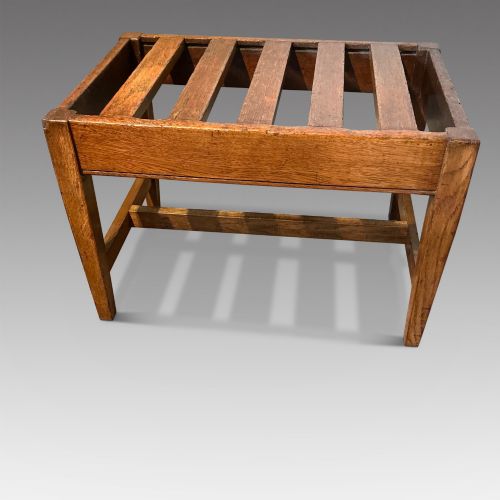
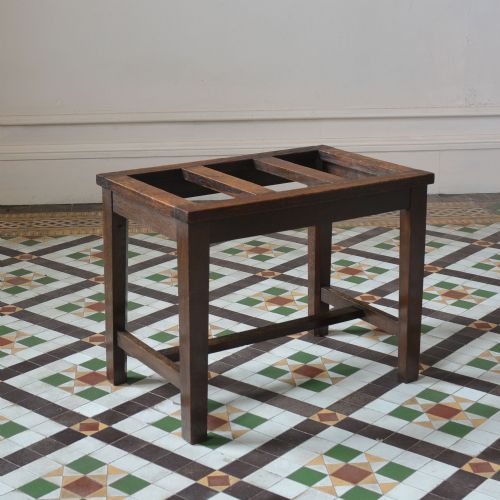
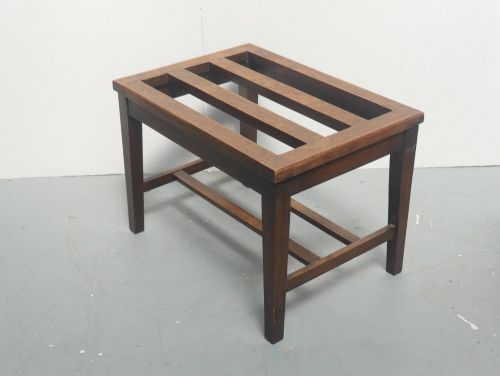
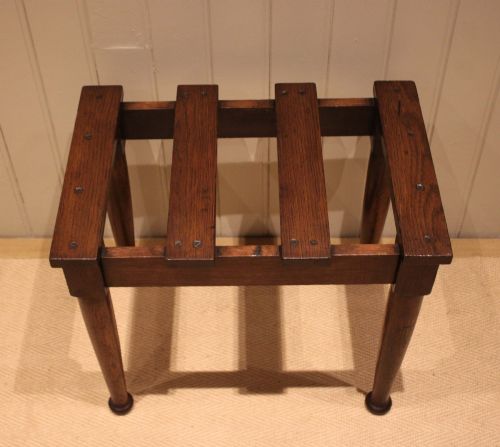
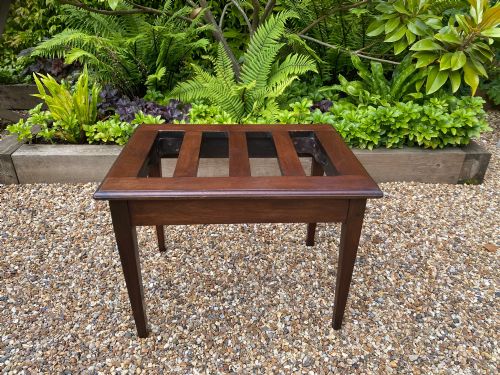

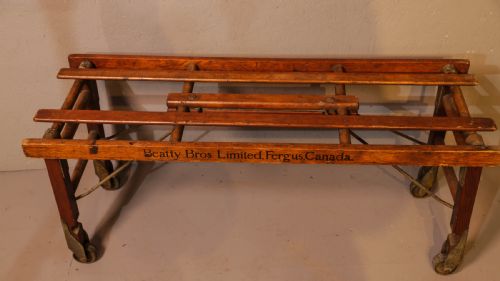


Hotel Suitcase Rack
These hotel suitcase rack pieces offer sturdy, folding utility for guest rooms, combining period timbers with functional webbing to keep bags off the floor.
Hotel Suitcase Rack
A hotel suitcase rack provides a raised surface for bags and luggage, serving domestic bedrooms and hospitality spaces alike with folding or rigid stands. When you search for hotel suitcase rack items on this page, you encounter sturdy stands designed to take heavy travel trunks and modern cases.
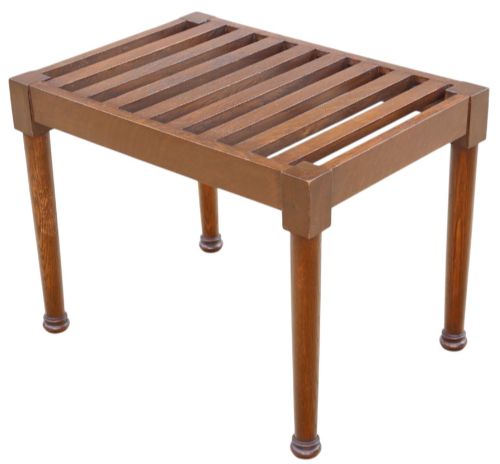
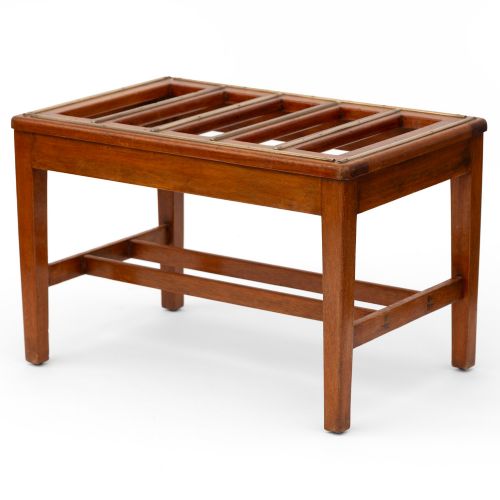
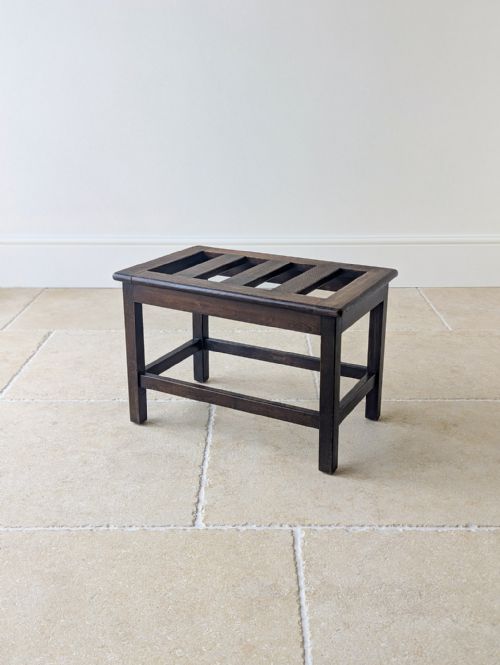
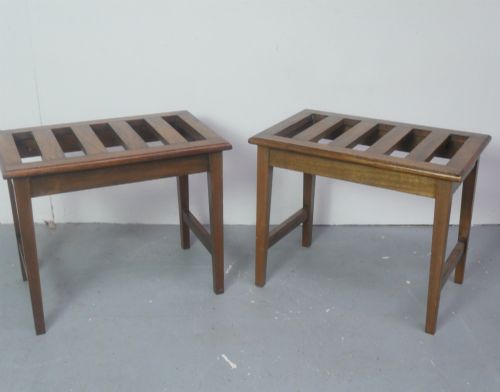
The selections span the Victorian, Edwardian, and mid-century periods, reaching back into the nineteenth century with robust timber frames. Most examples emerge in oak and mahogany, often featuring slatted tops supported by X-frame folding legs or fixed legs.
Makers such as Waring & Gillow, Brown & Lamont, and Beatty Bros Fergus Canada produced these practical items in walnut, beech, pine, and teak. They appear across various regional styles, including English country house and industrial aesthetics.
How they were made
Cabinetmakers constructed these frames using hardwoods like oak, mahogany, walnut, and beech, joined with stable mortise and tenon joints to withstand heavy luggage. Brass fittings, iron braces, and robust hinges reinforce the folding mechanisms on many stands.
Surfaces receive polished finishes or paint, preserving the natural grain of the timber while enduring frequent contact with travel bags. Slatted tops utilise matching woods or sturdy webbing to distribute weight evenly across the structure.
What varies in quality
The choice of timber defines the foundational grade, with dense oak, rich mahogany, and figured walnut sitting above painted pine and standard beech. Superior stands exhibit refined carving, substantial framing, and tight joinery that resists wobbling under load.
Provenance and maker attribution elevate certain pieces, particularly those bearing stamps or badges from notable firms like Waring & Gillow or Brown & Lamont. The complexity of the folding mechanism and the integration of quality brass or iron hardware also distinguish standard utility items from superior examples.
Waring & Gillow·Brown & Lamont·Beatty Bros Fergus Canada
The Hotel Suitcase Rack Glossary
- Luggage stand
- A low piece of furniture designed to hold a suitcase or trunk at a convenient height for packing and unpacking. These stands often feature folding frames for easy storage.
- X-frame
- A structural design where two legs cross in the shape of the letter X, allowing the stand to fold flat when not in use. This configuration provides stability under heavy loads.
- Edwardian
- Pertaining to the reign of King Edward VII, spanning from 1901 to 1910, characterised by lighter furniture designs and continued use of solid oak and mahogany. Pieces from this era often balance utility with refined domestic styling.
- Victorian
- Relating to the period of Queen Victoria's reign from 1837 to 1901, known for robust construction and darker timbers such as mahogany and walnut. Furniture from this time prioritises durability and functional design.
Hotel Suitcase Rack: Frequently Asked Questions
What is a hotel suitcase rack used for?
These pieces provide a raised platform in guest bedrooms for holding travel bags, suitcases, and trunks during unpacking. They lift luggage off the floor to a convenient height.
Historically, hotels and large country houses utilised them to protect floors and make packing easier for visiting guests. Today, they serve a similar functional purpose in domestic spare rooms.
How do I fold a luggage stand?
Most stands utilise an X-frame folding mechanism that collapses inward when lifted from the centre or sides. This allows the frame to store flat against a wall or inside a wardrobe.
Care should be taken with older brass hinges and wooden pivots to ensure smooth movement without straining the joints.
What woods were used for these racks?
Cabinetmakers employed durable hardwoods including oak, mahogany, walnut, beech, teak, and occasionally painted pine. These timbers provided the strength needed to support heavy travel luggage.
Frames often feature polished finishes to highlight the natural grain of the wood while protecting against daily wear.
How do I date an antique luggage stand?
Dating relies on stylistic markers, timber choice, and maker stamps associated with periods like the Victorian and Edwardian eras. Nineteenth-century pieces often feature heavier mahogany or walnut construction.
Later Edwardian and early twentieth-century examples frequently utilise oak with simpler turning or straightforward slatted designs.