
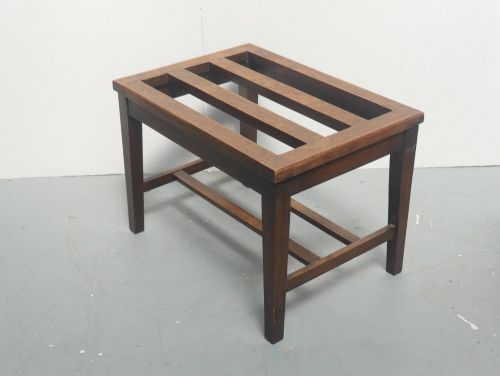
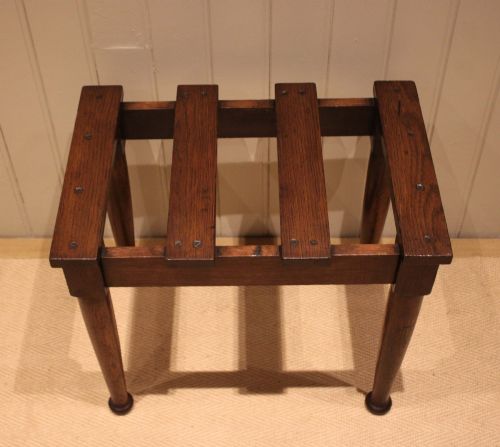



Hotel Luggage Rack Oak
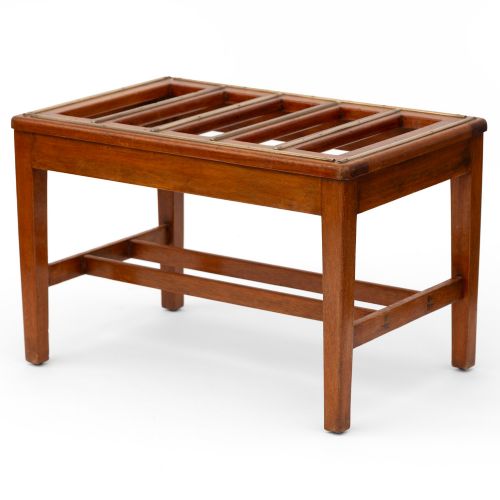
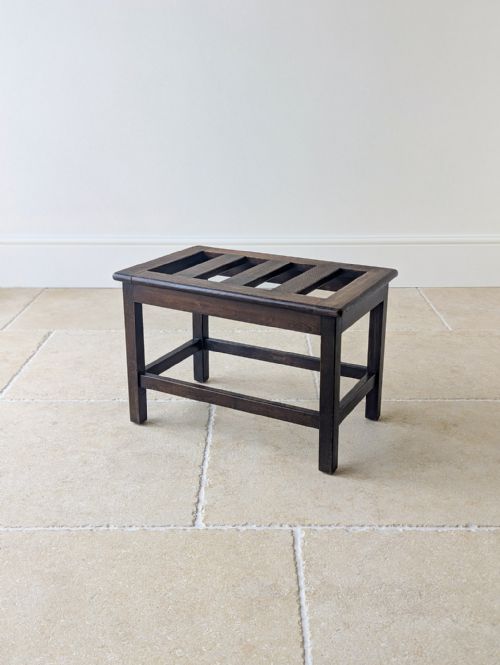
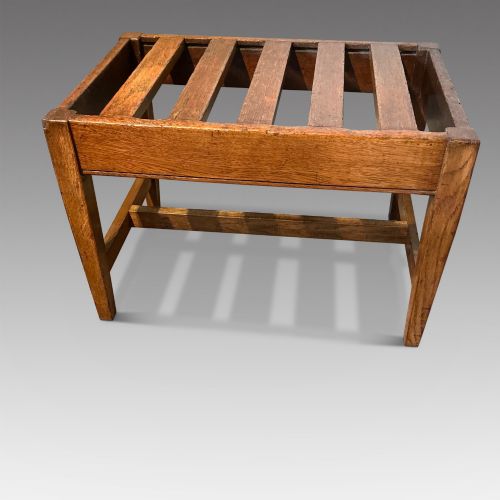
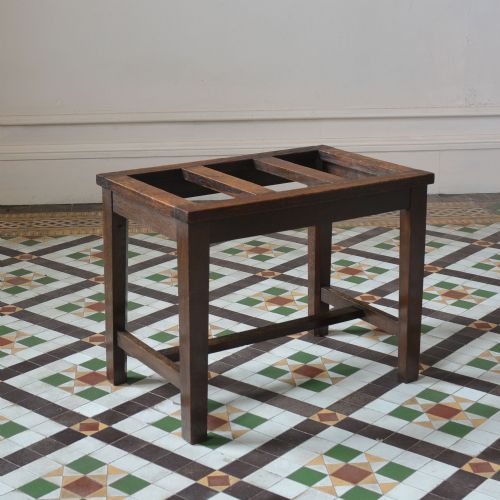
These hotel luggage rack oak pieces bring sturdy utility into the home, offering a practical surface for cases or extra linen.
Hotel Luggage Rack Oak
When you search for hotel luggage rack oak, you encounter practical furniture designed for guests to place their bags upon arrival. These items range from simple folding stands to substantial luggage racks originating in the Edwardian era, nineteen ten, nineteen twenty, nineteen hundred, and the nineteenth century.
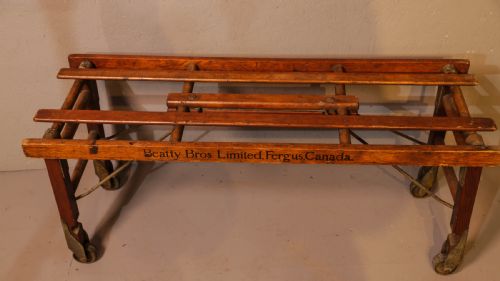
Origins span English country house contexts as well as Scottish examples and Canadian makers such as Beatty Bros Fergus Canada. You also find pieces marked by Waring and Gillow, reflecting the commercial output of prominent cabinet makers of the period.
Materials and construction
Construction relies heavily on solid oak and polished oak, providing a robust frame capable of supporting heavy travel chests and suitcases. Makers utilised wood alongside iron and brass fittings to reinforce joints and folding mechanisms.
Carved details appear on specific Edwardian examples, showing that functional utility often met decorative ambition in workshop production. The combination of solid timber and metal hardware ensures structural longevity across the surviving pieces.
The inventory includes items linked to specific makers such as Beatty Bros Fergus Canada and Waring and Gillow, alongside unbranded hotel pieces.
Assessing quality and finish
Quality rests upon the selection of timber and the crispness of any carved elements found on the frame. Finishes range from simple polished surfaces to more ornate Edwardian carved oak luggage stand designs.
The presence of maker attribution, such as Waring and Gillow or Beatty Bros Fergus Canada, distinguishes standard commercial pieces from workshop productions. Original brass and iron hardware also elevates the character of individual stands.
Beatty Bros Fergus Canada·Waring and Gillow
The Hotel Luggage Rack Oak Glossary
- Edwardian
- Pertaining to the reign of King Edward VII, spanning from nineteen hundred to nineteen ten. Pieces from this era often feature light oak tones and restrained functional design.
- Luggage stand
- A low wooden frame designed to hold a suitcase off the floor for convenience in guest bedrooms. These items frequently fold flat for storage when not in use.
- West End
- A district in London associated with grand hotels and high-end establishments. Items originating from these locations carry a specific commercial provenance.
- Industrial
- A style descriptor reflecting utilitarian design and robust materials built for heavy use. In this context, it applies to racks prioritising function over ornament.
Hotel Luggage Rack Oak: Frequently Asked Questions
What is a hotel luggage rack oak piece?
These items are functional stands designed to hold guest luggage off the floor in bedrooms and dressing rooms.
They combine sturdy wooden frames with practical surfaces, originating from commercial hospitality settings and domestic country houses.
How were these stands used originally?
Hotels and grand homes utilised them in guest rooms so visitors could unpack without bending down to the floor.
They offered a compact, accessible solution that could often be folded away when the room was unoccupied.
How do I date an oak luggage rack?
Dating relies on stylistic markers from the Edwardian period, nineteen hundred, nineteen ten, nineteen twenty, and the nineteenth century.
Makers' marks, carved details, and the type of brass or iron hardware also help place a piece in its historical context.
How do I live with a luggage stand today?
You can place one at the end of a bed for spare blankets, use it in a guest room as intended, or position it in a hallway.
Their sturdy oak construction and folding designs make them adaptable pieces for modern storage needs.