

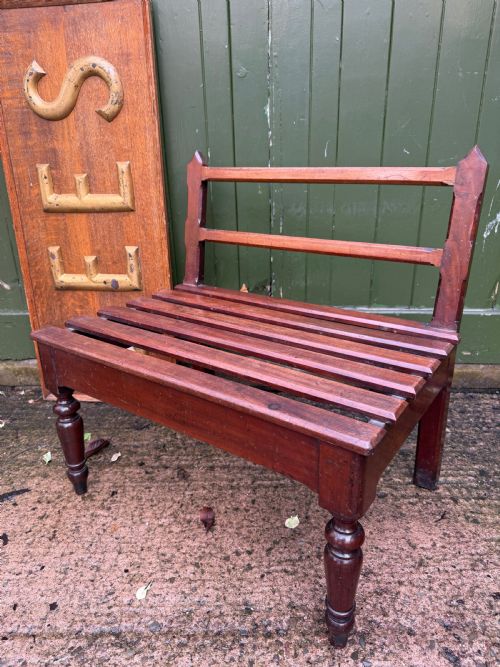


Wooden Luggage Rack
A wooden luggage rack offers a practical surface for bags and suitcases, bringing period utility and sturdy timber construction into a bedroom.
Wooden Luggage Rack
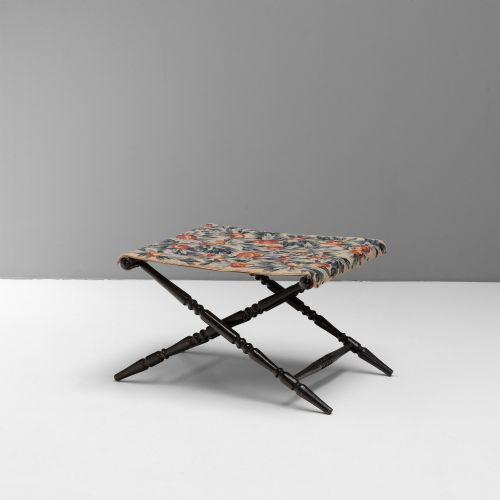
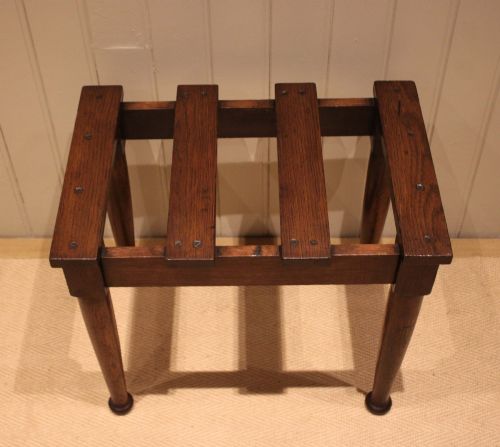
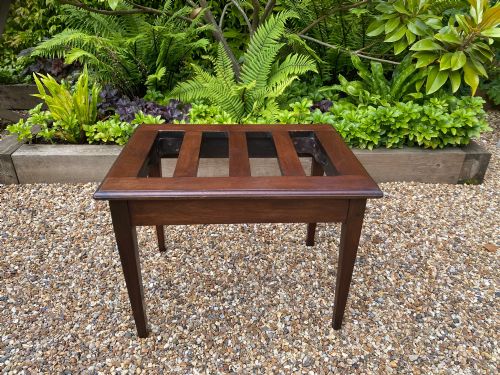
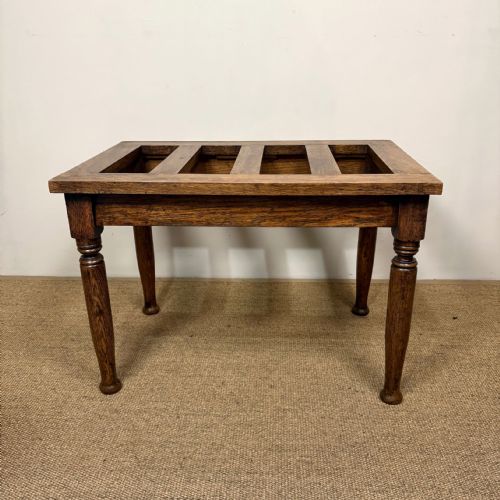
A wooden luggage rack is a low folding or rigid stand designed to hold travel bags at a convenient height, appearing in forms such as stands and racks across Victorian, Edwardian, and early twentieth-century periods. These pieces originate from domestic settings, hotels, and railway companies, reflecting the functional requirements of travel before the era of fitted wardrobes.
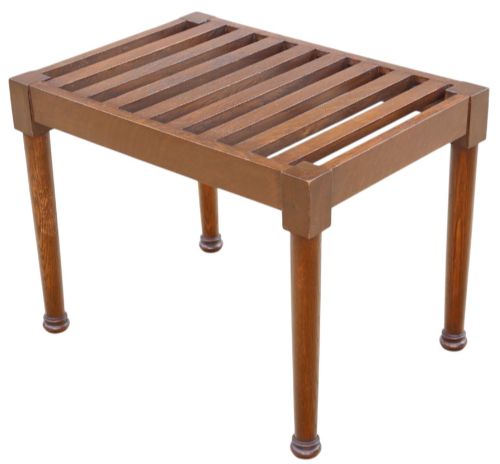
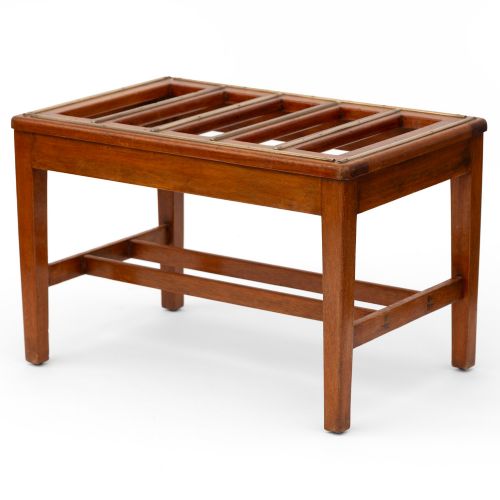
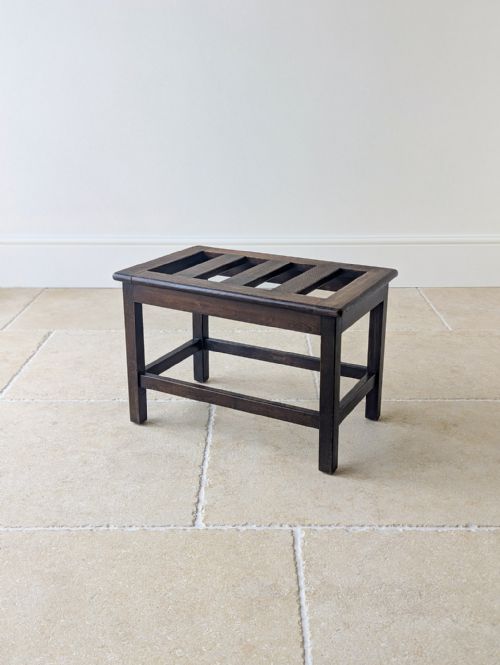
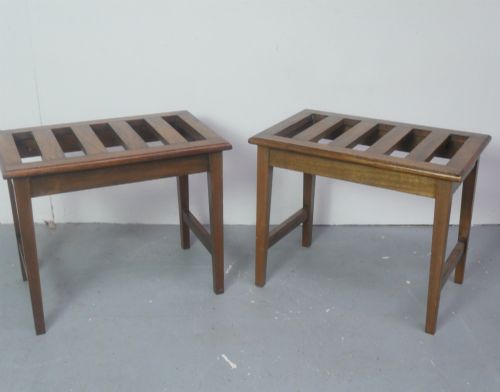
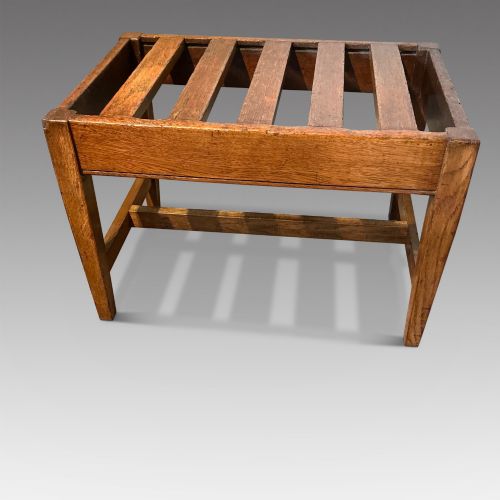
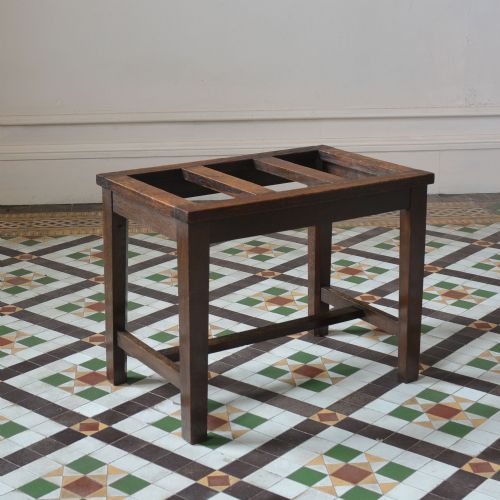
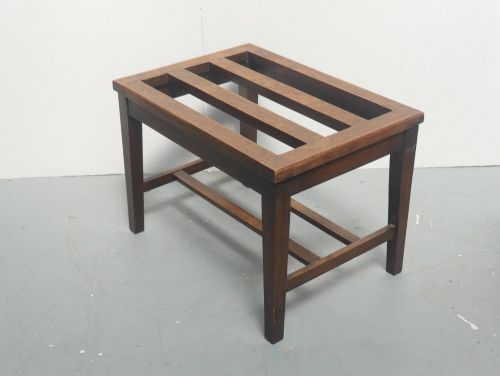
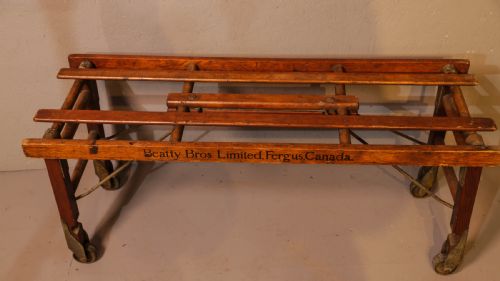
The versions most commonly met on this page include oak and mahogany luggage stands from the nineteenth and early twentieth centuries, often featuring slatted tops and supportive side or rear rails. Variants range from standard folding designs to railway carriers and substantial country-house proportions built for heavy use.
How they were made
Makers utilised solid timbers such as oak, mahogany, walnut, ash, beech, elm, yew wood, and pine, selecting them for strength and grain pattern. Folding frames rely on secure pivoting joints and webbing or wooden slats to support weight without buckling.
Metal components like brass and iron appear in brackets, screws, and hinges, adding structural rigidity to the wooden frames. Polished finishes highlight the natural colour of the wood, while simpler utilitarian pieces receive painted surfaces.
A sturdy piece stamped by the Great North Railway reminds us that Victorian porters once hauled trunks built like small wardrobes.
What varies in quality
The grade of timber and the solidity of construction define the standard of a wooden luggage rack, with dense hardwoods like mahogany and oak offering greater longevity than softer pine or beech. Superior examples display careful joinery and thoughtful proportions, such as raised rear upstands or carved details.
Provenance and maker attribution elevate certain pieces, particularly those bearing stamps from railway companies, notable hotels, or known cabinet makers. The integrity of the folding mechanism and the tightness of the joints determine daily utility.
Beatty Bros Fergus Canada·Brown & Lamont·Waring & Gillow
The Wooden Luggage Rack Glossary
- Luggage stand
- A low furniture piece designed to support a suitcase or trunk off the floor. These items usually feature a slatted or webbed top surface.
- Upstand
- A raised barrier at the rear of a stand. This feature prevents luggage from sliding backward against a wall.
- Slatted top
- A surface formed of parallel strips of wood with gaps between them. This construction keeps the frame lightweight while maintaining strength.
- Railway collectables
- Items originating from train networks and stations. Railway luggage carriers bear the marks of transit use and company ownership.
Wooden Luggage Rack: Frequently Asked Questions
How were wooden luggage racks used originally?
These racks stood in guest bedrooms and hotel rooms to hold heavy leather suitcases and trunks at a comfortable height for unpacking.
Servants moved them between rooms as guests arrived, meaning the folding mechanism had to withstand constant opening and closing.
Can I use an antique luggage rack for actual suitcases today?
Solid oak and mahogany stands from the Victorian and Edwardian eras remain robust enough to hold modern travel bags.
Checking the stability of the joints and the condition of any webbing ensures the piece handles the weight safely.
Where should I place a luggage rack in a modern home?
Bedrooms remain the natural home for these stands, where they function as guest luggage holders or blanket storage at the foot of a bed.
Some people also utilise them in hallways or bathrooms for holding towels and baskets.
How do I tell an Edwardian luggage rack from a Victorian one?
Victorian examples often employ dense mahogany or ash with deep proportions and sometimes railway or hotel provenance.
Edwardian pieces frequently feature lighter oak construction, occasionally with simple carved details reflecting contemporary domestic tastes.