
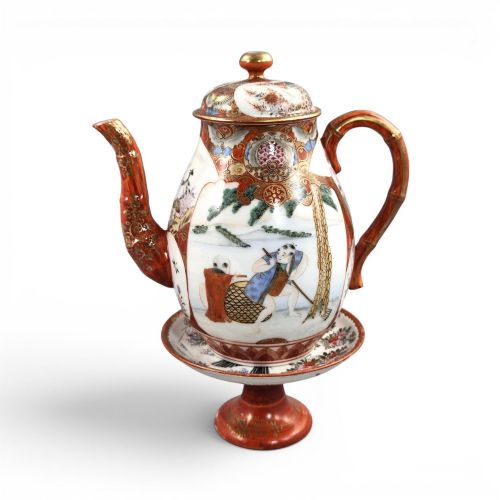
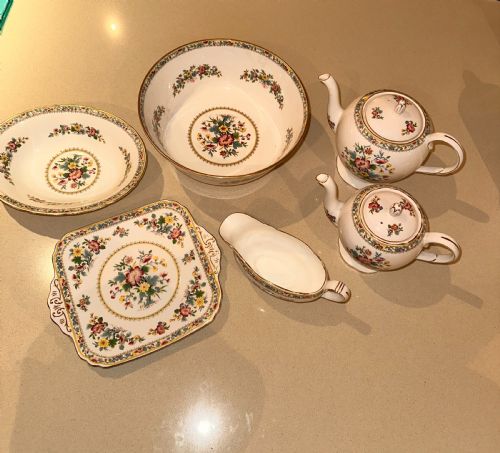


Hand Painted Teapot
A hand painted teapot brings brushwork and colour straight to the tea table, offering nineteenth century porcelain and earthenware adorned by hand.
What these pieces are
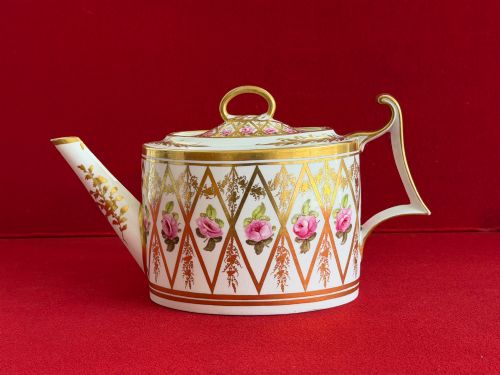
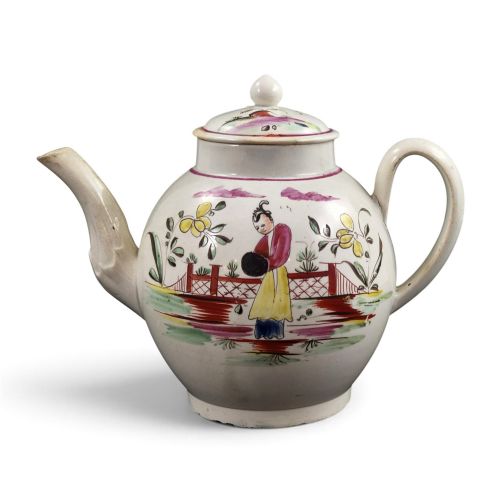
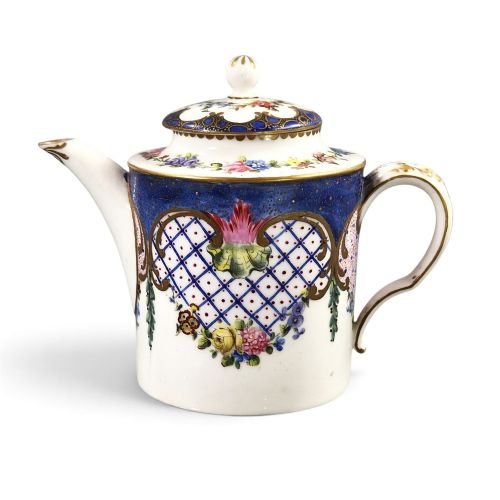
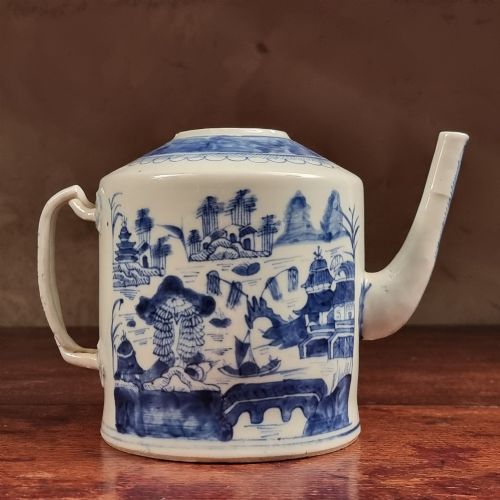
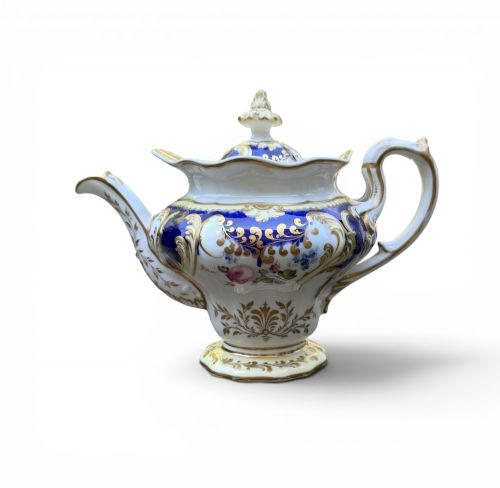
A hand painted teapot is a functional vessel decorated entirely by hand with pigments, enamel, glaze, and gold leaf. The pieces collected under this search phrase span nineteenth century English earthenware and porcelain alongside Japanese ceramics from the Meiji period.
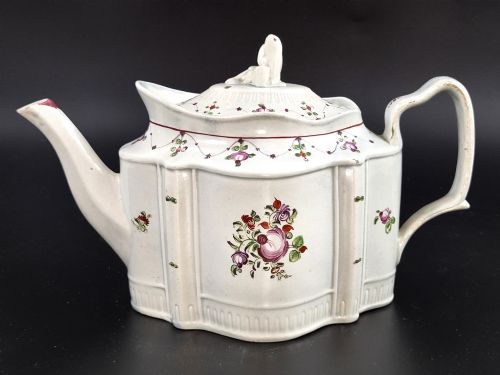
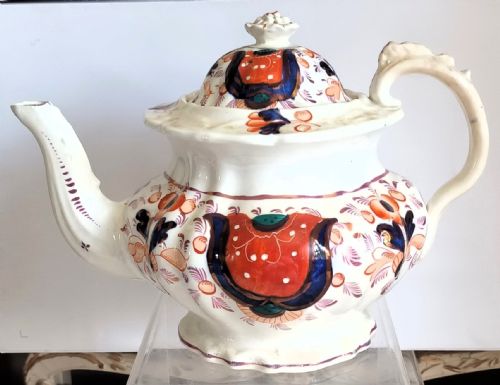
English examples range from commode shapes with widow finials and octagonal forms originating in Staffordshire, to Gaudy Welsh patterns and foliage shapes with painted flowers. Makers represented include Thomas Harley and Ridgway, alongside makers such as James Kent.
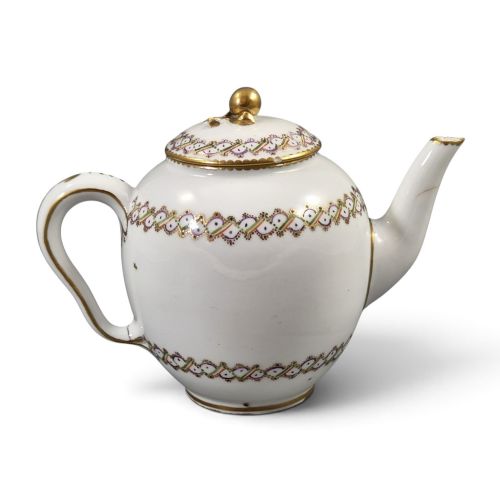
Continental European output appears through Sèvres pieces, whilst Japanese works include Satsuma ware and Kutani porcelain. Buyers encounter both standalone teapots and components belonging to larger tea sets with matching milk jugs and sugar pots.
How they were made
Potters shaped these vessels in earthenware, pearlware, and porcelain, sometimes forming distinct geometries such as octagonal profiles or foliage contours. Glazes provided a smooth, impervious surface suitable for subsequent decoration.
Artisans applied pigments by hand, incorporating enamel, lustre glaze, and gold leaf to render floral motifs and oriental patterns. Firing fixed the delicate pigments and precious metals onto the ceramic body.
Retail Price Guide 2026
Typical UK retail prices for hand painted teapot, calculated from the Sellingantiques database of over a million retail prices indexed since 2003. This retail price guide relies exclusively on Sellingantiques data; no external sources or auction records are used, so the figures do not describe the wider market.
Listings feature nineteenth century earthenware, porcelain, and pearlware teapots adorned with enamel, lustre glaze, and gold leaf.
What varies in quality
Quality rests in the precision and complexity of the brushwork applied across the surface. Pieces featuring intricate hand painted floral arrangements or detailed oriental motifs demand superior artistic skill.
The choice of materials also elevates a piece, particularly the inclusion of rich gold leaf highlights and vibrant enamel work. Well preserved glaze surfaces and intact finials complete the upper tier of these vessels.
Thomas Harley·Ridgway·James Kent
The Hand Painted Teapot Glossary
- Earthenware
- A porous pottery body fired at lower temperatures, requiring a glaze to hold liquids. It forms the foundation for many nineteenth century Staffordshire teapots.
- Porcelain
- A dense, vitrified ceramic made from kaolin, fired at high temperatures until white and translucent. It provides a refined white canvas for delicate painted flowers.
- Lustre glaze
- A metallic film applied to ceramics to create an iridescent sheen. This technique catches the light on nineteenth century tea wares.
- Gold leaf
- Beat gold applied to ceramic surfaces for ornamentation. It adds reflective warmth to painted patterns and borders.
- Satsuma ware
- Japanese earthenware decorated with fine crackle glazes and detailed polychrome enamel painting. It frequently incorporates gilded highlights.
Frequently Asked Questions
What periods do these teapots come from?
The available evidence dates these teapots to the nineteenth century. This era encompasses Georgian styles alongside Meiji period Japanese ceramics.
Production spans early nineteenth century English earthenware through to later Victorian porcelain and Satsuma wares.
How do I identify a Staffordshire teapot?
Staffordshire teapots from this era often employ earthenware bodies shaped into distinct commode or octagonal silhouettes. They frequently feature specific details like widow finials and hand painted geometric patterns.
Look for regional characteristics typical of early nineteenth century Staffordshire potteries and makers such as Thomas Harley.
What is Satsuma ware?
Satsuma ware is a type of Japanese pottery traditionally characterised by an ivory coloured, crackled earthenware body. Artisans decorated these surfaces with detailed polychrome enamel painting and gold leaf.
Pieces from the Meiji period often showcase this distinct combination of intricate brushwork and gilt ornamentation.
How should I care for a hand painted teapot?
Hand wash these delicate ceramic pieces gently in warm water without abrasive sponges. Avoid harsh detergents that might degrade the historic enamel and gold leaf.
Treat them primarily as decorative objects or display pieces rather than for daily service.