
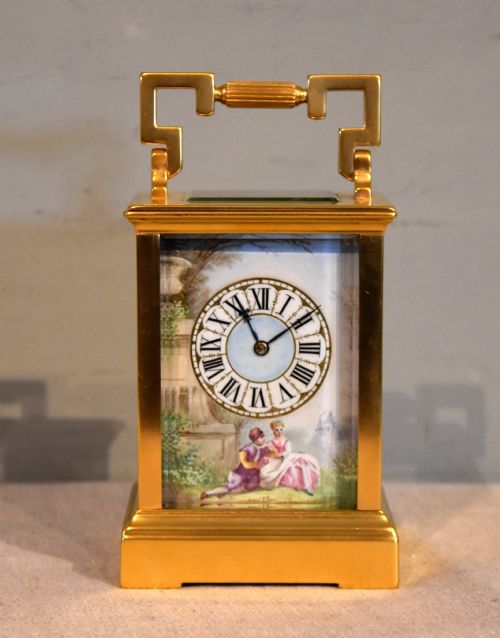


Hand Painted Porcelain Miniature
These hand painted porcelain miniature pieces bring intricate brushwork and delicate scale together, offering collectors a remarkably focused way to hold centuries of ceramic artistry.
Hand Painted Porcelain Miniature
When you search for hand painted porcelain miniature, you enter a field populated by small vases, portrait plaques, snuff bottles, and clock panels spanning the nineteenth century and early twentieth century. European factories and Japanese workshops alike turned their finest decorative talents toward these condensed canvases, creating scaled-down forms that demand precise brush control.
The pieces appearing on this page range from Satsuma and Imari wares of the Meiji period to English Worcester and continental porcelain plaques mounted in frames or carriage timepieces. These objects served as cabinet pieces, touring souvenirs, and domestic ornaments designed to display refined artistic skill within a limited footprint.
How they were made
Makers utilised high-fired ceramic bodies, applying fine glazes and earthenwares that provided a smooth, stable ground for delicate polychrome pigments and enamel work. Gold leaf and gilt details frequently highlight the borders, figures, and floral motifs, adhering to the surface through careful firing techniques.
Artisans executed the painted scenes using ultra-fine brushes, often reproducing master paintings, botanical studies, or traditional figural processions on surfaces measuring mere inches across. Many items feature subsidiary framing elements such as brass mounts, carved wood, or ormolu settings that complement the small ceramic panels.
Listings incorporate items from the Regency era up to the twentieth century, bridging Japanese Imari, Satsuma, and European factory traditions.
What varies in quality
The merit of a hand painted porcelain miniature rests primarily on the discipline and fidelity of the brushwork itself, distinguishing hurried commercial output from careful studio painting. Facial expressions, hand gestures, and fine line work reveal whether the artist maintained control across the miniature scale.
Quality also depends on the integration between the ceramic body and its secondary mount, such as a carved frame, gilt bronze, or ormolu housing. Superior examples display harmonious proportions where the mounting enhances the porcelain rather than overpowering it.
Flight Barr And Barr·Royal Worcester·Coalport·Spode·Doulton Lambeth·Hutschenreuter
The Hand Painted Porcelain Miniature Glossary
- Satsuma
- A type of Japanese earthenware featuring a crackle ivory glaze decorated with polychrome enamels and gilt. It became especially popular for export during the Meiji period.
- Imari
- A traditional style of Japanese porcelain characterised by a palette of underglaze blue, iron red, gold, and supplementary colours. Pieces often display dense floral and brocade patterns.
- Plaque
- A flat panel of porcelain used specifically as a support for painted scenes, frequently framed for wall hanging or mounted into furniture and clocks.
- Ormolu
- Gilt bronze mountings used to frame or support decorative porcelain objects, common in nineteenth-century European pieces.
- Tygs
- A traditional multi-handled drinking vessel scaled down in these listings to miniature collector proportions.
Hand Painted Porcelain Miniature: Frequently Asked Questions
How were porcelain miniatures displayed originally?
These small pieces were typically kept in glass-fronted cabinets, on mantelpieces, or integrated directly into portable items like carriage clocks and bookslides.
Owners arranged them closely together to showcase varied artistic styles and foreign imports within private drawing rooms.
What subjects appear on painted plaques?
Plaques frequently feature classical portraiture, figural mythology, and copies after Renaissance masters executed with microscopic precision.
Other examples depict pastoral landscapes, floral arrangements, and narrative scenes drawn from European and Asian traditions.
How do I identify a Meiji period piece?
Meiji period items often display signature marks from specific artists or studios alongside dense decorative schemes involving gilt figural processions.
The use of characteristic crackle-glaze earthenware and intricate brocade borders points directly to Japanese workshops of the late nineteenth century.
Are these items functional or decorative?
Most surviving examples served an entirely ornamental purpose, functioning as cabinet specimens, desk accessories, or architectural plaques.
While forms like teapots, ewers, and bowls appear in miniature, their small scale rendered them better suited for visual appreciation than practical use.