
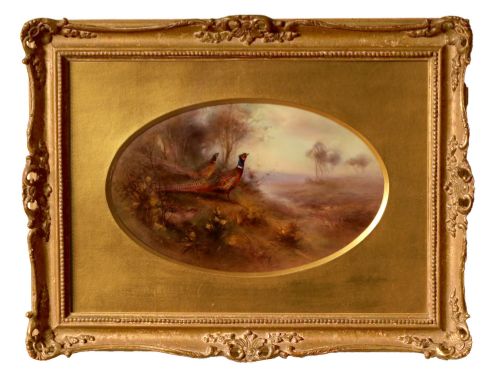


Gold Frame Ceramic Plaque
A gold frame ceramic plaque brings hand-painted porcelain artistry and rich gilding together for striking interior wall display.
Gold Frame Ceramic Plaque
A gold frame ceramic plaque combines hand-painted porcelain panels with elaborate gilded, carved wooden, or ormolu surrounds. These decorative objects emerge primarily from nineteenth-century European factories, featuring portraiture, historical scenes, and still life compositions.
The versions most commonly met on this page span the Victorian and Edwardian eras, encompassing factory work from Royal Worcester, Berlin KPM, and Sevres style pieces. They function principally as wall art and decorative plaques, occasionally mounted on stands or within velvet-backed enclosures.
Collector interest centres on the intersection of fine ceramic painting and ornate framing. The physical evidence shows various forms including oval plaques, rectangular wall panels, and pairs bearing artist signatures such as Stinton or Desprez.
Materials and manufacture
The core material is hard-paste or soft-paste porcelain, painted by hand using enamel pigments that undergo kiln firing to vitrify the surface. Specialised techniques like pate-sur-pate build up layers of slip in low relief upon the ceramic body.
Surrounding enclosures utilise giltwood, carved wood, and ormolu mounts to display the porcelain securely. Glass frequently protects the painted surface, whilst backing materials include wood and velvet to complete the framed presentation.
Several plaques immortalize historic literary figures like Charles Dickens alongside Prussian royalty.
Assessing quality and execution
The integrity and craftsmanship of the surrounding frame contribute substantially to the overall standard. Deeply carved giltwood, fire-gilded ormolu, and original backing indicate higher atelier standards than later replacement mounts.
Royal Worcester·KPM Berlin·Sevres·Minton
The Gold Frame Ceramic Plaque Glossary
- Pate-sur-pate
- A ceramic decoration technique where liquid clay is applied layer by layer to a contrasting body to create a cameo-like relief. This meticulous process requires immense patience from the ceramic artist.
- Ormolu
- Gilded bronze mounted onto decorative objects or furniture during the eighteenth and nineteenth centuries. The technique involves applying a mercury and gold amalgam to bronze before heating.
- Hard-paste porcelain
- A durable ceramic composition containing kaolin and petuntse, fired at very high temperatures. It produces a dense, translucent body impervious to liquids.
- Giltwood
- Wood that has been coated with a thin layer of gold leaf or powder over a prepared gesso ground. It provides a luminous border for framed artworks.
- Enamel
- Vitreous glass paste fused to a ceramic or metal surface through firing. This medium retains vibrant colouration over centuries.
Gold Frame Ceramic Plaque: Frequently Asked Questions
How do I hang a heavy plaque?
Secure hanging requires checking the structural integrity of the frame and utilising appropriate wall anchors rated for the combined weight of porcelain and wood.
Professional picture wire or heavy-duty D-rings attached directly to the wooden frame ensure the piece remains safely suspended against the wall.
Are these plaques fragile?
The ceramic panels possess inherent brittleness and can shatter if subjected to sharp impacts or sudden drops. Protective glass often shields the painted surface from accidental surface contact.
Handling requires two hands and a stable workspace away from high-traffic zones where the piece might be brushed against or dislodged.
How should I clean the frame?
Giltwood and carved wooden frames accumulate dust within their recesses over time. A soft, dry artist brush gently lifts particulate matter without disturbing fragile metallic leaf.
Avoid liquid cleaners, chemical sprays, or abrasive cloths entirely, as moisture and friction strip historic gilding from the carved surfaces.
Can I display them in direct sunlight?
Enamel pigments and delicate porcelain paints are vulnerable to ultraviolet degradation over extended periods. Direct solar exposure causes fading and alters the subtle tones of hand-painted scenes.
Positioning plaques on interior walls away from windows preserves the original colouration and prevents thermal stress on the ceramic body.