
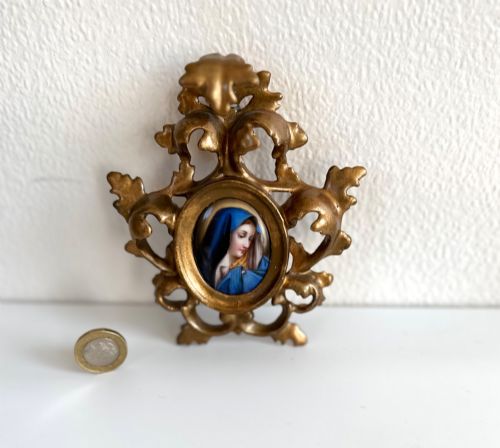
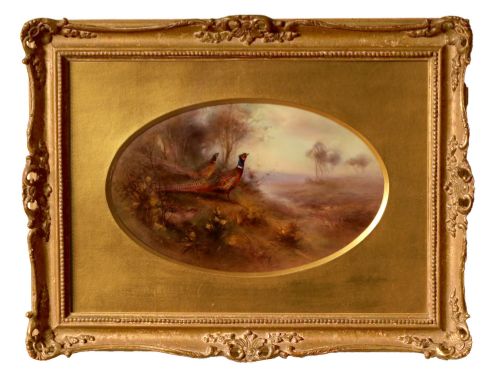


Gilt Framed Porcelain Plaque
These gilt framed porcelain plaque items combine painted ceramic panels with ornate gilded surrounds, offering collectors a striking fusion of fine art and decorative framing.

Gilt Framed Porcelain Plaque
A gilt framed porcelain plaque brings together delicate ceramic painting and elaborate timber or metal surrounds. When you search for gilt framed porcelain plaque examples, you encounter works ranging from intimate portraits to detailed still life and narrative scenes.
The pieces on this page span the nineteenth century into the early twentieth century, taking the form of wall plaques, miniature portraits, and decorative panels. Victorian and Edwardian examples dominate the selection, often reflecting Rococo Revival or Neoclassical aesthetic influences.
Makers such as Royal Worcester, KPM, and Sevres feature prominently among the recorded items, alongside signed continental European works. Collectors encounter everything from solitary devotional miniatures to grand pairs of hand-painted plates mounted for display.
Materials and production methods
The core medium relies on fired porcelain or enamel panels, which serve as a smooth canvas for detailed hand painting. Artists utilised enamel pigments that required multiple firings in a kiln to permanently fix the colours and details onto the ceramic surface.
Surrounds are constructed from gilded wood, gilt metal, or carved giltwood, frequently incorporating velvet lining or glass fronts to protect the delicate painted surface. These frames often mirror Victorian Rococo Revival or classical moulding techniques to complement the artwork within.
Gilt Framed Porcelain Plaque Retail Price Guide 2026
Typical asking prices for gilt framed porcelain plaque among the pieces listed under this phrase on Sellingantiques today, from the lower quarter to the upper quarter. They describe what is for sale here now, not the wider market.
Listings feature works from nineteenth-century European and British makers, utilising porcelain, giltwood, and enamel materials.
Distinctions in craftsmanship and origin
Quality separates simple decorative items from masterworks through the finesse of the brushwork and the prestige of the manufacturing factory. Pieces originating from renowned potteries like KPM or Royal Worcester, particularly those bearing the signature of artists such as James Stinton, demonstrate superior artistic execution.
The sophistication of the frame adds another layer of distinction, where deeply carved giltwood or intricate ormolu mounts elevate the status of the central porcelain panel. The depth of the enamel painting and the fidelity to Renaissance or classical subjects further distinguish finer examples.
James Stinton·Royal Worcester·KPM·Sevres·William Rayworth·H. Desprez
The Gilt Framed Porcelain Plaque Glossary
- Porcelain
- A hard, white ceramic material fired at high temperatures to create a dense, non-porous body. It provides an ideal smooth surface for detailed miniature painting.
- Giltwood
- Timber that has been coated with a thin layer of gold leaf or gold paint. This technique creates a radiant, metallic frame finish popular in period interior decoration.
- Enamel
- Vitrified glass powder fused to a surface through high-heat firing. It produces vibrant, glossy colours that resist fading over centuries.
- Ormolu
- Gilded bronze or brass used for decorative mounts and frames. This technique was widely utilised in nineteenth-century continental and French decorative arts.
Gilt Framed Porcelain Plaque: Frequently Asked Questions
How do I hang a heavy framed plaque safely?
Most wall plaques include secure hanging hardware fitted directly to the wooden or metal frame. Ensure your wall fixing matches the weight of the timber and porcelain combined.
For larger pieces, use picture wire rated well above the object's actual weight, anchored securely into wall studs or using heavy-duty wall plugs.
Are these porcelain plaques hand painted?
The majority of pieces listed are hand-painted works executed by skilled ceramic artists, often reproducing classical masterpieces or botanical and avian studies. Signatures from artists such as Stinton frequently appear on the surface.
Closer inspection under magnification reveals the individual brushstrokes and tonal gradations characteristic of genuine hand-applied enamel pigments.
What periods do these pieces come from?
The items originate primarily from the nineteenth century, spanning Victorian and Edwardian eras, with select examples extending into the early twentieth century. Styles frequently draw upon nineteenth-century revival movements.
Manufacturing traits and framing styles help date each piece, aligning with the Victorian Rococo Revival and Neoclassical tastes of the period.