


Hand Painted Kutani Vase
A hand painted kutani vase brings rich Japanese porcelain craftsmanship into a room, offering distinct floral and figurative motifs.
Hand Painted Kutani Vase
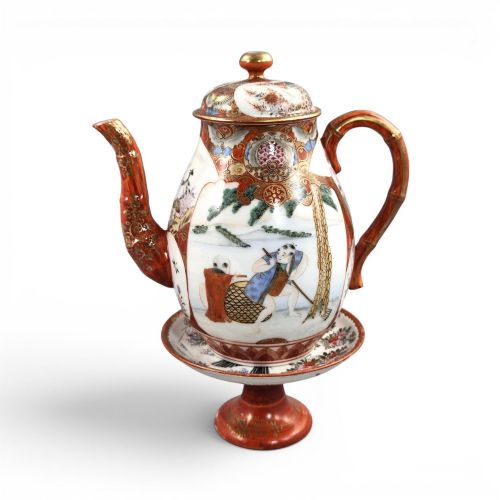
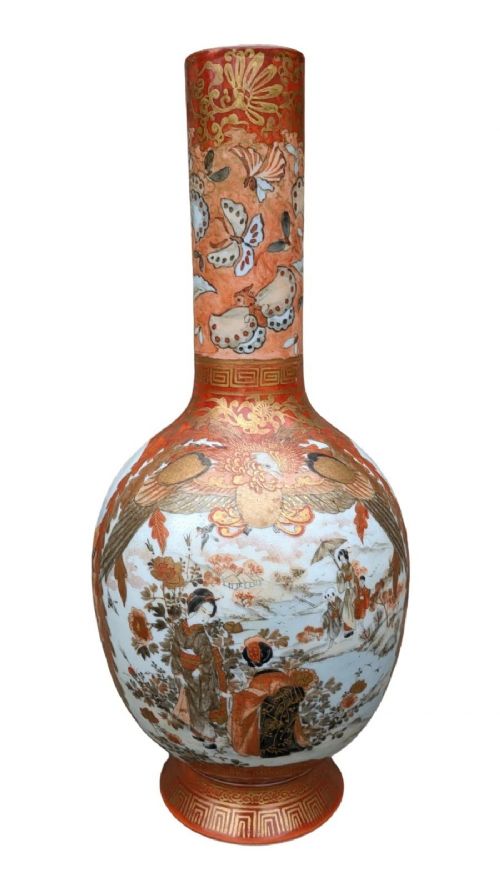
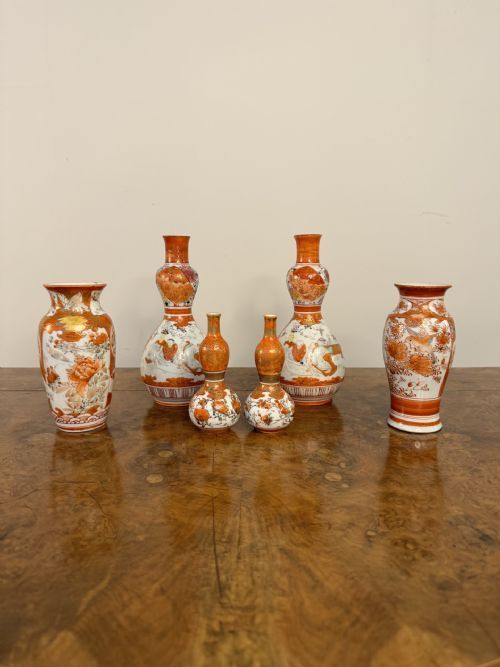
When you search for a hand painted kutani vase, you are looking at Japanese export ceramics originating primarily from the nineteenth century and the Meiji period. The pieces appearing here range from small antique vessels and teapots to large cylindrical floor vases and converted table lamps.
You are most likely to meet Meiji period examples dating from the late nineteenth century, often seen in pairs with flared necks. These vessels combine traditional Japanese forms with the robust export production characteristic of the era.
Materials and construction
These pieces are constructed from white porcelain, forming a sturdy base for elaborate surface decoration. Artisans applied coloured enamels and intricate gold leaf or gilding to build up the dense pictorial panels.
Supplementary materials such as brass fittings and silk fabric appear on pieces adapted into table lamps or paired with wooden stands. The primary technique relies on meticulous hand painting over and under the glaze to achieve the characteristic rich palette.
Some nineteenth-century examples spent decades quietly serving as table lamps before returning to their original vase form.
Assessing quality and execution
Quality in these ceramics rests upon the precision of the brushwork and the complexity of the enamelled scenes. Finer examples display disciplined, detailed figural or botanical painting with generous application of gold leaf rather than sparse decoration.
Scale and proportion also dictate the distinction between standard vessels and exceptional large exhibition pieces. The crispness of the porcelain body and the preservation of the delicate enamel surface elevate the standing of a piece.
The Hand Painted Kutani Vase Glossary
- Kutani
- A style of Japanese porcelain traditionally produced in Ishikawa Prefecture, known for vibrant enamel colours and gold detailing. It forms the core identity of these ceramics.
- Meiji Period
- The era in Japanese history spanning from 1868 to 1912, corresponding to a major surge in ceramic exports to the West. Many pieces on this page originate from these decades.
- Enamel
- Vitreous coloured glass fused to the porcelain surface during firing, creating the bright decorative pigments. It provides the primary colouration alongside gold leaf.
- Gilding
- The application of gold leaf or gold paint to accentuate specific motifs and borders on the ceramic body. This technique adds depth and light reflection to the painted panels.
Hand Painted Kutani Vase: Frequently Asked Questions
How do I date a kutani vase?
Dating relies primarily on stylistic indicators, manufacturing traits, and period attribution such as the Meiji era or nineteenth-century markers. Comparative analysis of the enamel palette and form helps narrow down the decade.
Many pieces from this tradition carry general century markers or specific decades like the 1890s based on historical export trends and decorative styles.
Were these vases made for export?
A large proportion of these ceramics were produced specifically for Western export markets following the opening of Japan in the mid-nineteenth century. Artisans tailored the scale and decorative themes to suit European and American tastes.
Export wares frequently included large pairs, cylindrical shapes, and decorative chargers intended for prominent display in Victorian interiors.
Can I use these vases as lamps?
Several pieces in this category are found as converted table lamps, often fitted with brass hardware and silk shades. This adaptation occurred both historically and in later periods to repurpose decorative vessels for domestic lighting.
When living with lamp conversions, the structural integrity of the porcelain body remains the primary consideration alongside the wiring arrangement.
What subjects appear on the decoration?
The hand-painted surfaces frequently feature traditional Japanese figures, birds, flowers, and intricate geometric or brocade patterns. These motifs are rendered in rich red, green, and blue enamels enhanced with gold.
Panels depicting narrative scenes or natural landscapes are a hallmark of the finest output from the kilns during the late nineteenth century.