




Hand Painted Glass Goblet
These hand painted glass goblets bring together brilliant enamels, rich gilding and blown glass from the nineteenth and early twentieth centuries.
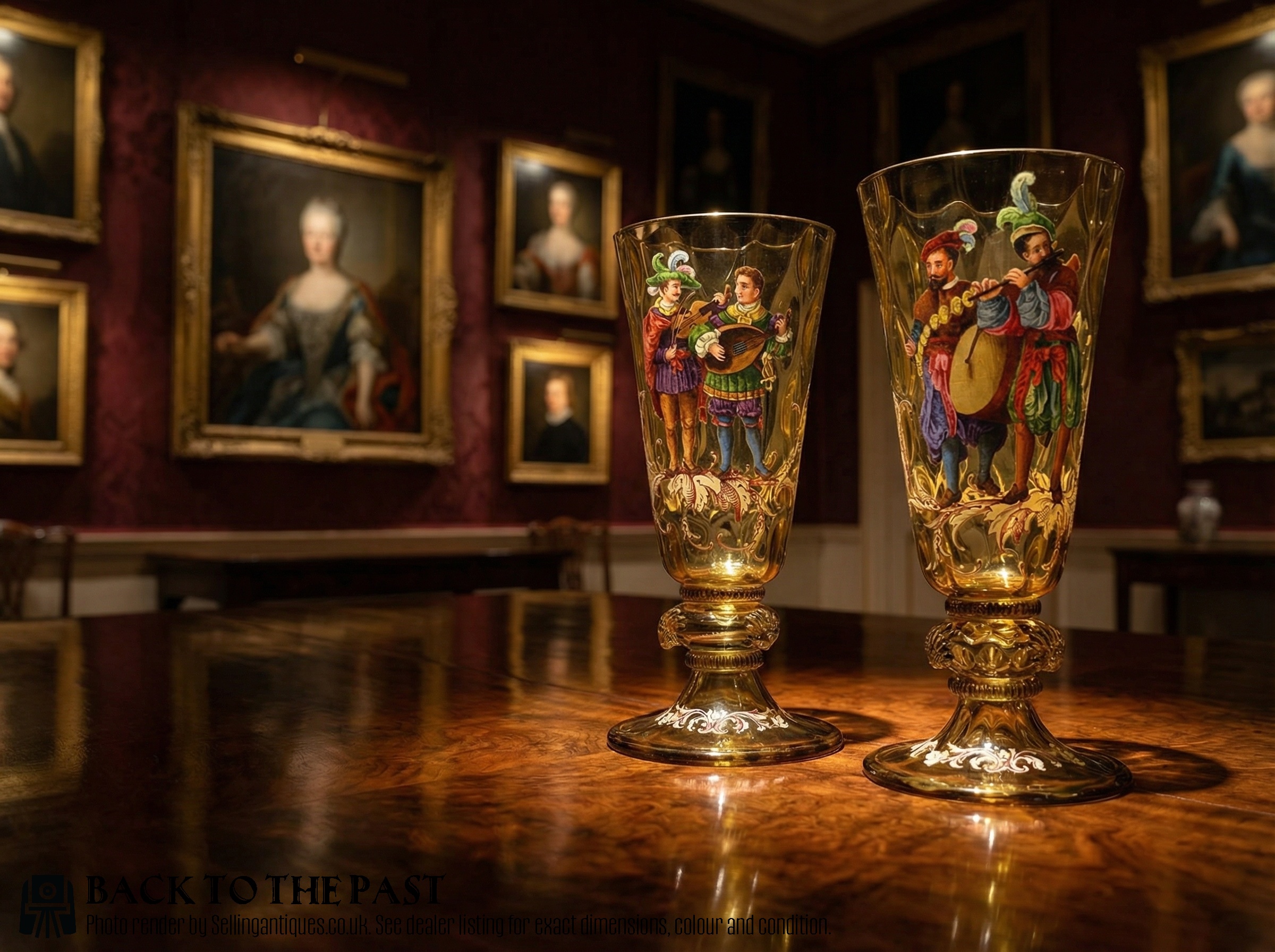
Hand Painted Glass Goblet
When you search for hand painted glass goblet, you encounter drinking vessels and decorative glassware from the Victorian period through to the early twentieth century. The selection spans robust green glass roemers, delicate hock glasses, and substantial triple cased Bohemian vessels.
Most examples originate from workshops in Germany and Bohemia, including specialised glasshouses such as Theresienthal and Lobmeyer. Forms range from single monumental display goblets to matched sets of cordial and wine glasses.
Makers utilised traditional techniques to create pieces adorned with heraldic motifs, floral enamel, and intricate polychrome decoration. These objects function equally as decorative centrepieces and as tactile examples of historic European glassmaking.
How they were made
Glassmakers formed these vessels using blown glass and crystal, sometimes casing multiple layers of coloured glass together before shaping. Artisans then applied vitreous enamel and gold leaf by hand, building up rich polychrome surfaces.
Firing fixed the enamel decoration permanently to the glass body. Guild workers and specialised decorators painted intricate floral and armorial details directly onto the curved exterior walls.
Hand Painted Glass Goblet Retail Price Guide 2026
Typical asking prices for hand painted glass goblet among the pieces listed under this phrase on Sellingantiques today, from the lower quarter to the upper quarter. They describe what is for sale here now, not the wider market.
Several makers painted elaborate coats of arms on wine glasses so guests could display their allegiance while drinking.
What varies in quality
Quality rests upon the crispness of the hand-painted enamels and the purity of the underlying blown glass. Finer pieces demonstrate precise brushwork in the heraldic or floral motifs without blurring or pooling.
The weight of the glass, the depth of the gold leaf application, and the complexity of the cased layers separate standard production from exceptional studio output.
Theresienthal·Lobmeyer·Fritz Heckert·Frits Hechert
The Hand Painted Glass Goblet Glossary
- Roemer
- A traditional Germanic large wine glass featuring a wide bowl and a studded stem designed for grip. These are frequently rendered in green glass.
- Enamel
- Opaque glass paste applied as paint and fired to fuse permanently with the vessel surface. It provides vibrant colour and raised texture.
- Hock glass
- A tall stemmed wine glass traditionally used for white wine, often heavily decorated with coloured enamel. The long stem keeps the hand away from the bowl.
- Triple cased
- Glass formed from three distinct fused layers of different coloured glass. This allows artisans to cut through layers to reveal contrasting colours beneath.
- Armorial
- Decoration featuring family coats of arms or heraldic crests. These motifs appear frequently on pieces made in German and Bohemian workshops.
Hand Painted Glass Goblet: Frequently Asked Questions
Were these goblets meant for drinking?
Many of these vessels served functional roles for wine, hock, or cordials in nineteenth-century dining rooms. Sets of cordial and hock glasses were produced specifically for formal entertaining.
Larger armorial and cased examples were often intended purely for display on sideboards or in cabinets.
How can I tell Bohemian glass from German glass?
Bohemian glass frequently employs heavy cased colours, rich gilding, and figurative or floral enamel work typical of nineteenth-century production. German pieces often lean towards historicist roemer forms with heraldic motifs.
Exact attribution typically relies on documented workshop styles and recorded enamel palettes rather than signatures.
What is Historismus glass?
Historismus refers to the nineteenth-century revival style where makers deliberately copied Renaissance and medieval glass forms. German and Bohemian workshops produced these pieces to satisfy a growing collector market for historic aesthetics.
These revival vessels combine older shapes with Victorian manufacturing precision and vibrant enamel decoration.