



Amber Glass Goblets
Amber glass goblets bring deep, warm tone and historic craft to the table, and these pieces span centuries of fine European glassmaking.
Amber Glass Goblets
When you search for amber glass goblets, you encounter drinking vessels, roemers, and decorative stems produced across several centuries. The selection includes Victorian sets, Bohemian engraved pieces, and German forms originating from various periods.
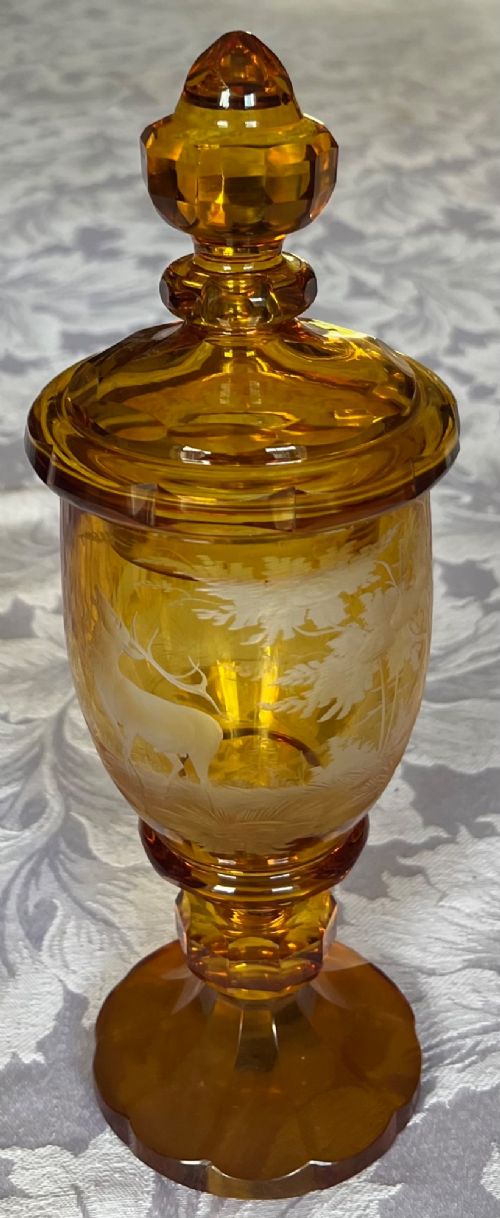
You are most likely to meet Victorian and 1900s Bohemian examples on this page, often featuring cut or engraved decoration. These pieces range from individual roemers to larger glassware services intended for wine and aperitifs.
How they were made
The makers utilised hand-blown glass, lead crystal, and coloured glass to achieve the distinct warm hues. Artisans shaped the hot metal into deep bowls and applied coiled feet or slender stems.
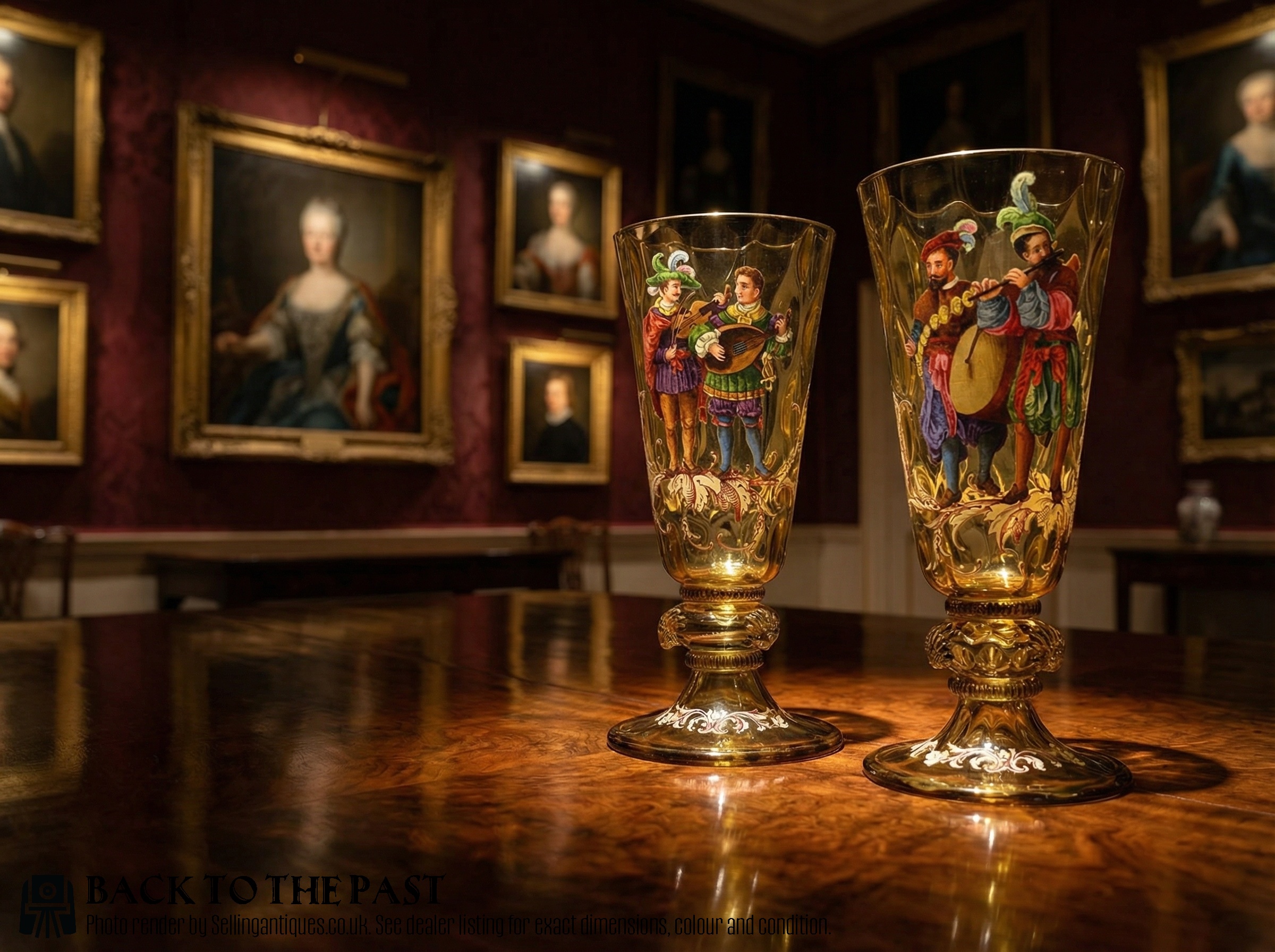
Decoration relied on skilled hand work, including intaglio engraving, surface cutting, and polychrome enamel work. Workshops in Bohemia, Germany, and Venice employed these traditional techniques to ornament the vessels.
Amber Glass Goblets Retail Price Guide 2026
Typical asking prices for amber glass goblets among the pieces listed under this phrase on Sellingantiques today, from the lower quarter to the upper quarter. They describe what is for sale here now, not the wider market.
The listings here include Victorian, Georgian, and twentieth-century items, spanning materials from lead crystal to enamelled glass.
What varies in quality
Quality rests upon the depth of the amber colour and the crispness of the wheel-cut or engraved detailing. Finer examples show precise motifs, such as figurative enamel work or intricate animal decoration, executed with complete control.
The weight and clarity of the lead crystal or hand-blown metal set superior pieces apart from simpler wares. Integrity of form, from the balanced proportions of the stem to the stability of the foot, defines the better specimens.
The Amber Glass Goblets Glossary
- Roemer
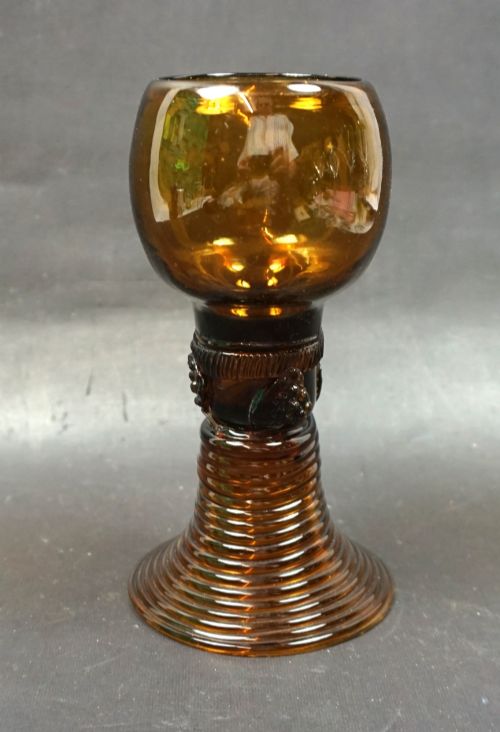
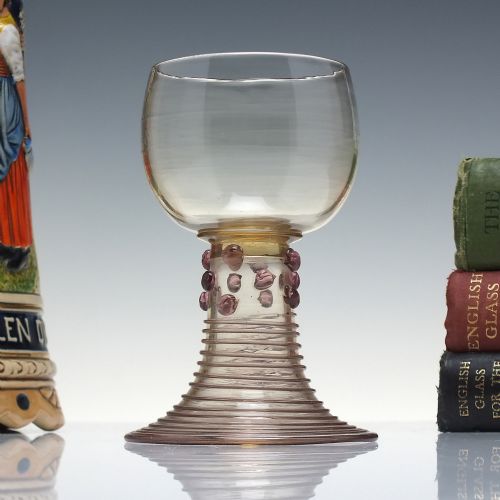
- A traditional Germanic wine glass featuring a wide bowl and a decorative coiled foot. This form commonly appears in amber and green glass.
- Intaglio
- A technique where the design is carved into the surface of the glass rather than raised. Artisans utilise small wheels to create detailed sunken patterns.
- Lead crystal
- Glass containing metallic oxide that increases weight, brilliance, and clarity. This material allows for deeper and sharper cuts during decoration.
- Enamel
- Opaque coloured glass fused onto the surface of the vessel through firing. It permits bright figurative or ornamental scenes to be applied to the amber body.
Amber Glass Goblets: Frequently Asked Questions
What is a roemer glass?
A roemer is a historic Germanic wine glass style featuring a bulbous bowl resting on a cylindrical stem and a coiled foot. These vessels are traditionally formed in green or amber glass.
They developed for serving Rhine wines and remain popular among collectors for their robust proportions and distinctive silhouette.
How do I care for antique glass?
Wash antique amber glass goblets by hand in lukewarm water using a mild detergent. Avoid sudden temperature changes to protect the historic material.
Dry them gently with a soft lint-free cloth and store them upright on a stable surface away from direct sunlight.
Where were these glasses made?
The listings show production across various European centres, with a strong representation from Bohemia and Germany. Other pieces originate from Austrian workshops and Venetian glasshouses.
Each region brought distinct decorative traditions, such as Bohemian engraving or German roemer forms, to the amber glass medium.
Are these glasses safe to use?
Most antique glass is chemically stable and suitable for holding wine or water during special occasions. Inspect each piece to ensure there are no cracks or chips near the rim.
Gentle hand washing preserves both the surface polish and the historic enamel or cut decoration over time.