

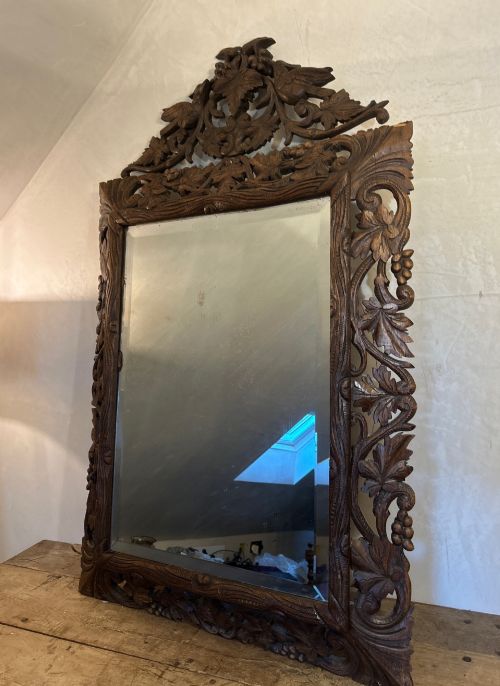
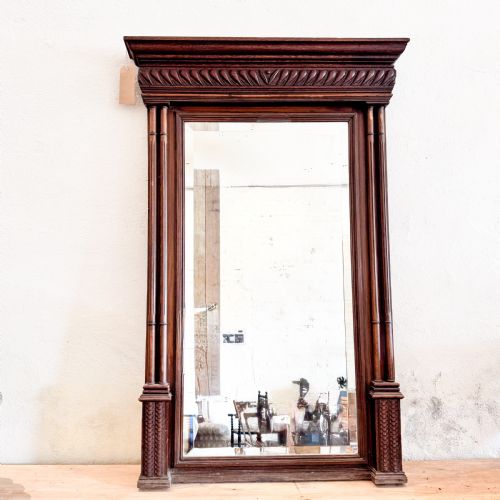


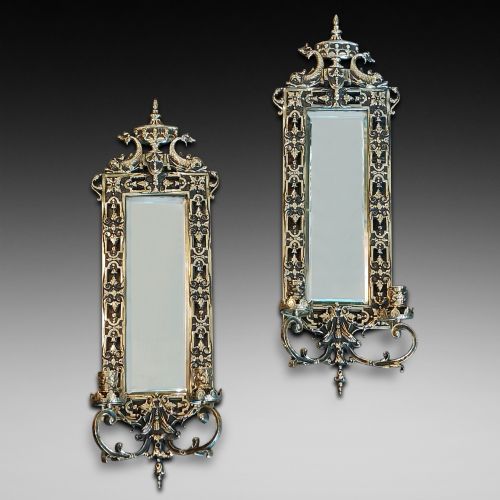
Renaissance Revival Glass
Renaissance revival glass brings theatrical historical weight to a room, combining deep historic forms with rich nineteenth-century craftsmanship.
Renaissance Revival Glass
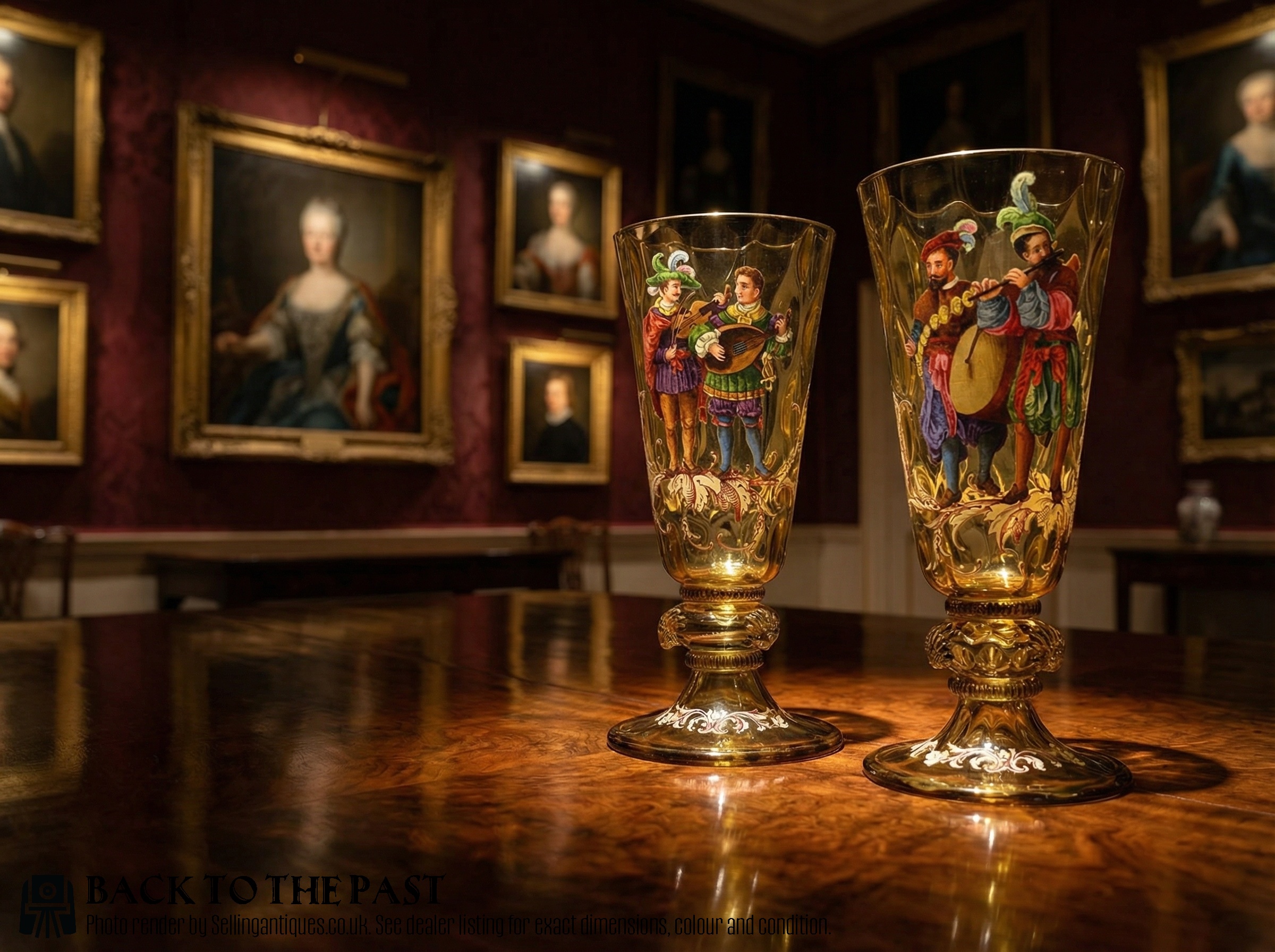
When you search for renaissance revival glass, you encounter pieces that echo sixteenth-century aesthetics through nineteenth-century hands, often taking the form of enamelled glassware and goblets. These items draw heavily on historic motifs, translating older ornamentation into Victorian decorative arts.
The selection here frequently bridges glassmaking with sturdy wooden framing, connecting fragile vessels to larger mirrors and cabinets that share the same historical vocabulary. You find items dating across the nineteenth century and into the early decades of the twentieth, reflecting a sustained appetite for revivalist design.
How they were made
The glass elements rely on traditional blowing techniques, frequently enhanced with enamelling to achieve rich surface decoration and saturated colour. Artisans combined these fragile components with robust structural frames built from oak, walnut, and brass.
Woodwork involved deep carving and panel construction, anchoring the decorative glassware and mirrors within substantial architectural surrounds. Iron hardware and brass accents provided secure mountings and functional detailing for cabinets and wall mirrors.
Renaissance Revival Glass Retail Price Guide 2026
Typical asking prices for renaissance revival glass among the pieces listed under this phrase on Sellingantiques today, from the lower quarter to the upper quarter. They describe what is for sale here now, not the wider market.
Some nineteenth-century makers evidently decided that a simple wall mirror was insufficient without the grand protection of a heraldic shield.
What varies in quality
Quality rests upon the crispness of the glass enamelling and the depth of the carved woodwork framing the pieces. Superior examples display precise brushwork and well-defined mouldings that avoid shallow or hurried detailing.
The choice of primary timber and the integration of metalwork also separate standard items from finer works. Stronger structural joints and well-preserved decorative surfaces command attention among collectors.
The Renaissance Revival Glass Glossary
- Enamelled glass
- Glass decorated with melted glass powders that form colourful, opaque designs upon the vessel surface. This technique allows for rich pictorial scenes reminiscent of Renaissance painting.
- Renaissance Revival
- A nineteenth-century design movement that reinterpreted sixteenth-century classical and northern European motifs. It appears across furniture, mirrors, and decorative objects.
- Girondelle
- A type of wall mirror featuring attached candle sconces that reflect light into the room. These pieces combine functional illumination with decorative framing.
- Secretaire bookcase
- A cabinet combining a writing drawer with a shelved bookcase section above. The form often incorporates revivalist carving and specialised panel work.
Renaissance Revival Glass: Frequently Asked Questions
What is renaissance revival glass?
These are nineteenth-century glass items, such as enamelled goblets and vessels, created in the historicist style of the Renaissance.
They reflect a period fascination with sixteenth-century aesthetics, often appearing alongside heavy carved wooden furniture and mirrors.
How do I date these pieces?
Dating relies on material combinations, stylistic markers, and recorded periods stretching across the nineteenth and early twentieth centuries.
Items often show characteristic Victorian or continental revival traits that help place them within specific decades.
How were these items used?
Many glass items served as decorative tableware or display pieces rather than everyday utensils, highlighting the owner's taste.
Paired with large wooden mirrors and cabinets, they contributed to an opulent, historically rich domestic interior.
How do I care for enamelled glass?
Enamelled surfaces require gentle cleaning with dry or barely damp cloths to protect the bonded glass powders from abrasion.
Keeping pieces away from direct sunlight preserves the vibrant colours of the decorative painting.