








Gilded Art Nouveau Glass
These pieces of gilded art nouveau glass bring together flowing organic forms and precious metallic decoration from the late nineteenth and early twentieth centuries.
Gilded Art Nouveau Glass
When you search for gilded art nouveau glass, you encounter pieces spanning the late Victorian period through the Edwardian era, including Jugendstil and French Belle Époque creations. The selection centres on decorative vessels, drinking sets, and lighting fixtures produced across Europe.
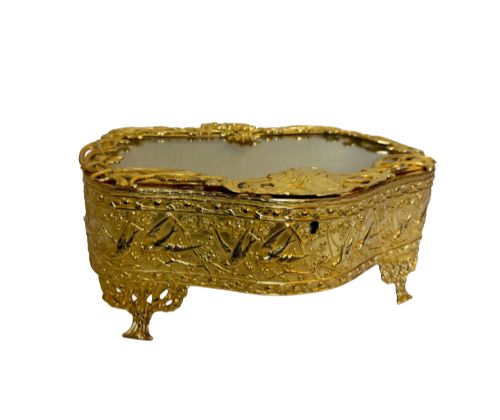
Vases, bowls, decanters, and jewellery boxes form the core of what appears here. These items frequently combine glass bodies with mounts in gilt bronze, brass, or pewter.
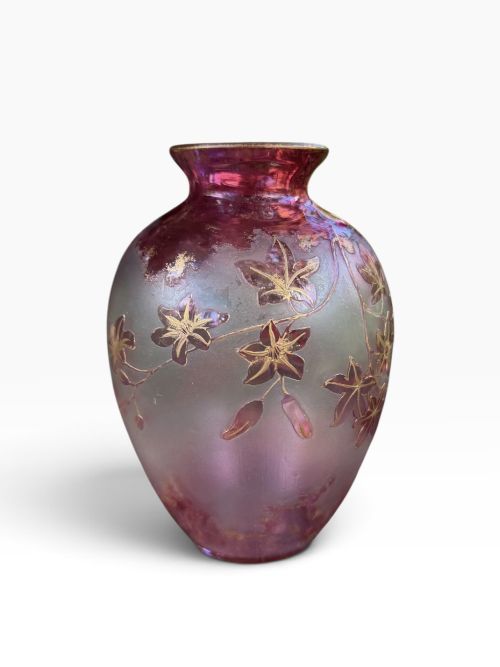
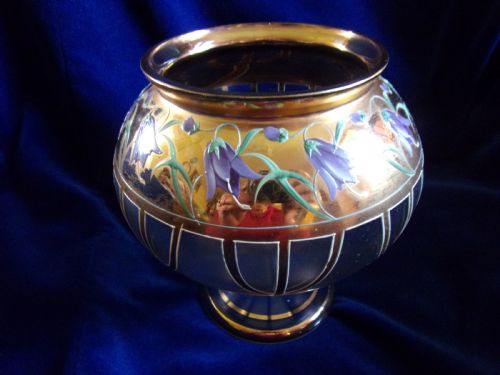
The aesthetic draws heavily on natural motifs, showcasing floral enamelling, lotus designs, and poppy flowers rendered in gold leaf or paste gilt. Continental makers predominate, alongside British examples from the Arts and Crafts movement.
How they were made
Maker's methods rely on blowing and moulding glass, utilising crystal, frosted glass, cameo glass, and vaseline glass as foundational materials. Artisans then applied surface enrichment through gold leaf, liquid gold enamelling, and paste gilt decoration.
Metalwork frames and mounts in gilt bronze, brass, and beaten copper were cast or hammered to house the glass elements securely. Enamel colours were fused to the glass surface through firing, fixing floral and foliate patterns permanently.
Techniques range from acid-etching cameo layers to hand-painting delicate enamel blossoms. The integration of metal mounts required precision engineering to fit organic glass shapes.
Gilded Art Nouveau Glass Retail Price Guide 2026
Typical asking prices for gilded art nouveau glass among the pieces listed under this phrase on Sellingantiques today, from the lower quarter to the upper quarter. They describe what is for sale here now, not the wider market.
Listings feature items from the Victorian period up to nineteen ten, incorporating glass, gold leaf, gilt bronze, and beaten copper.
What varies in quality
Quality rests on the crispness of the glass-forming and the dexterity of the hand-applied gilding and enamelling. Superior pieces display deep, multi-layered cameo carving or intricate, hand-painted enamel botanical details rather than simple stencilled motifs.
The refinement of the metal mounts dictates the overall standing of a piece. Heavier cast gilt bronze or carefully hand-beaten copper frames separate workshop masterpieces from standard commercial output.
The reputation of the maker and the clarity of any signature or factory mark elevate a piece significantly. Pieces attributed to prominent glassworks demonstrate superior raw material purity and artistic ambition.
Thereisenthal·Legras·St Louis glassworks·Moser·Salviati·Baccarat·Daum·Orivit·Adelbert Niemeyer
The Gilded Art Nouveau Glass Glossary
- Cameo glass
- Glass formed with multiple layers of different colours, then carved or acid-etched to produce a raised design. This technique requires immense skill to avoid cutting through the thin outer layer.
- Jugendstil
- The German manifestation of the Art Nouveau movement, characterised by flowing lines and stylised natural forms. It heavily influenced decorative arts across central Europe around nineteen hundred.
- Vaseline glass
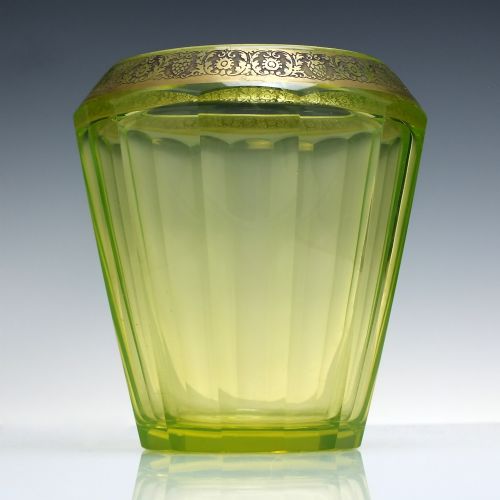
- Glass containing uranium dioxide, which produces a distinctive yellow-green colour and glows under ultraviolet light. It enjoyed immense popularity during the Victorian and Edwardian eras.
- Tazza
- An ornate cup or chalice set on a high foot and stem, often utilised as a decorative centrepiece. These items highlight the pairing of glass bowls with metal stands.
- Paste gilt
- A method of applying powdered gold mixed with a medium onto glass or ceramics before firing. This creates a raised, tactile metallic decoration that catches the light differently than flat gilding.
Gilded Art Nouveau Glass: Frequently Asked Questions
Can I use these antique glasses for drinking?
Many hock glasses, wine glasses, and tumblers remain entirely functional for occasional dining and toast use. Hand-washing is mandatory to protect the delicate gold enamel work from degrading.
Inspect the rims and bases for any hidden chips before serving guests. If the gilding shows severe thinning, reserve the glassware strictly for display.
How do I date a piece of art nouveau glass?
Examine the stylistic markers, signature formats, and manufacturing techniques present on the object. Pieces created around eighteen ninety to nineteen ten often feature distinct floral motifs and specific acid-etched signatures.
Consult known factory production records and hallmark archives for metal mounts. Comparing the glass colour palette to period catalogues helps narrow down the production decade.
Where were these glass pieces manufactured?
Production centred primarily in France, Germany, and Bohemia, which were the major hubs of art glass innovation. Notable workshops operated in regions renowned for historic glassmaking traditions.
British makers also contributed through the Arts and Crafts movement, often pairing local metalwork with imported glass bodies.
What is the difference between cameo and enamelled glass?
Cameo glass involves carving or acid-etching away outer layers of coloured glass to leave a raised, contrasting design. This is a structural glassmaking technique requiring deep relief work.
Enamelled glass involves painting powdered glass pigments onto a smooth surface and firing the vessel to fuse the colours. Gilt decoration is often added over or alongside these enamel applications.