

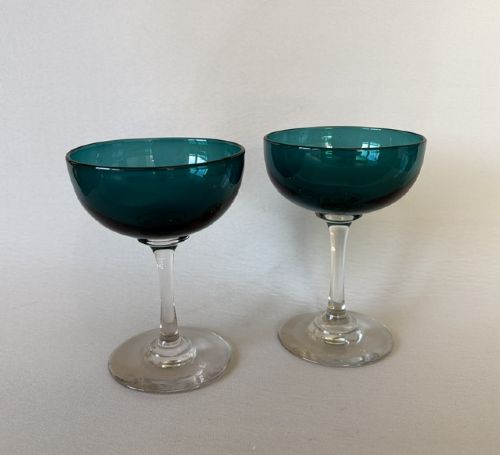




Vintage Green Stem Glassware
These vintage green stem glassware pieces bring vibrant colour and historic craftsmanship to any table, offering distinct period charm.
Vintage Green Stem Glassware
Vintage green stem glassware comprises drinking vessels and decorative items featuring characteristic green stems, spanning periods from Georgian through Victorian, Edwardian, and Art Nouveau eras. The selection on this page frequently includes wine glasses, cordial glasses, goblets, and vases originating from diverse workshops in Britain, Bohemia, and continental Europe.
Buyers encounter various shades of green, ranging from deep emerald and Bristol green to pale aqua and turquoise hues. Many examples combine the green stem with clear bowls, coloured glass bodies, or elaborate hand-enamelled and gilded decoration.
Materials and methods
These pieces utilise traditional glassmaking techniques, predominantly hand-blown glass and lead crystal, shaped into pedestals, stems, and bowls. Makers applied coloured glass compositions to achieve the distinctive green tones seen in the stems and vessels.
Decoration often involved polychrome enamel, gold leaf, and intricate hand-painting, particularly on continental European and Bohemian productions. Cut glass techniques also appear, adding facets and texture to the bowls and stems of Georgian and Victorian examples.
Vintage Green Stem Glassware Retail Price Guide 2026
Typical asking prices for vintage green stem glassware among the pieces listed under this phrase on Sellingantiques today, from the lower quarter to the upper quarter. They describe what is for sale here now, not the wider market.
Materials represented across the selection include blown glass, lead crystal, polychrome enamel, and applied gold leaf.
Assessing quality
Quality in vintage green stem glassware rests upon the fineness of the glass-blowing, the precision of the cut, and the delicacy of any enamel or gold leaf decoration. Finer pieces demonstrate thin, even walls and well-balanced proportions between the stem and the bowl.
The complexity and preservation of hand-enamelled floral motifs or gilding distinguish standard production from exceptional workshop output. Artisanal touches, such as those from Theresienthal or specific Bohemian makers, show superior execution in colour saturation and decorative detail.
Harry Powell for James Powell·Theresienthal·Frits Hechert
The Vintage Green Stem Glassware Glossary
- Roemer
- A traditional Germanic drinking vessel featuring a large spherical bowl resting on a cylindrical stem decorated with applied prunts. These often appear in pale green glass with enamel work.
- Hock glass
- A tall wine glass traditionally used for German white wines, frequently characterised by a coloured glass stem and bowl. They often showcase elaborate enamel or etched decoration.
- Cordials
- Small glasses designed for after-dinner liqueurs, typically featuring slender stems and compact bowls. Sets often survive in matched groupings.
- Enamel
- Opaque glass paste applied to the surface of the vessel and fired to create colourful decorative patterns. Polychrome versions use multiple colours for floral or geometric designs.
- Lead glass
- Glass containing lead oxide, offering greater weight, brilliance, and clarity than standard soda-lime glass. It allows for sharper cutting and finer detail.
Vintage Green Stem Glassware: Frequently Asked Questions
How do I clean antique green glassware?
Wash these pieces by hand using lukewarm water and mild soap, avoiding harsh abrasives or dishwashers that can damage delicate enamel and gold leaf.
Dry them immediately with a soft lint-free cloth to prevent water spots and protect the historic glass surfaces.
Can I use these glasses for daily dining?
While sturdy enough for occasional use, older glasses require careful handling due to the fragile nature of hand-blown stems and historical enamel decoration.
Hand-washing and gentle storage ensure these delicate items remain protected during everyday or special occasion use.
How can I date green stem glassware?
Dating relies on observing stylistic markers such as Victorian proportions, Edwardian forms, or specific Art Nouveau and Jugendstil motifs found in the decoration.
Techniques like hand-cutting, pontil marks on the base, and specific enamel styles also provide clues to the manufacturing period.
What is a roemer glass?
A roemer is a historical wine goblet style originating in northern Europe, typically formed from green forest glass with a wide bowl and a stud-decorated stem.
They were traditionally used for drinking Rhine wines and often feature detailed polychrome enamel painting on the bowl.