

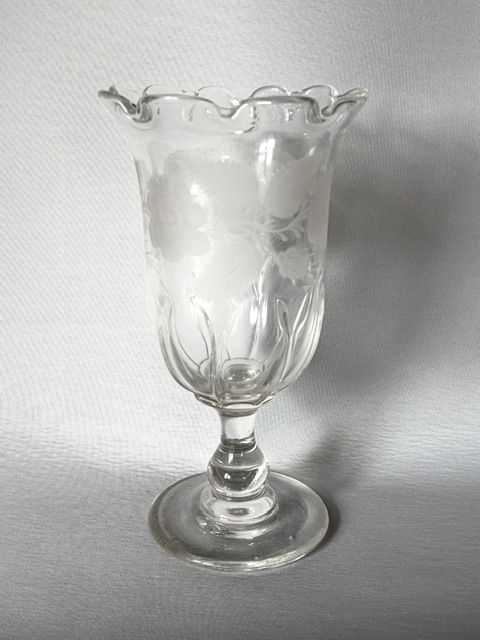



Antique Floral Glass Goblet
These antique floral glass goblet pieces combine delicate etched or enamelled botanical motifs with traditional vessel forms, bringing tactile history and period character to any table.
Antique Floral Glass Goblet
An antique floral glass goblet represents a distinct category of drinking vessels and glassware, spanning eras from the Victorian period through to the early twentieth century. When searching for an antique floral glass goblet, collectors encounter various forms including wine glasses, hock glasses, cordial glasses, rummers, celery vases, and vases.
The pieces appearing on this page originate predominantly from the Victorian era and the years around nineteen hundred, encompassing styles such as Victorian, Art Nouveau, Jugendstil, and Victorian Bohemian. Most items showcase floral decorative themes executed through etching, cutting, or enamel work on clear glass, crystal, and lead crystal.
How they were made
Makers utilised clear glass, crystal, and lead crystal as the foundational material for these drinking vessels, shaping them into various functional forms. Artisans then applied intricate surface decoration using techniques such as wheel-etching, glass-cutting, and hand-enamelling.
Certain vessels received additional ornamental detail through the application of gold leaf alongside coloured enamel floral motifs, highlighting the integration of traditional glassblowing and decorative arts.
Antique Floral Glass Goblet Retail Price Guide 2026
Typical asking prices for floral glass goblet among the pieces listed under this phrase on Sellingantiques today, from the lower quarter to the upper quarter. They describe what is for sale here now, not the wider market.
Harlequin sets bring mismatched Victorian drinking companions together for a cheerful, colourful table.
What varies in quality
The standard of an antique floral glass goblet depends largely on the precision of the glass-cutting and the refinement of the etched or enamelled floral design. Crispness in the wheel-etched lines and delicate control in hand-enamelled botanical details distinguish finer examples from simpler production.
Material choice also dictates quality, with heavy lead crystal and clear crystal providing superior brilliance and weight compared to standard glass. The presence of secondary ornamentation, such as gold leaf accents or cohesive matching sets like harlequin groups and pairs, elevates the standing of the glassware.
Thereisenthal·Theresienthal
The Antique Floral Glass Goblet Glossary
- Goblet
- A drinking vessel with a bowl, stem, and foot. These pieces are often larger than standard wine glasses and serve both functional and decorative purposes.
- Enamel
- Opaque or translucent glass powder fused to the surface through firing. This technique allows for vibrant floral ornamentation in multiple colours.
- Etched glass
- Glass decorated by applying acid or using a mechanical wheel to cut designs into the surface. This method creates frosted or textured botanical patterns.
- Lead crystal
- Glass containing a significant proportion of lead oxide, which increases weight, clarity, and the capacity to refract light. It is commonly found in finer period stemware.
- Hock glass
- A tall-stemmed wine glass traditionally used for German white wines. They frequently feature elaborate coloured bowls and decorative enamel stems.
Antique Floral Glass Goblet: Frequently Asked Questions
What is an antique floral glass goblet used for?
These vessels were originally manufactured for serving wine, cordials, hock, or celery at formal dining tables during the nineteenth and early twentieth centuries.
Today, collectors utilise them for special dining occasions, decorative display, or as part of a curated table setting featuring period glassware.
How do I date an antique goblet?
Dating relies on examining the manufacturing techniques, material weight, and stylistic indicators such as Victorian etching or Art Nouveau enamel patterns.
Maker marks, where present, and documented design periods also help establish the approximate decade of production.
Are these goblets safe for drinking?
Most period glass remains suitable for beverages provided it is washed by hand and inspected for structural stability.
Pieces featuring heavy gold leaf or certain enamel formulations benefit from careful handling to preserve the surface decoration.