
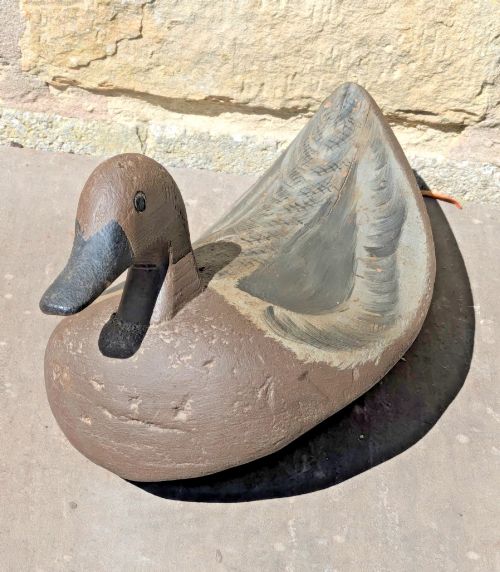
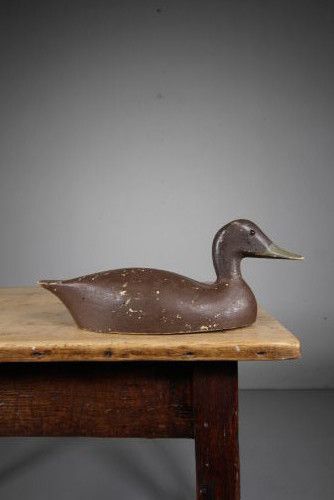
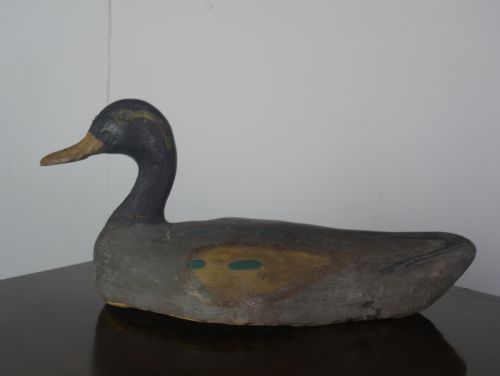


Hand Painted Duck Decoy
These hand painted duck decoy carvings bring tactile English country folk art into modern interiors.
Hand Painted Duck Decoy
A hand painted duck decoy represents working sporting items from the nineteenth century, Edwardian era and early twentieth century. When exploring this selection, buyers frequently encounter wooden sculptures shaped as ducks or loons.
The objects stem from English country traditions, taking the form of single birds or small groups including an American loon with her chick. These functional working pieces now serve entirely as decorative sculptures within homes.
Most examples date from the 19th Century, 1900, 1920, 1930 and the Edwardian period. They reflect utilitarian origins transformed over time into appealing folk art displays.
Materials and construction
Maker construction relies heavily on carved wood and timber shaped to mimic waterfowl. Artisans shaped these blocks manually before applying surface pigments.
Paint finishes define the exterior appearance, while glass appears alongside carved wood in certain configurations. The combination of timber and applied colour creates the characteristic folk art texture.
One remarkably protective parent decoy even brings its own wooden chick along for the swim.
Judging quality in decoys
Quality rests upon the expressiveness of the carving and the character of the original painted surface. Smoother integration between timber shaping and pigment application distinguishes superior examples.
Proportion and stance create visual appeal, separating standard utility pieces from those with stronger sculptural presence. Age and surface wear contribute authenticity without uniform perfection.
The Hand Painted Duck Decoy Glossary
- Folk art
- Objects created by self-taught or traditional artisans outside academic fine art traditions. These pieces often serve practical functions while displaying vernacular style.
- Decoy
- A carved and painted representation of a water bird once used by hunters to attract real fowl. Today, they survive purely as decorative objects.
- Edwardian
- Pertaining to the reign of King Edward VII, spanning from 1901 to 1910. Pieces from this era often exhibit refined craftsmanship combined with traditional utility.
- Loon
- A diving water bird sometimes depicted in folk sculpture. Sculptures of loons occasionally include chicks alongside the adult form.
Hand Painted Duck Decoy: Frequently Asked Questions
What is a duck decoy?
A duck decoy is a carved wooden figure historically used by hunters to lure waterfowl on lakes and rivers. Artisans shaped timber and applied paint to mimic the appearance and posture of live birds.
Over decades, these working tools transitioned from utilitarian objects into collected folk art. Today, people display them as decorative sculptures on shelves and mantelpieces.
How old are these decoys?
The pieces span from the 19th Century through the Edwardian era up to the 1930s. Earlier examples show distinct nineteenth-century hand-carving methods.
Twentieth-century versions from the 1920s and 1930s continue these traditional woodworking techniques. Each period carries slight variations in silhouette and paint application.
Are these decoys made of wood?
Yes, construction relies on carved wood and solid timber. Artisans shaped these natural materials by hand before adding pigment layers.
Some examples also incorporate glass components alongside the primary wooden body. The combination of timber and painted surfaces creates the distinct texture of antique folk art.
How do I style a decoy?
Decoys suit rustic interiors, studies, and eclectic living spaces where natural materials take centre stage. Placing them on wooden surfaces or bookshelves highlights their sculptural qualities.
They work well singly or grouped together in sets of three. Their understated folk art aesthetic complements both traditional and contemporary room schemes.