
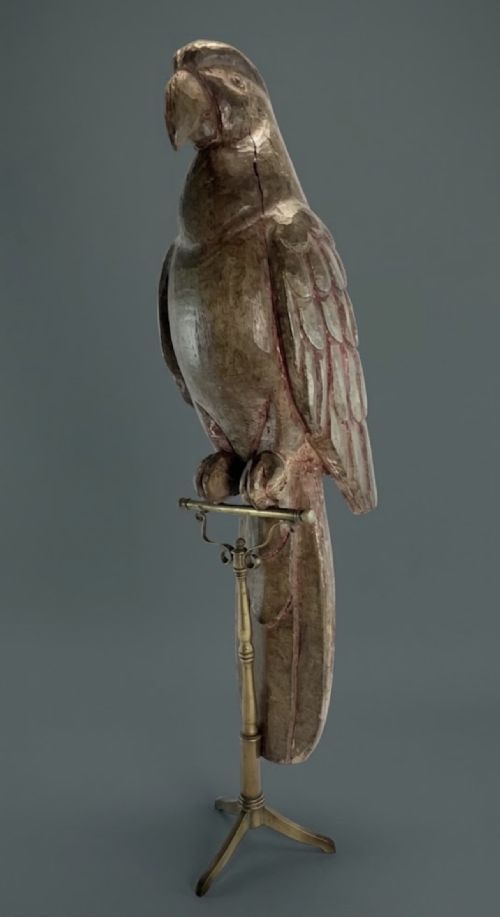
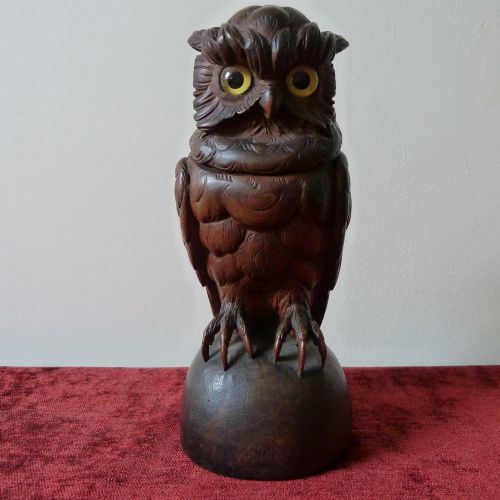
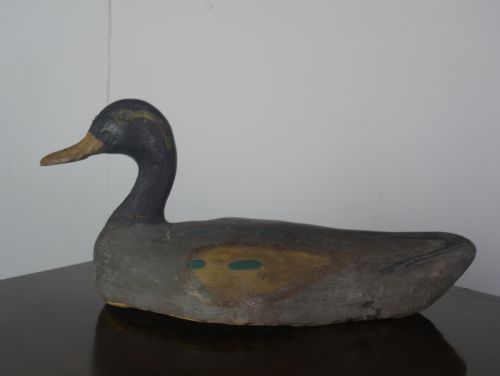


Carved Wooden Bird Ornament
These carved wooden bird ornament examples bring rustic charm to a room, ranging from folk art decoys to ornate Black Forest inkwells.
How they were made
Makers shaped these ornaments primarily from solid timber, utilising pine, linden wood, and mahogany alongside painted surfaces. Artisans carved the bodies by hand, often incorporating applied paint or gilt to enhance plumage details.
Functional elements integrate glass eyes and brass stands, combining carpentry with metalwork where utility demands. Certain regional schools employ distinct staining and finishing techniques to accentuate the natural grain of the wood.
What varies in quality
The distinction between ordinary and superior pieces rests upon anatomical proportion and sculptural depth. Master carvers capture the alert posture and feather texture of living birds with convincing realism, whereas lesser works appear rigid and flat.
Integration of secondary materials also dictates standard, such as well-fitted glass eyes and secure brass mountings. Original surface patination and surviving hand-painted decoration elevate an object above stripped or heavily restored examples.
Periods represented span from the 18th century through the Victorian, Edwardian, and early 20th century eras.
The Carved Wooden Bird Ornament Glossary
- Decoy duck
- A carved and painted floating or stationary waterfowl figure historically used by hunters to attract real birds. These objects have transitioned entirely into decorative folk art.
- Gilt-wood
- Timber coated with a thin layer of gold leaf or metallic powder to simulate solid gold. This technique adds a reflective sheen to decorative swans and architectural carvings.
- Sancai glaze
- A lead-based ceramic glazing technique producing amber, green, and cream colours. It appears on oriental pottery bird figures.
Carved Wooden Bird Ornament: Frequently Asked Questions
What is a decoy duck?
A decoy duck is a wooden carving historically placed on water or shorelines to lure wild waterfowl within shooting range. Today, collectors value them as folk art.
They display weathering, lead weights, and hand-painted surfaces that tell the story of their working past.
Are Black Forest carvings antique?
Black Forest carvings date primarily from the nineteenth and early twentieth centuries, originating in central Europe. They are renowned for deep, expressive animal sculptures.
These pieces utilise linden wood and walnut to create realistic owls, bears, and eagles.
How do I display bird carvings?
Wooden bird ornaments suit bookshelves, mantelpieces, and side tables where their silhouettes can be appreciated. Pair them with natural materials and rustic interiors.
Keep them away from direct sunlight and excessive heat to protect the wood and painted surfaces.
How old are these carvings?
The pieces available range from the late eighteenth century through the early twentieth century, spanning Georgian, Victorian, and Edwardian periods. Each era brings distinct carving styles.
Tool marks, wood shrinkage, and wear patterns help establish the age of individual items.