




Hand Painted Chinese Chest
A hand painted chinese chest brings rich pigment, carved stands and traditional motifs directly into your interior.
Hand Painted Chinese Chest
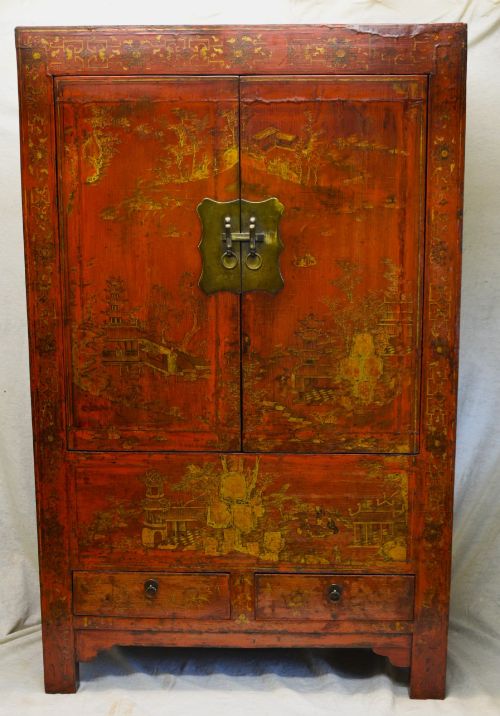
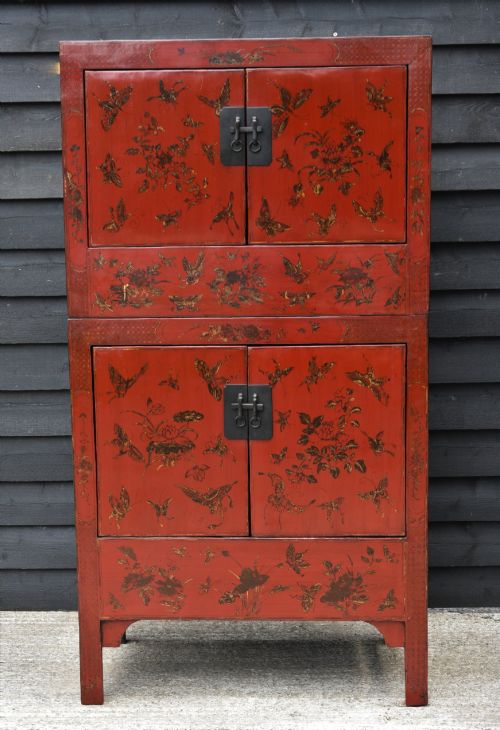
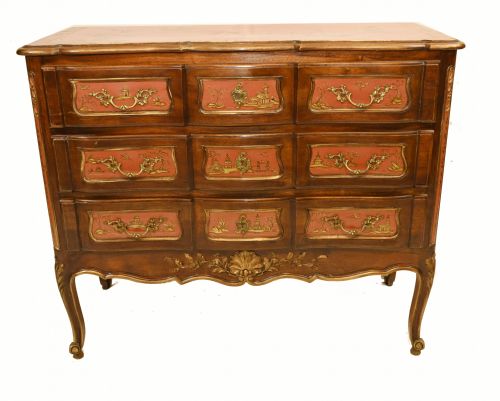
When you search for a hand painted chinese chest, you are looking at practical storage pieces finished with elaborate pictorial scenes, traditional motifs and vibrant pigments. These items serve as focal points in a room while offering deep compartments or drawer space.
On this page, you are most likely to meet pieces originating from the nineteenth century up to the nineteen-thirties. The selection spans straightforward trunks, side cabinets, commodes and cocktail cabinets.
Forms vary from low centre chests with multiple drawers to tall cabinets mounted on carved stands. Styles draw heavily on Chinoiserie and Chinese Export traditions, often finished in black or red lacquer.
How they were made
Joiners built the foundational structure using timbers such as camphor and general wood, often mounting them on carved stands. Camphor wood was particularly prized for its aromatic qualities and natural resistance to pests.
Surface decoration relies on layers of lacquer applied to wood or leather, building a deep sheen. Artisans then applied gold leaf, gilt details and hand-painted pigments to render intricate figurative and floral scenes.
Hardware played both a functional and decorative role, incorporating brass plates, hinges and corner brackets to reinforce the joints and protect the painted edges.
Hand Painted Chinese Chest Retail Price Guide 2026
Typical asking prices for hand painted chinese chest among the pieces listed under this phrase on Sellingantiques today, from the lower quarter to the upper quarter. They describe what is for sale here now, not the wider market.
Listings span the nineteenth century up to nineteen-thirty, incorporating camphor, brass, leather, and lacquered wood.
What varies in quality
The sophistication of the hand-painted artistry dictates much of the distinction between pieces, with finer examples displaying precise brushwork, layered depth in the pigment and intricate detailing in the gold leaf. Simpler interpretations rely on bolder, more uniform application.
The integrity of the lacquered surface and the condition of the underlying wood structure separate exceptional survivals from heavily restored items. Superior examples retain their original stands, brass hardware and crisp pictorial clarity.
The Hand Painted Chinese Chest Glossary
- Chinoiserie
- European decorative style reflecting Chinese artistic influences, frequently seen in the painted motifs of these cabinets and trunks. It emerged strongly during the seventeenth and eighteenth centuries and persisted well into the twentieth.
- Camphor
- A fragrant wood native to Asia, frequently utilised for storage chests due to its insect-repellent properties. It provides a stable and aromatic interior for textiles and valuables.
- Lacquer
- A durable resin finish applied in multiple coats and polished to a smooth sheen, forming the base for painted decoration. Black and red lacquer are predominant in this category.
- Gilt
- A thin layer of gold or gold-like material applied to surfaces to highlight carved details or pictorial borders. It adds a luminous contrast against dark lacquer backgrounds.
- China Trade
- Goods produced specifically for export to Western markets during the eighteenth and nineteenth centuries, often blending Eastern craftsmanship with Western furniture forms.
Hand Painted Chinese Chest: Frequently Asked Questions
What is a hand painted chinese chest used for?
These chests provide generous enclosed storage for blankets, clothing or household items while serving as decorative surface furniture in living spaces or hallways.
Their striking painted exteriors allow them to function visually as coffee tables, sideboards or statement console pieces.
How do I care for lacquered wood?
Keep lacquered surfaces away from direct sunlight and extreme temperature fluctuations to prevent the finish from drying out or cracking.
Dust gently with a soft, dry cloth and avoid harsh chemical cleaners that can strip the painted pigments and gold leaf.
How do I date a Chinese chest?
Dating relies on examining the construction methods, timber types, hardware styles and the specific wear patterns within the lacquer layers.
Nineteenth-century examples often display hand-forged brass fittings and denser hardwoods, whereas early twentieth-century pieces incorporate different structural joins and regional export characteristics.
Where should I place a cabinet?
Position these cabinets in rooms where their painted panels and gold leaf details can catch ambient light without being exposed to moisture or heavy heat sources.
They sit well against plain walls that allow the intricate Chinoiserie scenes and black or red lacquer colours to stand out.