





Chinese Lacquered Trunk
A chinese lacquered trunk brings rich texture and enduring storage to a room through centuries of traditional craftsmanship.
Chinese Lacquered Trunk
When you search for a chinese lacquered trunk, you encounter a robust storage piece designed to protect precious items. These containers range from blanket boxes and coffers to heavy shipping chests and smaller jewellery cases.
The versions most commonly met on this page date from the eighteenth century through to the early twentieth century. They combine utility with decorative finishes suited to both traditional and modern interiors.
Makers utilised various timbers such as camphor wood and general timber beneath the primary surface layers. Many examples display influences of Chinese export trade and regional workshop traditions.
How they were made
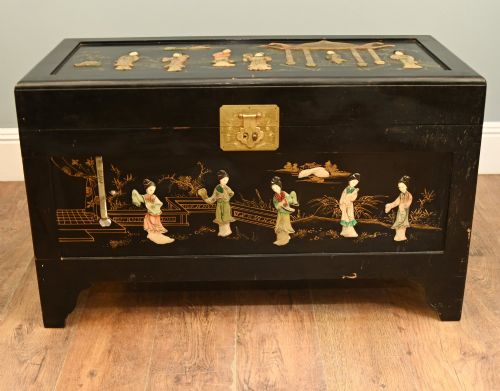
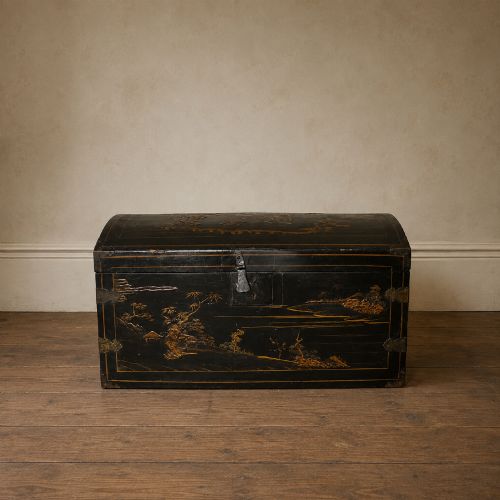
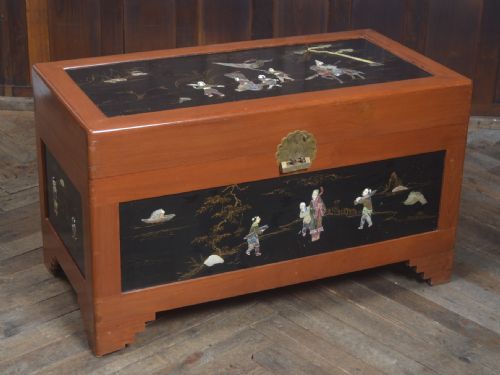
Artisans applied multiple coats of lacquer over wood bases to create a durable, glossy exterior that resists moisture and wear. Pigment and gilt decoration often embellished the surfaces, depicting floral Chinoiserie and traditional motifs.
Hardware elements like brass and iron provided structural reinforcement and functional locking mechanisms for travel. Camphor wood interiors offered natural aromatic properties to protect stored textiles from insects.
Chinese Lacquered Trunk Retail Price Guide 2026
Typical asking prices for chinese lacquered trunk among the pieces listed under this phrase on Sellingantiques today, from the lower quarter to the upper quarter. They describe what is for sale here now, not the wider market.
Listings feature pieces spanning the eighteenth, nineteenth, and early twentieth centuries, utilising materials including lacquer, camphor wood, brass, and pigment.
What varies in quality
The refinement of the surface decoration dictates much of the visual appeal, separating simple utilitarian containers from finely painted export pieces. Hand-applied gilt work and intricate pictorial scenes demand high skill from the artisan.
Structural integrity relies on the preservation of the underlying timber and the stability of the lacquer layers. Original brass or iron hardware and intact camphor wood linings enhance the desirability of a piece.
The Chinese Lacquered Trunk Glossary
- Lacquer
- A durable finish applied in successive coats to wood objects, hardening into a smooth protective surface. It provides the characteristic sheen seen on these chests.
- Chinoiserie
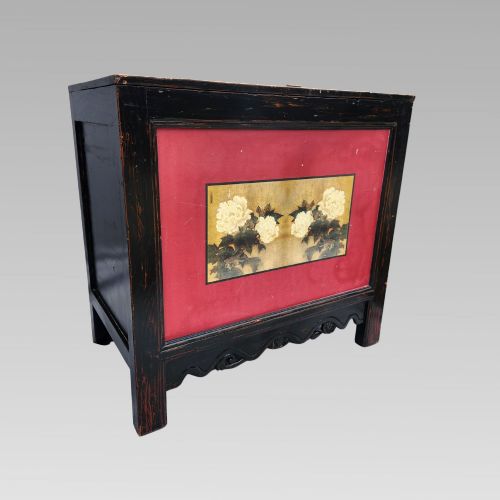
- European-influenced interpretation of traditional Chinese artistic motifs, frequently featuring figures, landscapes, and floral patterns in gilt or pigment. This style appears widely on export trunks.
- Camphor wood
- A fragrant timber utilised for interior construction to repel moths and preserve stored garments. It remains identifiable by its distinct natural aroma.
- Coffer
- A deep box or chest traditionally used for safekeeping valuables, often predating simpler blanket boxes in formal domestic settings. These items served both storage and transport functions.
- Gilt
- Application of gold leaf or powdered gold to surface decorations, adding contrast against black or red lacquer backgrounds. It highlights fine details on panels and borders.
Chinese Lacquered Trunk: Frequently Asked Questions
What were chinese lacquered trunks used for?
These trunks served primarily for storing garments, blankets, and precious valuables within the home or during travel. Their durable construction protected contents from dust, moisture, and insects.
Many examples functioned as shipping chests for long-distance transport before becoming decorative domestic furniture. Today, they continue to provide practical storage while adding historic character to living spaces.
How do I clean a lacquered surface?
Dust the surface regularly with a soft, dry cloth to prevent abrasive particle buildup. Avoid harsh chemical cleaners, commercial polishes, or excessive water.
Maintain stable indoor humidity levels to prevent the lacquer from cracking or lifting away from the timber base. Professional conservation is recommended for any significant surface damage.
Are these trunks suitable for daily use?
Many trunks remain sturdy enough to function as coffee tables, end-of-bed blanket boxes, or general living room storage. The internal capacity accommodates everyday items while keeping spaces tidy.
Care should be taken to protect the exterior finish from sharp objects, heavy liquid spills, and direct sunlight. Proper placement ensures the antique materials endure regular interaction.
How can I tell the age of a trunk?
Dating relies on examining the construction methods, fastener types, wood species, and stylistic details of the decoration. Eighteenth-century examples often display distinct regional joinery compared to later Victorian or twentieth-century pieces.
Wear patterns on the lacquer and the style of Chinoiserie painting also offer clues regarding the period of manufacture. Comparing hardware components to known manufacturing eras helps narrow down the timeframe.