
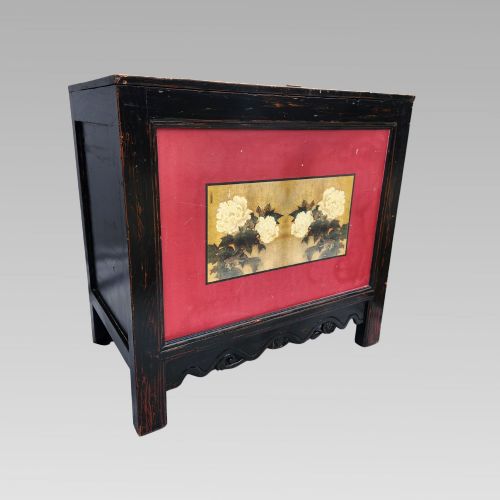


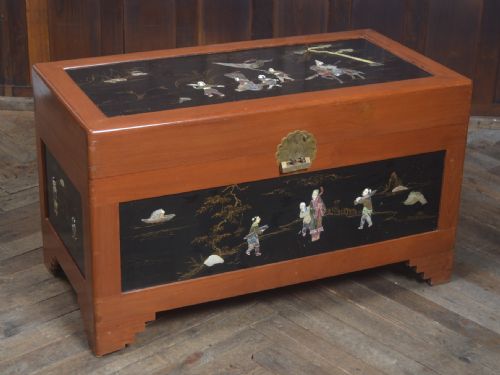


Lacquered Blanket Chest
A lacquered blanket chest brings rich surface, deep history and practical storage into a room.
Lacquered Blanket Chest
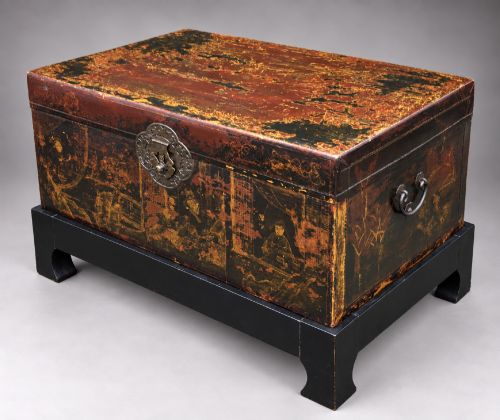
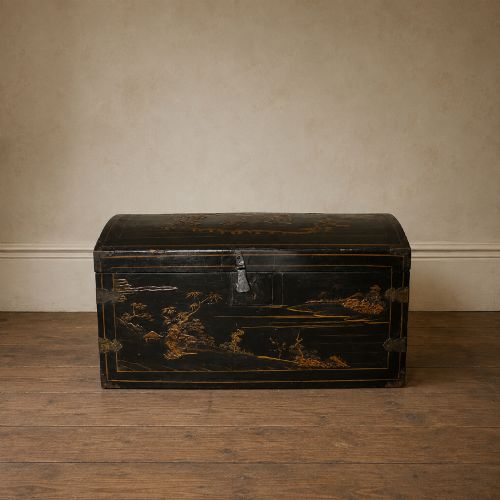
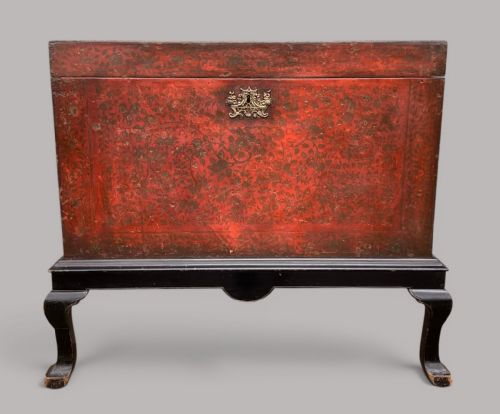
A lacquered blanket chest provides robust storage while displaying decorative surface finishes originating from varied eastern and colonial traditions. Buyers searching for a lacquered blanket chest encounter domestic storage pieces shaped as domed trunks, flat-topped boxes, and coffers fitted upon stands.
The pieces appearing here span the eighteenth, nineteenth, and early twentieth centuries, encompassing Chinese export workshops, Indian regional makers, and Japanese production. Many examples utilise camphor wood or timber as a base, overlaid with pigment, gold leaf, and protective lacquer coatings.
Chinese export items and Anglo-Indian variants predominate, alongside Chinoiserie interpretations created for western markets. Certain formats incorporate internal compartments or rest upon dedicated wooden stands for elevated placement in a room.
How they were made
Construction relies upon durable timbers such as camphor wood and pine, joined to withstand long transport and daily use. Artisans applied successive layers of natural lacquer, building a protective and glossy shell that accepts painted pigments and metallic leaf.
Camphor wood chests retain a faint, aromatic trace of their botanical origins after more than a century of service.
What varies in quality
Quality rests upon the depth and preservation of the lacquer surface, together with the crispness of the gilt or painted decoration. Pieces retaining intact gold leaf and smooth, stable lacquer finishes stand apart from those with extensive surface wear.
The structural integrity of the underlying timber and the original condition of brass mounts further distinguish superior examples. Retaining original stands or internal fittings adds considerable character and contextual integrity to the piece.
The Lacquered Blanket Chest Glossary
- Lacquer
- A durable resin finish applied in multiple layers to seal and decorate wood surfaces. It cures to a hard, glossy coat that resists moisture.
- Chinoiserie
- European artistic interpretation of Chinese and East Asian decorative styles, popular in furniture design during past centuries. This style employs motifs of landscapes, figures, and pavilions.
- Coffer
- A heavy wooden chest traditionally used for storing valuables or textiles. These pieces often feature sturdy construction and domed or flat lids.
- Gilt
- Application of gold leaf or powdered gold onto a surface to create decorative highlights. It catches ambient light against darker lacquer grounds.
- Camphor wood
- An aromatic timber frequently utilised for storage chests due to its natural insect-repellent properties. It imparts a distinct scent to stored blankets and textiles.
Lacquered Blanket Chest: Frequently Asked Questions
How do I clean a lacquered chest?
Dust the surface gently with a soft, dry microfibre cloth to prevent scratching the delicate finish. Avoid using chemical polishes, modern detergents, or excessive water.
Keep the chest away from direct sunlight and heat sources to prevent the lacquer from cracking or fading over time. Applying microcrystalline wax occasionally can help protect older finishes if handled with care.
Are these chests safe for blanket storage?
Many of these pieces utilise camphor wood, which naturally protects woolens and linens from moths and dampness. Lining the interior with acid-free tissue paper provides extra security for delicate antique textiles.
Ensure the interior is completely dry and clean before placing fabrics inside for long periods. Periodically airing out the chest maintains a fresh environment for stored items.
How do I identify Chinese export pieces?
Chinese export pieces were manufactured specifically for western markets, combining traditional eastern techniques with European furniture forms. They frequently feature black or red lacquer grounds decorated with gilt landscapes or figural court scenes.
Hardware on these items often displays distinctive brass joinery and lock plates characteristic of nineteenth-century export workshops.
What is the purpose of a chest on stand?
A chest on stand elevates the main storage compartment to a more accessible height for daily use. This configuration reduces the need to bend down when retrieving blankets or garments.
The raised design also adds architectural presence to a room, creating lighter proportions underneath the heavy storage box.