

Hallmarked Sterling Frame
A hallmarked sterling frame holds a treasured portrait behind glass, fashioned from solid silver with supporting materials like wood and velvet.
Hallmarked Sterling Frame
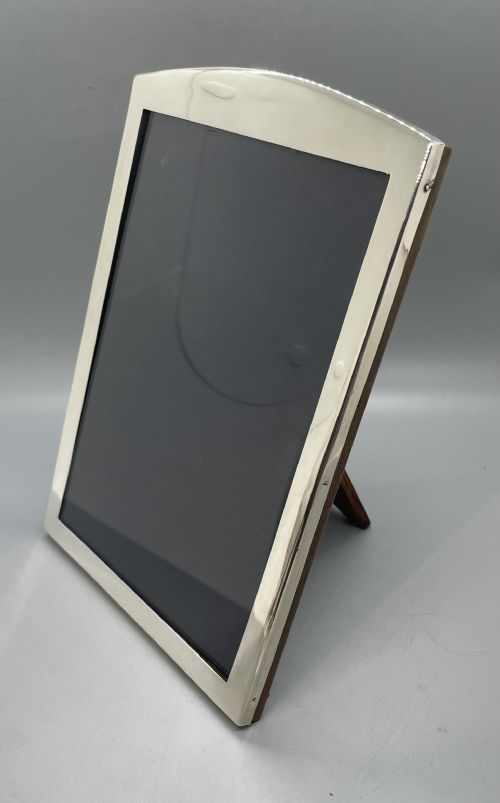
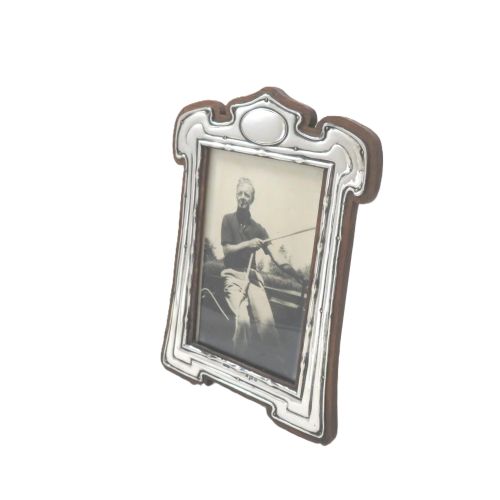
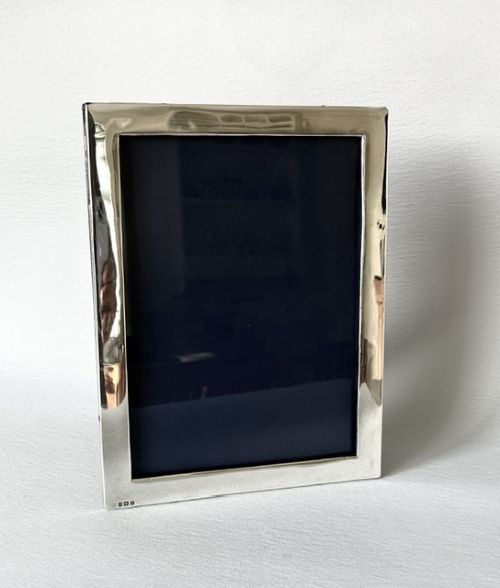
A hallmarked sterling frame is a domestic accessory designed to display portrait and landscape photographs on desks, mantelpieces and tables. The examples found here span the Victorian, Edwardian and George V periods, moving through the nineteenth and twentieth centuries.
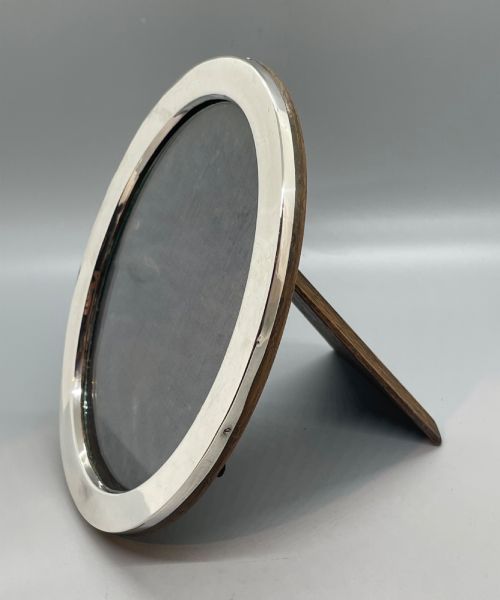
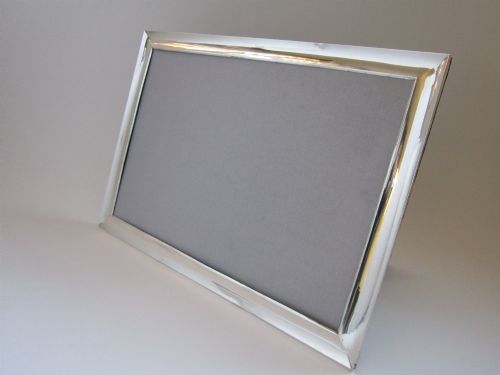
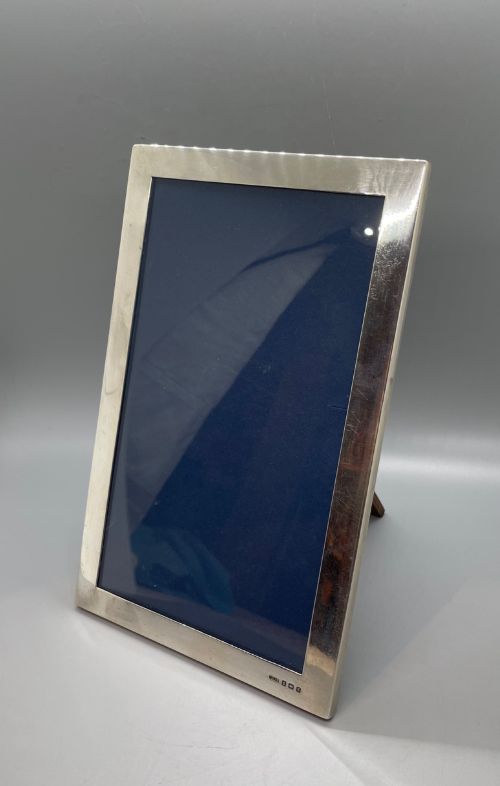
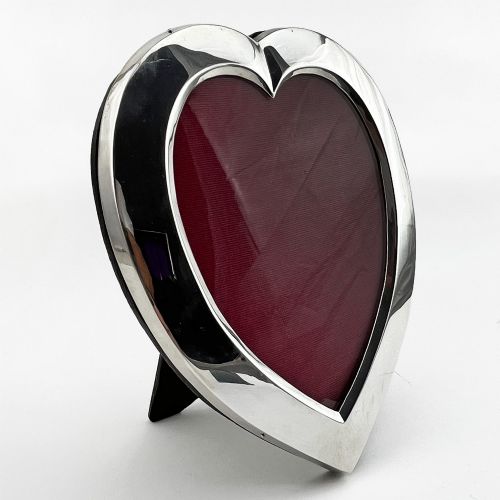
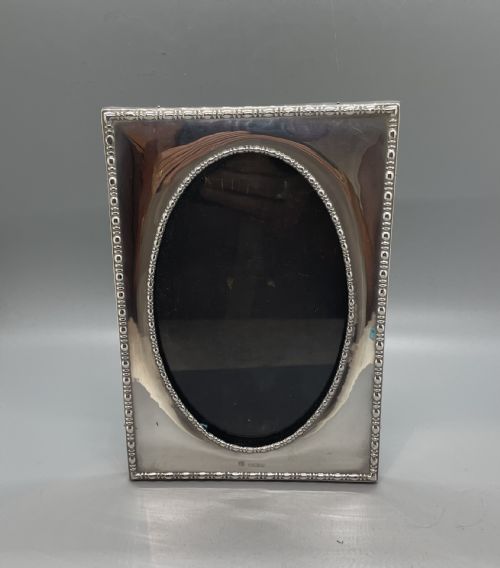
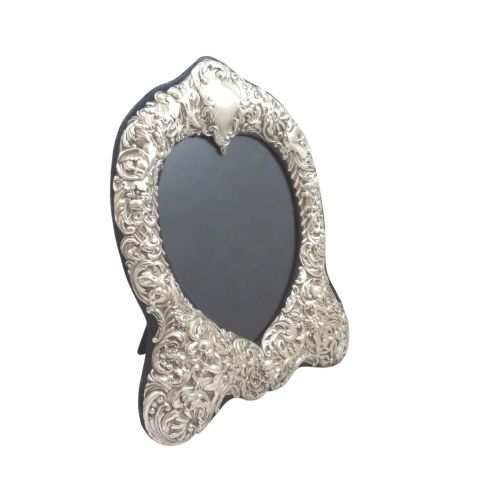
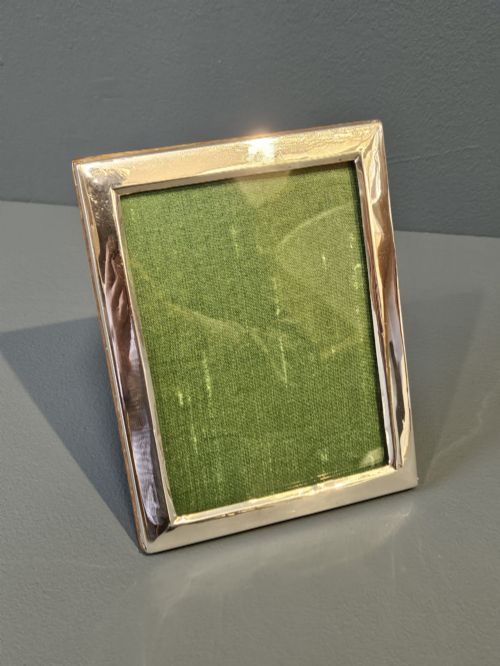
The most common form met on this page is the upright picture frame, accompanied by heart-shaped, oval and rectangular variations. Alongside standard photograph holders, related silver table items and pocket watch holders also appear.
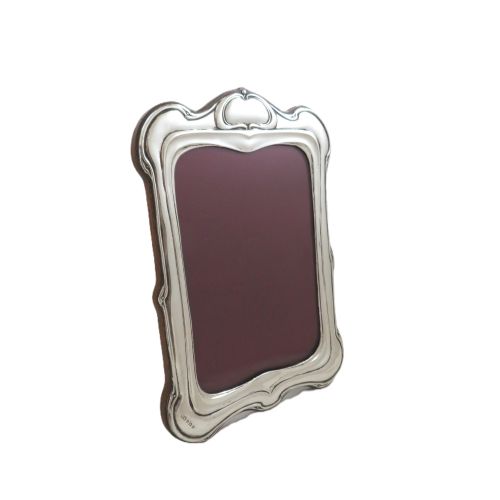
These items originate primarily from British workshops, carrying assay office marks from cities such as Birmingham, Sheffield and London. The aesthetic vocabulary shifts from ornate floral embossing to clean geometric lines as styles move from Art Nouveau to Art Deco.
How they were made
Makers constructed these objects using sterling silver sheet, which was shaped by hand or pressed with dies to create embossed borders and smooth panels. This metalwork was mounted onto wooden backings to provide structural rigidity.
Internal support structures incorporated materials like fabric, leather and velvet to line the reverse, while folding struts allowed the pieces to stand upright. Glazing protected the paper photograph inserted within the silver border.
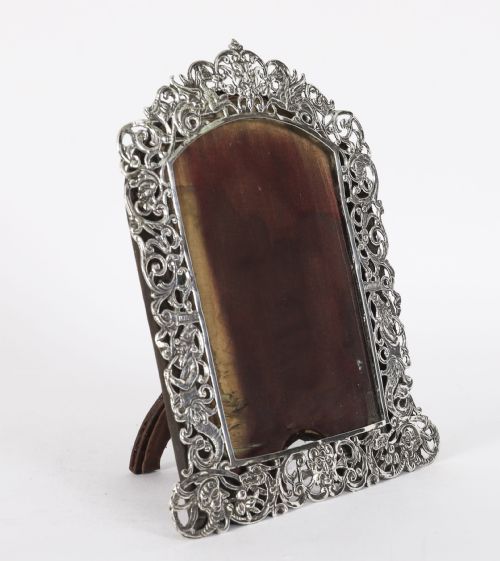
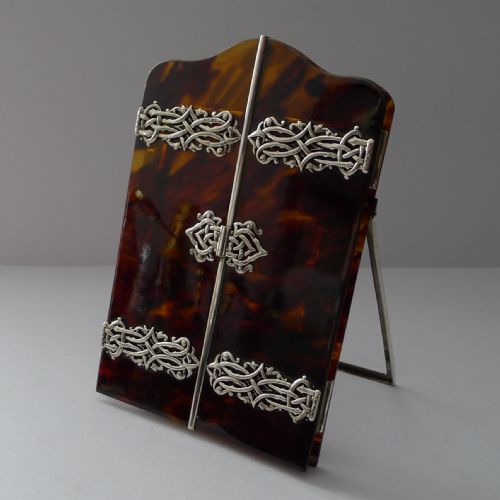
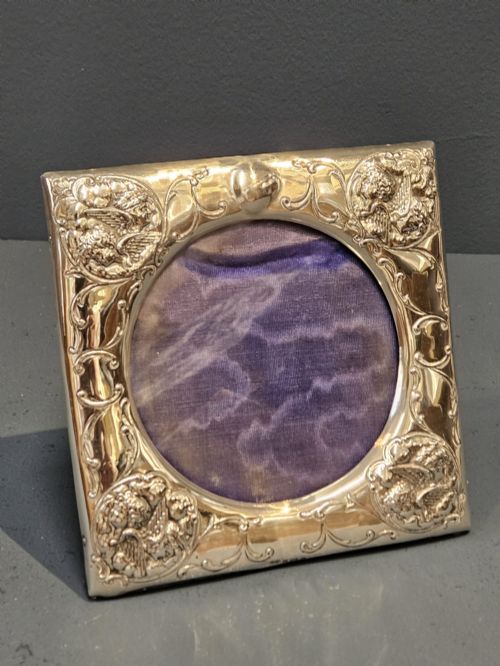
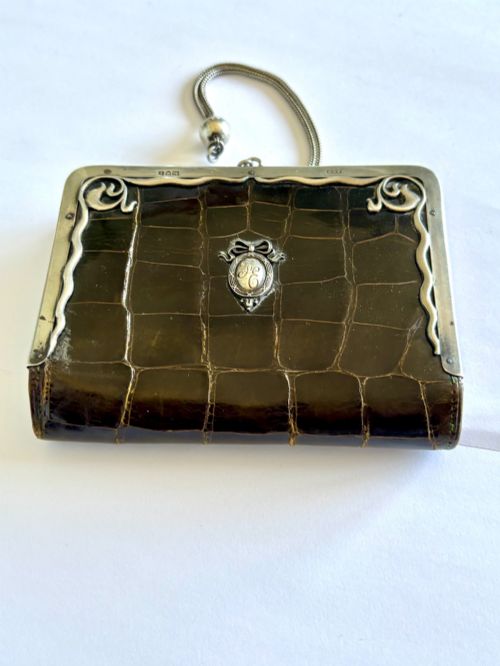
Makers applied decorative techniques including engine-turning, pierced metalwork and repoussé embossing to ornament the borders. Tortoiseshell and crocodile skin panels occasionally appeared as contrasting backing materials behind open silver filigree.
Listings feature items dated from the Victorian era through the Edwardian period and into the 1930s, incorporating wood, glass and leather elements.
What varies in quality
The distinction between tiers of production lies in the weight of the metal and the crispness of the chased or embossed detail. Heavier gauge sterling silver provides greater durability and resistance to distortion across larger formats.
The sophistication of the backing assembly and the easel mechanism indicates the original grade of manufacture. Superior examples integrate tightly fitted wooden panels with high-grade velvet linings and robust silver hinges.
Artistic execution in decorative motifs, such as hand-engraved scrollwork or finely detailed cast appliqués, separates standard commercial output from exceptional studio pieces.
Rosenthal, Jacob & Co.·William Comyns·John Collard Vickery·Mappin Bros·W.I. Broadway & Co.·William Burwash
The Hallmarked Sterling Frame Glossary
- Hallmark
- A series of official marks stamped on precious metals, indicating the purity, the maker, the assay office and the year of testing. These stamps allow collectors to date silver items accurately.
- Sterling Silver
- An alloy containing a high proportion of pure silver combined with other metals to increase strength. This standard is denoted by the lion passant mark on British silver.
- Engine-Turned
- A surface decoration created by a mechanical lathe that etches precise geometric patterns into the metal. This technique creates a textured finish that catches the light.
- Repoussé
- A metalworking method where the design is hammered into relief from the reverse side. It creates raised floral or figurative patterns on the frame borders.
- Assay Office
- An official body responsible for testing the purity of precious metal items and applying statutory hallmarks. Towns like Birmingham and Sheffield operated prominent offices.
Hallmarked Sterling Frame: Frequently Asked Questions
How do I date a silver frame?
Dating relies on the assay office letter stamp found within the hallmark cluster on the silver border. Each year corresponds to a specific letter font and shield shape used by offices in London, Birmingham or Sheffield.
Additional clues come from the overall style, whether Art Nouveau curves, Edwardian floral embossing or Art Deco geometric lines. Photograph styles inside the glass can also offer a broad chronological hint.
What materials back these frames?
Most antique silver frames utilise a wooden backing board covered in fabric, leather or velvet. This internal wood provides the necessary weight and stability to support the metal front and easel stand.
Luxury variations occasionally incorporate tortoiseshell or crocodile skin panels beneath pierced silver overlays. The easel strut is typically hinged to the backing board for tabletop display.
How should I clean silver frames?
Cleaning requires a soft cloth and a gentle silver polish formulated to remove tarnish without abrading the metal surface. Care must be taken around embossed details and glued backing materials to prevent moisture damage.
Harsh chemical dips should be avoided, particularly on pieces with velvet linings or delicate wooden structures. Regular, light dusting helps preserve the original patina built up over decades.
Can these frames be wall mounted?
Most antique frames were designed exclusively for tabletop display using an integrated folding easel strut. They rely on gravity and the internal wooden backing to remain upright on a flat surface.
Some pieces feature secondary suspension loops or rings added by makers to allow hanging. Modifying a tabletop frame for wall hanging requires careful assessment of the existing hinge structure.