
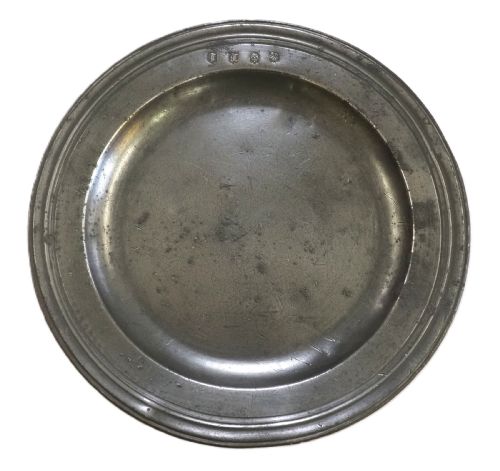


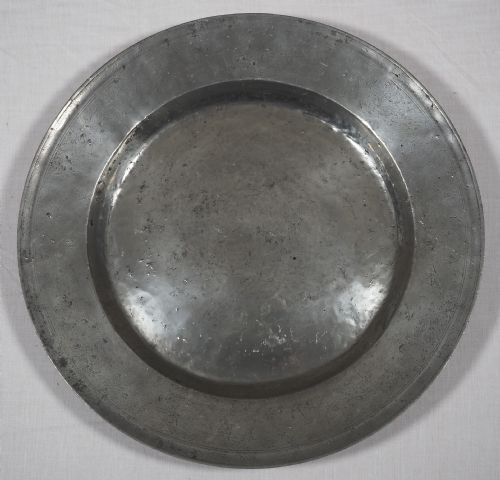


Grey Pewter Serving Dish
A grey pewter serving dish brings substantial weight and understated historic metalwork to the table.
Grey Pewter Serving Dish
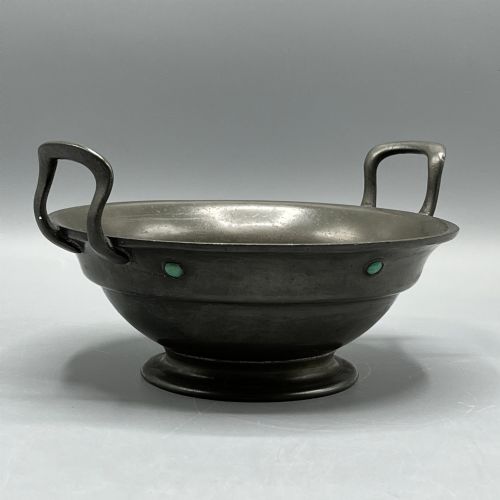
When searching for a grey pewter serving dish, you encounter chargers, platters, and broad rim dishes spanning the seventeenth and eighteenth centuries, alongside later Arts and Crafts interpretations. These pieces function as large serving platters or decorative chargers, originating predominantly from English workshops.
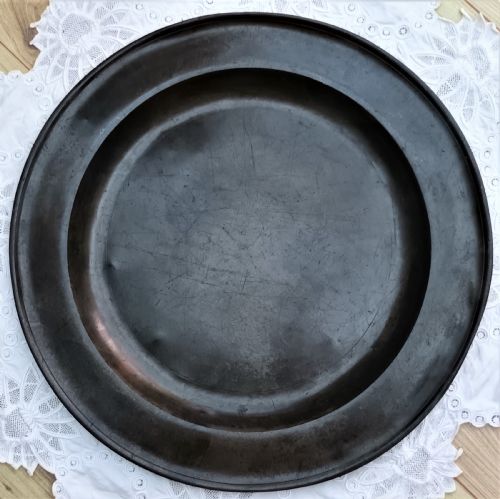
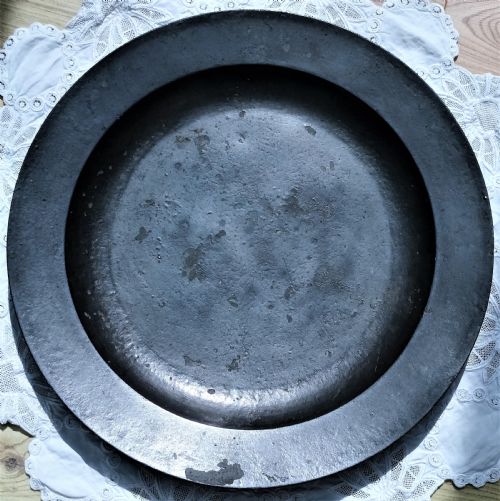
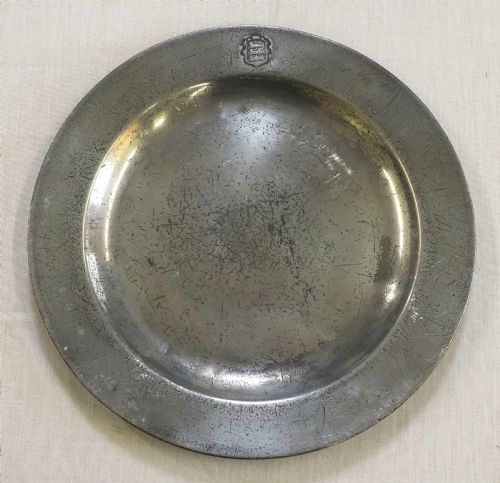
The most frequent examples on this page are eighteenth-century Georgian dishes and chargers, often featuring plain, triple reeded, or multiple reeded rims. Platters and chargers from the seventeenth century, including Charles II and William & Mary styles, also appear with broad rims and hammered surfaces.
What varies in quality
Quality rests upon the weight of the metal, the crispness of reeded rims, and the preservation of touchmarks that identify the maker. Thicker plates and broader rims command attention for their substantial presence and structural integrity.
The distinctiveness of surface texture, from smooth patinated grey metal to hand-hammered expanses, separates standard utilitarian plates from impressive large chargers. Maker attribution through clear touchmarks adds historical weight.
Some chargers span over twenty-two inches, offering enough surface area to serve a feast or host a very small turtle.
John Duncomb·Samuel Smith·Wood & Michell·John Tubb·Thomas Alderson·Thomas Haward·Thomas Powell·Edward Leapidge I·Nehemiah Cloudesley·John Barlow·S Duncomb·Liberty & Co
The Grey Pewter Serving Dish Glossary
- Charger
- A large decorative plate or serving dish, typically measuring over sixteen inches in diameter. These heavy vessels formed the centrepiece of formal dining tables before shifting to sideboard display.
- Touchmark
- A small stamp impressed into pewter by the maker or workshop to certify standard and origin. These marks allow researchers to trace individual pewterers through trade records.
- Reeded
- A rim decorated with parallel raised mouldings or bands. Triple reeded and multiple reeded variants add linear detail to plain round plates.
- Broad rim
- A wide, flat margin surrounding the central well of a dish. Seventeenth-century chargers frequently display this expansive border.
- Cabochon
- A polished, uncut gemstone or glass insert set into metalwork. These decorative elements appear on Arts and Crafts pewter pieces.
Grey Pewter Serving Dish: Frequently Asked Questions
How do I date an antique pewter dish?
Dating relies on rim styles, manufacturing techniques, and maker touchmarks stamped into the metal.
Earlier pieces from the seventeenth century often feature broad rims and hammered surfaces, while eighteenth-century examples frequently adopt reeded borders.
Were these large chargers used for food?
Historic chargers served as communal platters for meat or as underplates for courses at formal dining tables.
Over time, many transitioned into decorative wall or sideboard displays due to their impressive size.
How should I clean antique pewter?
Historic pewter requires minimal intervention to preserve the dark grey oxidation and soft patina built up over centuries.
Avoid aggressive metal polishes that strip away the surface character; simple dusting or gentle washing with mild soap suffices.
What is the difference between a plate and a charger?
Plates are smaller tableware items intended for individual dining use during meals.
Chargers are substantially larger serving dishes and platters designed to hold multiple portions or anchor the table arrangement.