


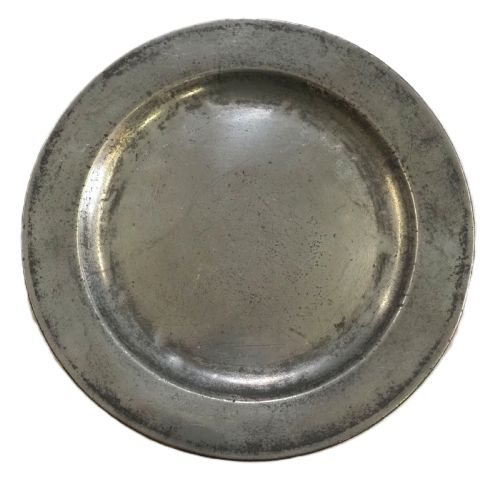
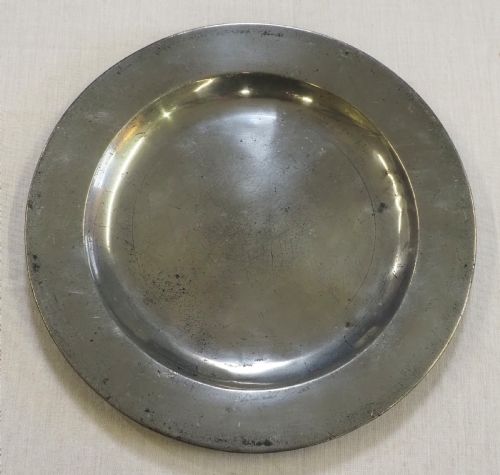


Georgian Pewter Platter
A georgian pewter platter is a sturdy table vessel built for hearty dining, bringing heavy metal substance and understated historic presence to any room.
Georgian Pewter Platter
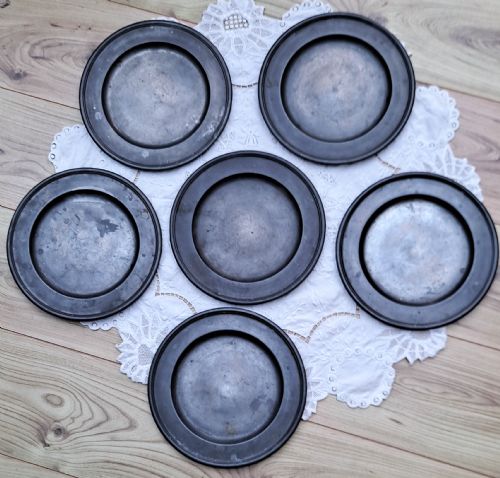
When you search for a georgian pewter platter, you encounter large circular dining vessels, dishes, and chargers spanning the eighteenth and nineteenth centuries. These pieces were cast and hammered for functional use in domestic and institutional settings, surviving from periods like 1750 and the broader Georgian era.
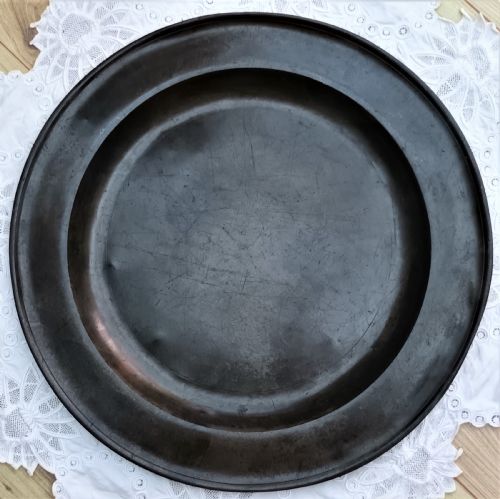
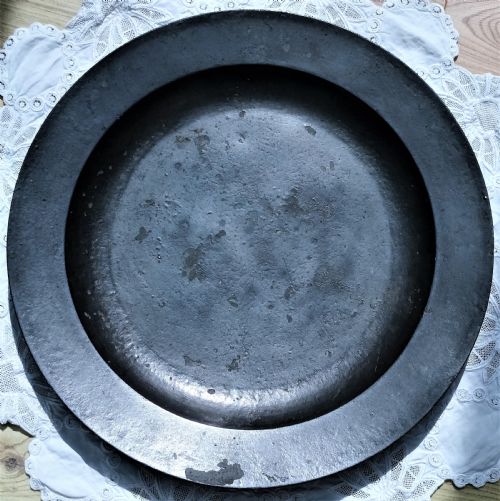
The versions most commonly met on this page include plain rim plates, large chargers measuring up to twenty-two inches, and heavy multi-reeded dishes. They originate from English workshops and bear the marks of makers working between the late seventeenth and early nineteenth centuries.
Many examples retain simple circular forms designed for heavy daily service rather than delicate display. Their substantial weight and muted metallic grey surfaces reflect the utilitarian demands of historic dining rooms.
What varies in quality
Quality in these metalwares depends on the crispness of the maker touchmarks and the original thickness of the cast metal retained over centuries of use. Heavy, substantial chargers that resist bending show superior initial craftsmanship compared to thin, heavily worn domestic plates.
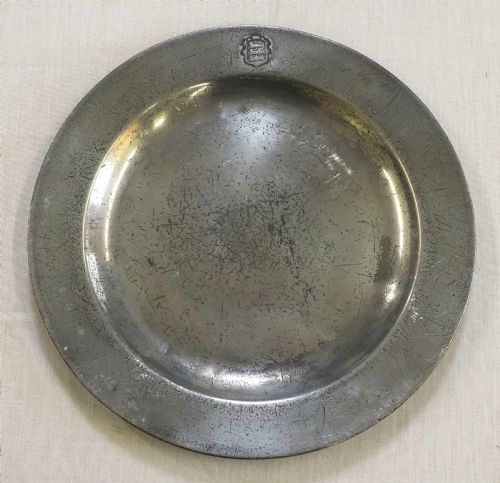
The presence of crisp armorial engravings, such as town coats of arms, elevates the historical interest of a dish. Furthermore, well-preserved tool marks and unblemished multiple reeded borders distinguish superior workshop production from standard utility wares.
John Duncomb·William Wright·Samuel Smith·T & H Compton·Richard King·Wood & Michell·Humphrey Evans II·Thomas Alderson·John Barlow·S Duncomb
The Georgian Pewter Platter Glossary
- Charger
- A large large plate or platter, traditionally used as a base plate for multiple courses or for serving shared joints of meat at the table. These substantial vessels form the heaviest category of historic dining silver and pewter.
- Touchmark
- A small stamp or maker mark struck into the pewter surface to identify the smith or workshop responsible for the casting. These marks serve as primary evidence for dating and attributing English metalwork.
- Reeded
- A decorative moulding consisting of parallel raised bands or rounded ridges running along the rim of a plate or charger. Multiple reeded borders provide both structural reinforcement and visual framing.
- Plain rim
- A simple, flat, unadorned border surrounding the central well of a plate or dish. This minimalist style prioritizes functional utility over decorative engraving.
- Armorial
- An engraved heraldic crest or coat of arms displaying the lineage or civic identity of the original owner. These additions turn utilitarian vessels into personalized historical documents.
Georgian Pewter Platter: Frequently Asked Questions
What is the difference between a plate and a charger?
Plates are smaller dining vessels intended for individual portions of food during a meal.
Chargers are significantly larger platters designed to sit beneath individual plates or to hold shared joints of meat at the centre of the table.
How do I know if my pewter is eighteenth century?
Eighteenth-century pieces typically display heavy gauge metal, simple plain or reeded rims, and specific maker touchmarks associated with documented smiths.
Analysing the style of the touchmark and any engraved coats of arms helps narrow down the active working dates of the maker.
Were these platters used for everyday dining?
These vessels were the standard tableware for prosperous households, inns, and institutions during the Georgian period.
Their heavy construction allowed them to withstand the rigours of daily service before ceramic wares largely replaced them on the dining table.
How should I clean historic pewter?
Historic pewter requires minimal intervention to preserve its aged grey surface and historic tool marks.
Gentle washing with mild soap and warm water, followed by immediate drying, is sufficient; aggressive polishing removes the desirable patina accumulated over centuries.