

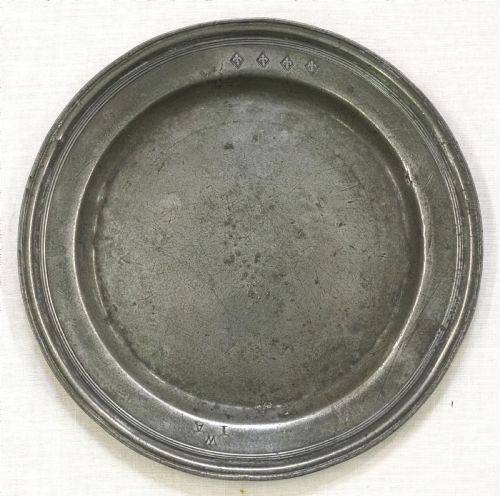
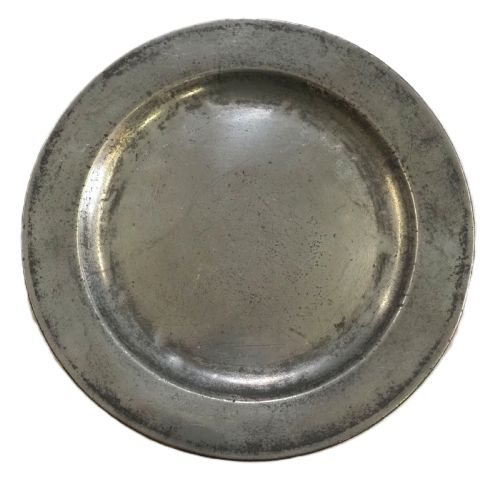


Pewter Charger Plate
A pewter charger plate delivers centuries of metalwork tradition to a dining table or wall.
Pewter Charger Plate
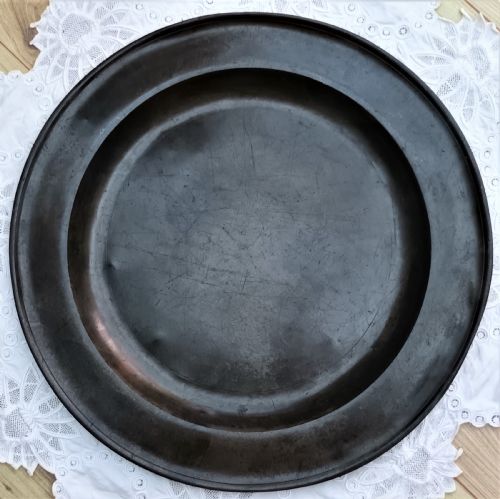
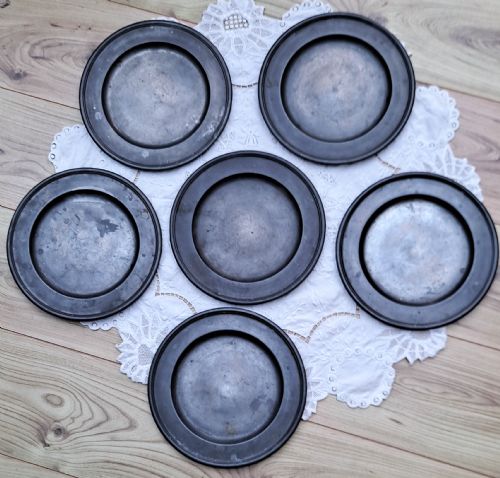
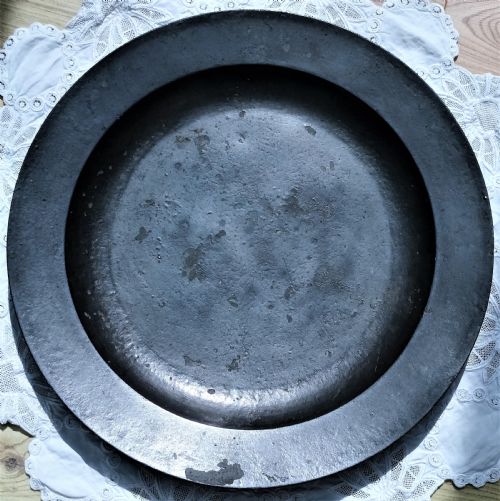
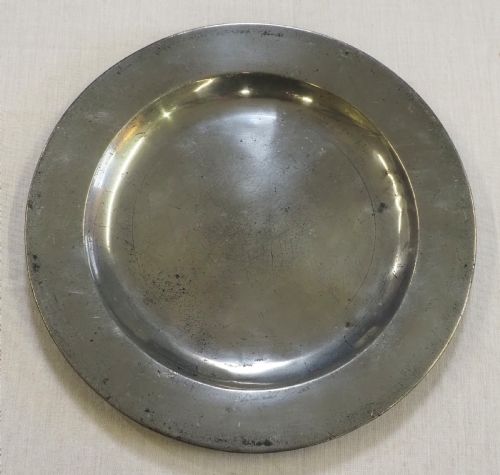
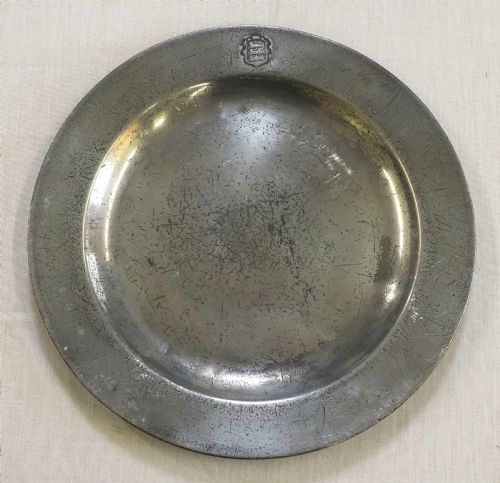
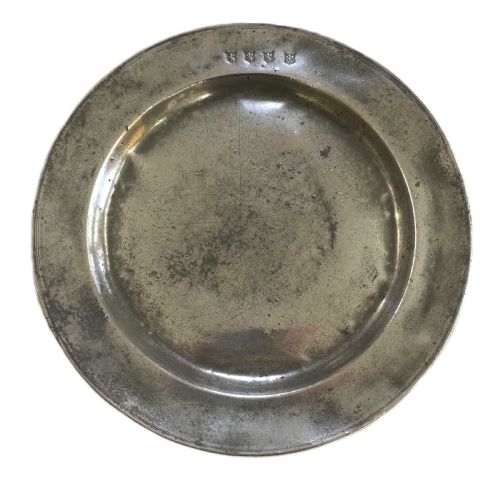
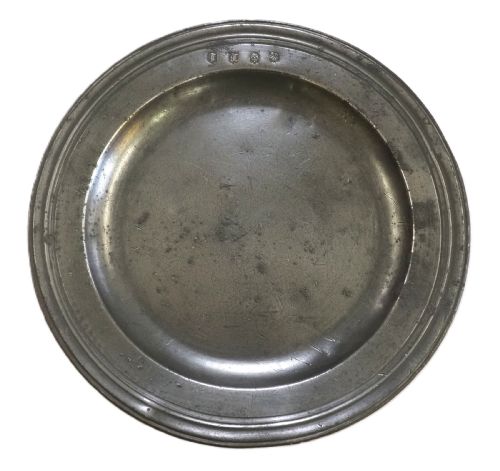
A pewter charger plate is a large decorative or service dish designed to sit beneath smaller plates or to be displayed on a wall. When searching for a pewter charger plate, collectors encounter substantial metal platters originating mainly from the seventeenth, eighteenth, and nineteenth centuries. English examples dominate the selection, spanning styles from Charles II and William & Mary through to the Georgian period.
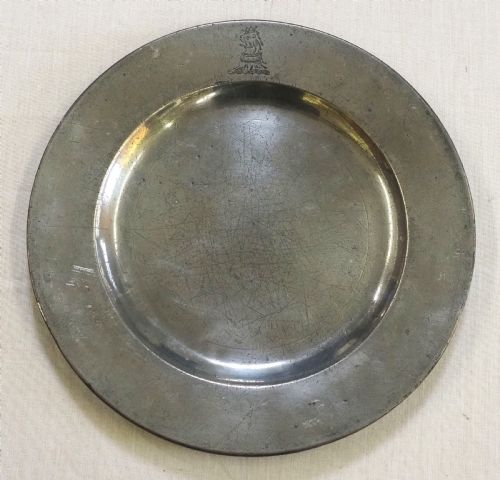
The assortment on this page ranges from broad rim chargers measuring over twenty inches to smaller plates with plain, triple reeded, or multiple reeded edges. Pieces often feature maker touches, touchmarks, or engraved family crests that connect them directly to their original workshops. Buyers also meet Arts and Crafts beaten wall plates alongside continental European wavy edge plates.
How they were made
Pewter plates and chargers are formed from an alloy primarily composed of tin, historically mixed with lead or copper to achieve the necessary rigidity and lustre. Makers cast the metal into flat blanks before hammering the surfaces by hand to shape the final depth and strengthen the structure.
Rim details such as triple reeds, multiple reeds, or incised lines are worked into the metal during finishing. Makers stamp their personal touchmarks directly into the soft alloy, leaving a permanent record of the workshop and date of production.
Pewter Charger Plate Retail Price Guide 2026
Typical asking prices for pewter charger plate among the pieces listed under this phrase on Sellingantiques today, from the lower quarter to the upper quarter. They describe what is for sale here now, not the wider market.
The listings span multiple centuries, including seventeenth-century Charles II broad rim chargers and eighteenth-century Georgian plain rim plates made entirely of pewter.
What varies in quality
Quality in these plates rests upon the crispness of the original cast, the depth of hand hammering, and the clarity of the maker touchmark. Examples featuring broad rims with extant family crests or coats of arms stand apart from standard plain rim utility pieces.
The thickness of the metal plate and the survival of original tool marks without excessive smoothing or modern polishing define the better items in this range. Pieces retaining sharp touchmarks from documented makers demonstrate superior workshop origins.
John Duncomb·William Wright·Samuel Smith·T & H Compton·James Spackman·Richard King·Wood & Michell·John Trapp II·John Tubb·Robert Moulins II·Humphrey Evans II·Thomas Alderson·Lawrence Dyer·Thomas Haward·Thomas Powell·Edward Leapidge I·Nehemiah Cloudesley·John Barlow·S Duncomb·Thomas Templeman·Yates Birch & Spooner
The Pewter Charger Plate Glossary
- Charger plate
- A large decorative or base plate used beneath service dishes or displayed upright on a wall. These substantial platters form the focal point of historic table settings.
- Touchmark
- The personal stamp or hallmark impressed by a pewterer into the metal to identify their workshop. These marks often include initials and symbols recorded in trade directories.
- Broad rim
- A wide flat border surrounding the central well of seventeenth-century chargers. This expansive surface frequently accommodates engraved family crests or armorial bearings.
- Reeded
- A rim decorated with raised parallel concentric bands or moulded lines. Triple reeded and multiple reeded variants add textural detail to the plate edge.
- Incised rim
- A border decorated with fine lines cut directly into the surface of the pewter. This technique creates subtle linear patterns distinct from raised mouldings.
Pewter Charger Plate: Frequently Asked Questions
What is a pewter charger plate used for?
These large metal platters traditionally served underneath smaller dinner plates during formal banquets or functioned as standalone display pieces on sideboards. Today they are commonly hung on walls or utilised as decorative centerpieces in traditional interiors.
Because of their substantial metal composition, they provide a distinct historic display compared to ceramic or porcelain tableware.
How do I identify the maker of a pewter plate?
Makers stamped their identifying touchmarks directly onto the surface of the pewter, usually on the rim or the rear of the plate. These marks often feature initials, trade symbols, or town names that match historical pewterer records.
Comparing these stamps to standard reference guides helps establish the workshop and the active working dates of the craftsman.
How do I date a antique pewter charger?
Dating relies on stylistic clues such as rim width, reeding patterns, and the presence of maker touchmarks. Seventeenth-century chargers typically feature very broad rims, while eighteenth-century examples frequently adopt plain or multi-reeded edges.
Engraved crests and commemorative inscriptions also provide specific historical contexts that narrow down the date of manufacture.
Can I use antique pewter for daily dining?
Historical pewter often contained varying levels of lead and other metals depending on its age and composition. Most collectors prefer to treat these pieces as decorative items rather than utilising them for active food service.
Gentle cleaning with appropriate soft cloths helps preserve the aged patina without damaging the historic metal surface.