
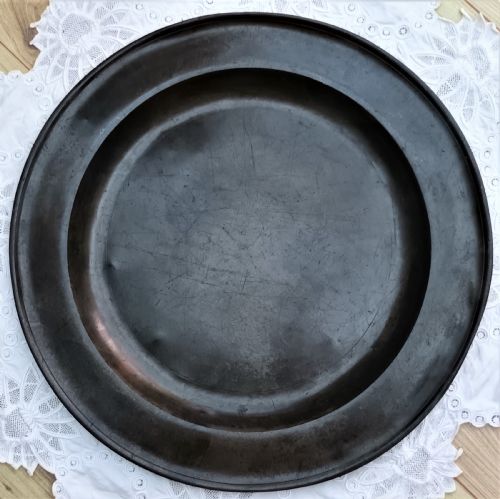
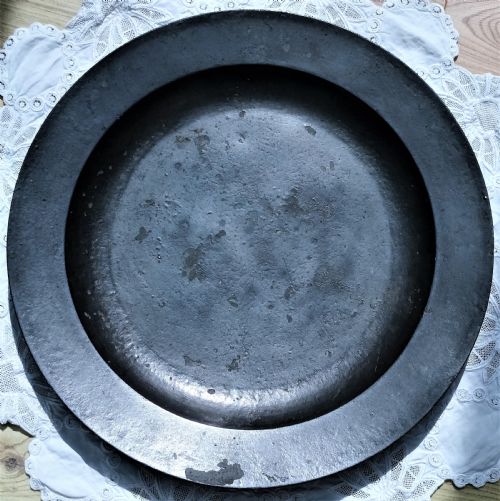

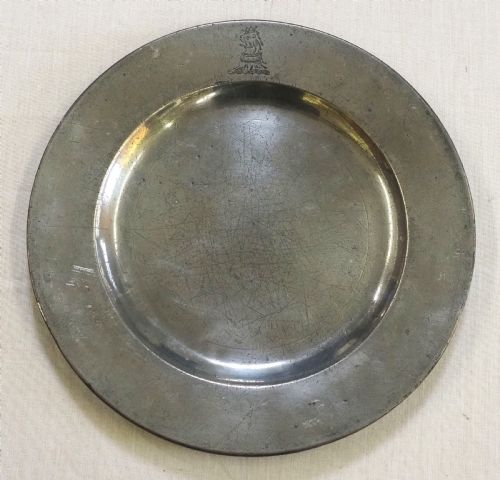
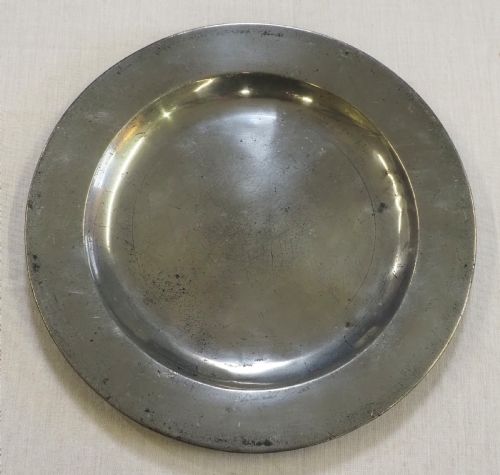


Georgian Pewter Dish
A georgian pewter dish brings heavy metal substance to the table, offering understated domestic history through its utilitarian form.
Georgian Pewter Dish
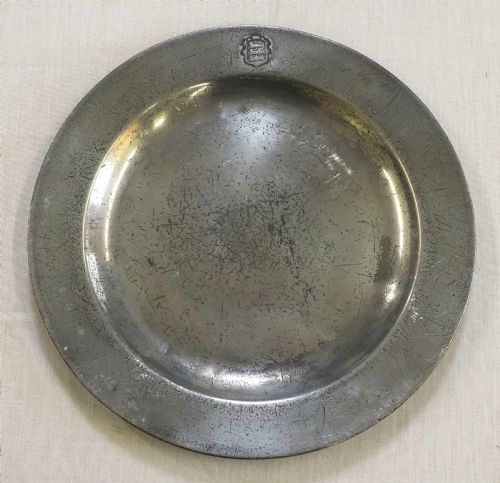
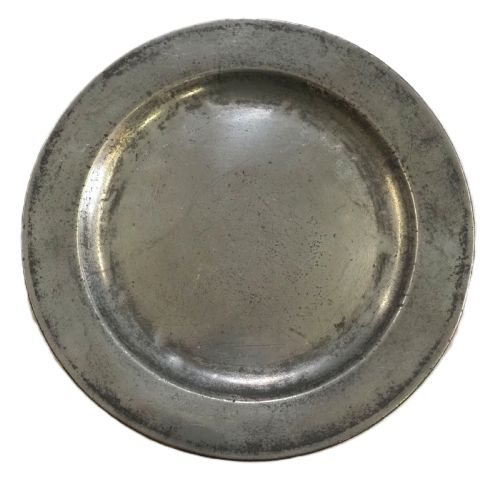
A georgian pewter dish spans flat plates, deep plates, large chargers, and wide platters intended for formal dining or daily sustenance. These vessels emerge primarily from eighteenth and nineteenth century English workshops, alongside occasional European examples.
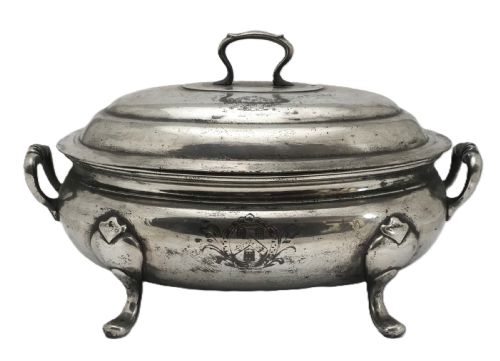
Buyers encounter plain rim plates, multiple reeded chargers, and wavy edge plates bearing maker touches, ownership crests, or civic coats of arms. Less common forms include matched sets of four or six plates, heavy pairs, and specialised vessels like toilet basins or tureens.
How they were made
Makers cast these pieces using alloyed metal poured into moulds before turning the hardened material on lathes to achieve smooth, balanced surfaces. Workers then finished the edges by hand, shaping plain rims, multiple reeded borders, or wavy contours.
Engraving added personal or institutional identity, utilising sharp tools to incise heraldic lions, family crests, or borough arms directly into the soft metal surface.
Georgian Pewter Dish Retail Price Guide 2026
Typical asking prices for georgian pewter dish among the pieces listed under this phrase on Sellingantiques today, from the lower quarter to the upper quarter. They describe what is for sale here now, not the wider market.
Listings feature plates and chargers produced across the eighteenth and nineteenth centuries, stamped by named English pewterers from London, Exeter, and provincial towns.
What varies in quality
Substance and scale separate the heavier charges from standard plates, with massive twenty-two inch chargers demonstrating exceptional metallurgical investment. The crispness of touchmarks and the depth of engraved armorial crests elevate specific pieces above plain utilitarian stock.
The integrity of the original rim shape and the survival of maker hallmarks provide tangible proof of provenance, distinguishing standard workshop output from signed pieces carrying historical weight.
John Duncomb·Samuel Smith·T and H Compton·James Spackman·Richard King·Wood and Michell·Humphrey Evans II·Thomas Alderson·William Wright·John Barlow·S Duncomb·Yates Birch and Spooner
The Georgian Pewter Dish Glossary
- Charger
- A large circular plate or dish, often measuring up to twenty-two inches, used for serving shared joints of meat or as a base for smaller courses at the dining table.
- Reeded
- A decorative border formed of parallel raised mouldings running around the rim of a dish or charger.
- Touchmark
- An official stamp struck by a pewterer into the metal to certify standard alloy quality and identify the maker.
- Plain rim
- A flat, undecorated border surrounding the central well of a plate or dish.
- Wavy edge
- A scalloped or undulating rim configuration found on certain European plates and dishes.
Georgian Pewter Dish: Frequently Asked Questions
How do I identify a georgian pewter dish?
Examine the piece for maker touchmarks stamped into the metal surface, alongside characteristic plain rims, multiple reeded borders, or wavy edges.
Compare the weight and scale of the vessel against standard eighteen-century and nineteenth-century domestic metalware forms.
Were these dishes used for dining?
These vessels served actual dining functions at the table, holding meats, vegetables, and individual portions during formal or domestic meals.
Larger chargers accommodated communal joints, while smaller plates suited individual diners before porcelain became dominant.
What is the difference between a plate and a charger?
Plates measure smaller in diameter and suit individual dining use, whereas chargers span up to twenty-two inches for serving communal meals.
Chargers possess heavier metal substance and often display more complex multiple reeded rims.
How should I care for antique pewter?
Maintain the surface by dusting gently with a soft cloth and avoiding aggressive commercial metal polishes that remove historic patina.
Keep the metal away from damp environments to preserve the stable grey finish characteristic of old alloy.