



Grey Pewter Jug
A grey pewter jug brings honest metal and centuries of domestic service straight to your table.

Grey Pewter Jug
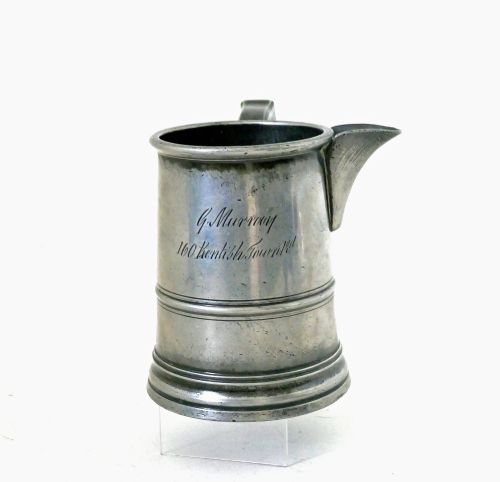
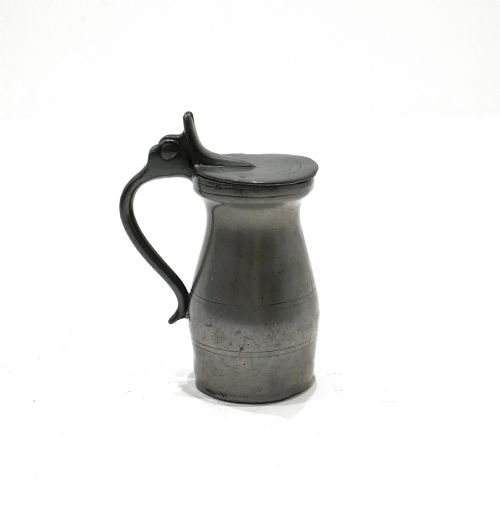
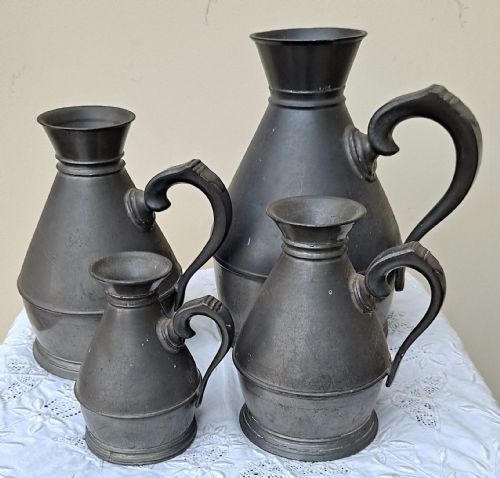
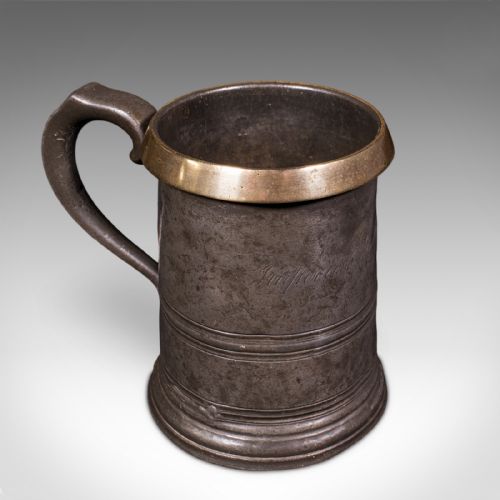
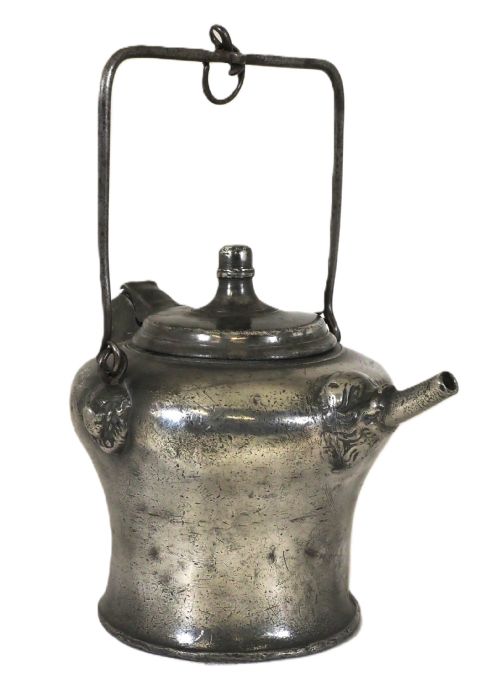
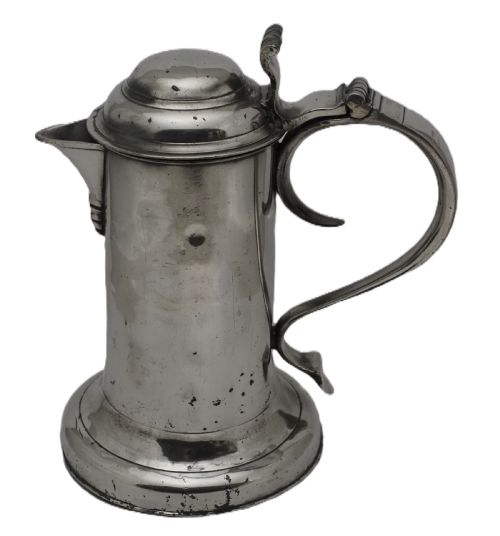
When you search for a grey pewter jug, you encounter utilitarian drinking vessels, public house tankards, and church flagons spanning several hundred years. These pieces range from small flat-lidded spirit measures to large capacity ale jugs and tall spired flagons.
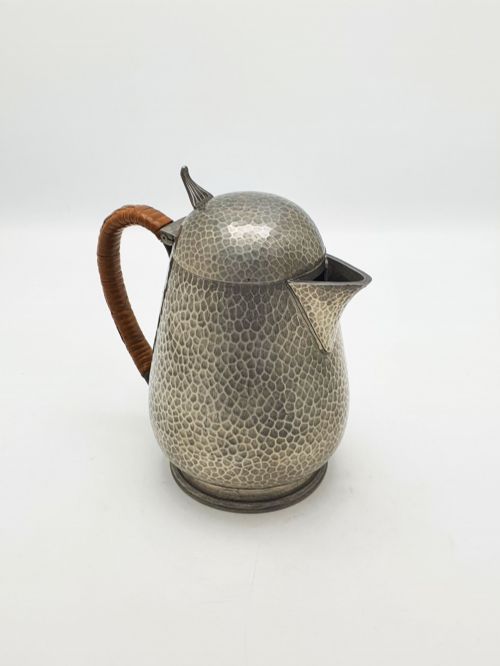
You are most likely to meet nineteenth-century Victorian measures alongside eighteenth-century Georgian flagons and occasional Arts and Crafts or Art Deco serving pots. Forms vary widely by region, including English tavern tankards, Irish haystack measures, and Channel Islands flagons.
The material itself possesses a distinctive muted grey tone that deepens with age and handling. Each vessel tells a story of daily tavern life, domestic hospitality, or ecclesiastical ritual.
Materials and construction methods
These vessels are cast primarily from pewter, an alloy traditionally composed of tin alloyed with copper, lead, or antimony. Metalworkers shaped the components using moulds before soldering them together and smoothing the surfaces by hand.
Selected forms incorporate contrasting elements such as ebonised wood handles or woven cane insulation wrapped around metal grips. Engraved inscriptions, maker touchmarks, and capacity stamps appear frequently across the body or rim.
Grey Pewter Jug Retail Price Guide 2026
Typical asking prices for grey pewter jug among the pieces listed under this phrase on Sellingantiques today, from the lower quarter to the upper quarter. They describe what is for sale here now, not the wider market.
The listings span the eighteenth, nineteenth, and twentieth centuries, uniting Georgian tavern flagons with Arts and Crafts and Art Deco tableware.
Distinctions in quality and execution
Quality rests upon the crispness of the original casting and the integrity of the soldered joints. Superior examples retain their original touchmarks, sharp capacity stamps, and balanced proportions without excessive thinning of the metal wall.
The presence of specialised regional forms, such as crested Tappit Hens or spired flagons, elevates a piece beyond standard tavern ware. Honest surface wear and an undisturbed grey patina distinguish genuine antique specimens from later reproductions.
John Heaney of Dublin·Robert Iles of London·John de St Croix·Armada Pewter
The Grey Pewter Jug Glossary
- Flagon
- A large drinking vessel with a handle and usually a lid, often used for church services or communal ale consumption. Spired variants feature a tall, tapering lid.
- Measure
- A standardised vessel designed to hold exact liquid capacities for trade and public house use. Common types include imperial and pre-imperial sizes such as gills and pints.
- Haystack measure
- A distinct regional nineteenth-century Irish measure shape featuring a bulbous body resembling a stacked heap of hay. These sets are collected for their pleasing sculptural silhouette.
- Touchmark
- An identifying stamp struck into the metal by the maker or workshop to certify quality and origin. These small punch marks often record the craftsman's initials or city.
- Tappit Hen
- A traditional Scottish pewter drinking measure fitted with a lid and a characteristic tapped thumbpiece. Capacities range from chapmen's pints up to larger mutchkin sizes.
Grey Pewter Jug: Frequently Asked Questions
How do I clean an antique grey pewter jug?
Pewter requires very little maintenance beyond gentle dusting and occasional washing with mild soapy water. Avoid harsh metal polishes that strip away the historic grey patina built up over centuries.
Dry the metal thoroughly with a soft cloth to prevent water spotting. Allowing the surface to breathe preserves the natural oxidisation valued by collectors.
Can I still use these vessels for serving drinks?
Many older pieces contain lead within the metal alloy, making them unsuitable for modern food consumption and acidic beverages. Displaying them as decorative objects or dry flower vases remains the safest approach.
Twentieth-century examples made by Arts and Crafts or Art Deco makers are sometimes composed of lead-free pewter, but checking individual composition is advisable.
What do the touchmarks on the metal mean?
Touchmarks serve as the maker's signature, stamped into the surface to indicate compliance with guild standards and regulations. Finding a clear mark helps attribute the piece to a specific workshop or geographic region.
Capacity marks, such as crown VR stamps, indicate official government verification for use in public houses. These stamps provide reliable clues for dating the object.
Why do some jugs have lids while others do not?
Lidded vessels were typically designed to keep tavern ale fresh and free from insects or debris during communal drinking. Lidless measures allowed barmen to dip directly into larger casks or serve measured portions quickly.
Thumbpieces attached to the lids enabled patrons to lift the cover easily with one hand while holding the handle.