
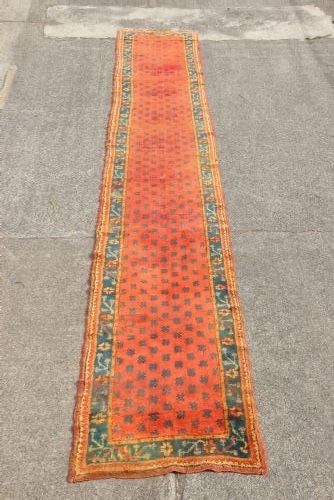
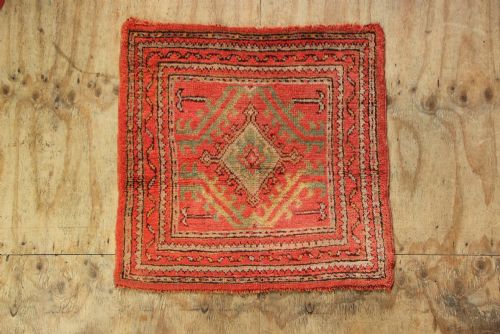


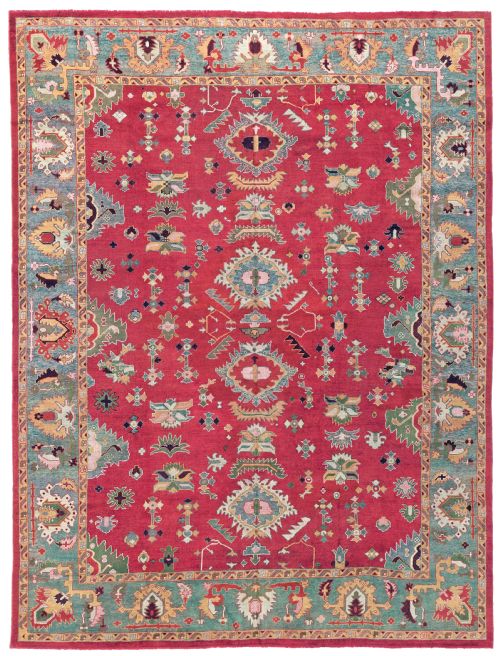
Green Wool Anatolian Rug
A green wool anatolian rug brings deep botanical character and centuries of weaving tradition straight to your floor.
Green Wool Anatolian Rug
When you search for a green wool anatolian rug, you are looking at hand-knotted floor coverings originating from Turkey across the eighteenth, nineteenth, and early twentieth centuries. These pieces encompass village works, tribal creations, and city workshop productions designed for utility and aesthetic warmth.
The most common formats on this page range from generous carpets and square room-pieces to elongated runners and dedicated prayer rugs. Styles frequently align with traditional Anatolian, Ottoman, Ushak, Ghiordes, Kirsehir, and Bergama designations, reflecting distinct regional weaving cultures.
Examples span from the mid-eighteenth century through to the Edwardian era, showing how weavers utilised natural dyestuffs to achieve verdant fields. Each piece serves as a durable textile history, carrying the specific motifs and structural traits of its local provenance.
How they were made
The foundational materials recorded across these listings are wool and cotton, deployed together to build a robust pile and stable flat-woven or corded foundation. Weavers relied on wool for the soft, insulating surface pile, while cotton often provided the warp and weft threads for structural tension.
Techniques involve traditional hand-knotting methods tied onto vertical looms, varying by region from fine city workshops to coarser village setups. Artisans employed time-honoured dyeing traditions to secure botanical and mineral pigments into the wool fibres before weaving.
Listings feature wool and cotton materials across periods spanning from 1750 through the early twentieth century.
What varies in quality
Quality separates along the fineness of the knotting density and the crispness of the drafted design, which together dictate how sharply geometric or curvilinear motifs resolve. Tighter knot counts allow complex patterns, such as those found in Ushak or Holbein designs, to hold their structural integrity.
The handling of the wool pile and the depth of the dye saturation also govern the visual success of the piece, determining how light plays across the green field. Superior examples maintain balance between the secondary border tones and the primary field, showing intentionality in composition.
The Green Wool Anatolian Rug Glossary
- Anatolian
- Pertaining to the geographic region of Asia Minor, encompassing numerous historic weaving towns and nomadic tribal groups. This term links a rug directly to the rich traditions of Turkish textile production.
- Ushak
- A prominent Turkish weaving centre known for large-scale decorative carpets featuring distinctive medallion or open-field compositions. Ushak pieces often utilise lustrous wool and soft colour palettes.
- Prayer rug
- A small-format carpet featuring a distinct mihrab or arch design indicating the direction of prayer. These rugs were traditionally used for personal devotion.
- Ghiordes
- A historic Turkish town celebrated for prayer rugs characterised by specific architectural motifs and floral borders. Weavers here utilised a symmetrical knot style named after the region.
- Kilim
- A flat-woven carpet or rug produced without a pile by tightly interweaving warp and weft strands. These textiles offer a lightweight alternative to knotted carpets.
Green Wool Anatolian Rug: Frequently Asked Questions
How do I clean an antique wool rug?
Professional specialist cleaning is essential for antique wool textiles to protect natural dyes and fragile structures.
Regular gentle surface vacuuming without a beater bar helps remove grit without stressing the historic fibres.
Where were these rugs made?
These rugs were made across various regions of Turkey, including Ushak, Ghiordes, Kirsehir, Konya, and Bergama.
Each location developed distinct weaving techniques, design motifs, and colour palettes associated with local village or workshop traditions.
How can I date my rug?
Dating relies on examining structural materials, knot types, dye characteristics, and stylistic evolution recorded across historical periods.
Comparing the wool quality and design motifs against documented nineteenth and eighteenth-century examples provides a reliable timeline.