
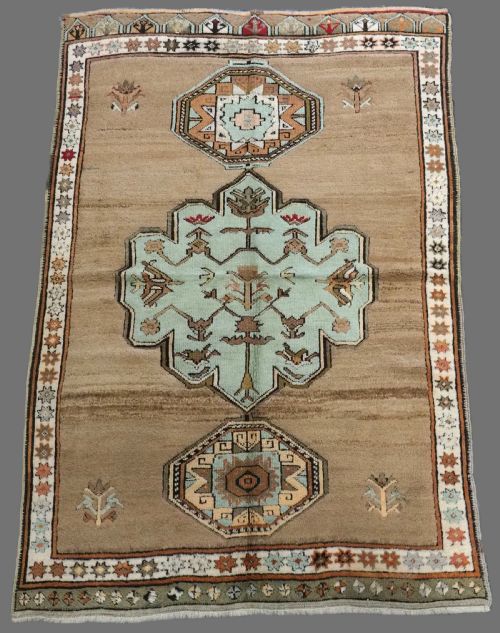
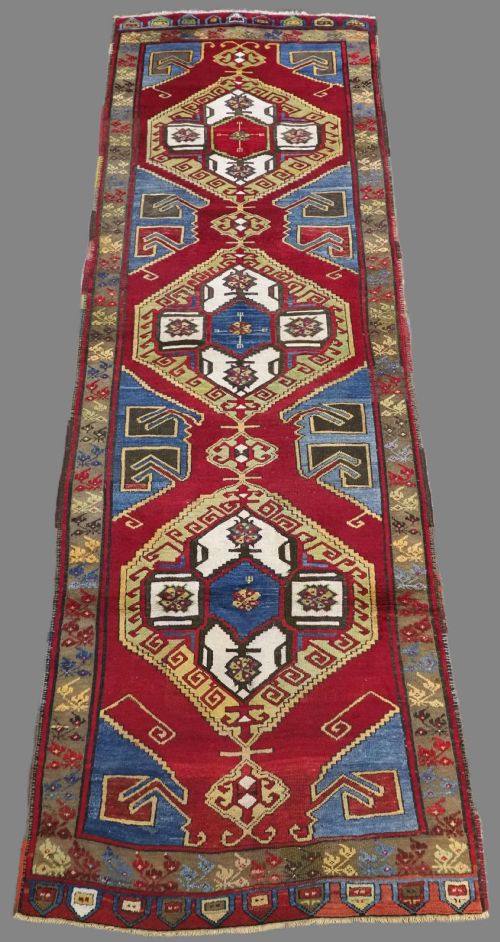
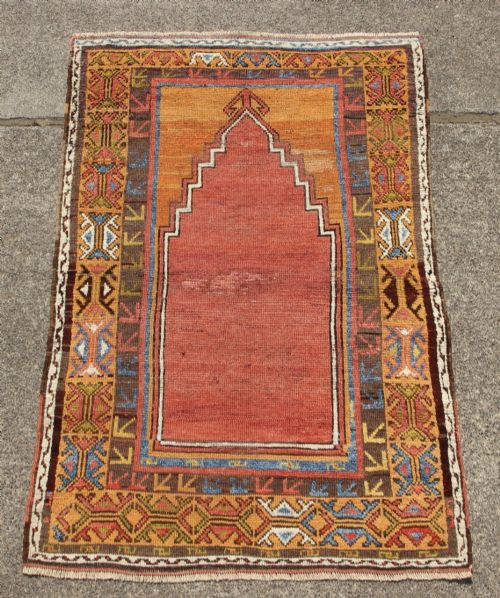


Konya Wool Carpet
These konya wool carpet examples bring authentic Central Anatolian tribal artistry and warm vegetable dyes directly into living spaces.
Konya Wool Carpet
A konya wool carpet represents traditional village weaving from the Central Anatolian region of Turkey, dating from the early nineteenth century through to the early twentieth century. These pieces appear in forms such as area rugs, long runners, prayer rugs, yastiks, and flatwoven kilims.
Village weavers and tribal makers produced these pieces using traditional Anatolian designs, often incorporating prayer arches and classic geometric motifs. The selection includes examples originating from specific regional centres such as Karapinar, Reyhanli, and Sivrihisar.
Buyers encountering this group will find pieces spanning the 1800s to the 1920s, showing the evolution of village craftsmanship across generations. The forms range from compact seating cushions to large room-sized floor coverings.
Materials and construction
Weavers constructed each konya wool carpet using natural hand-spun wool and cotton foundations, occasionally incorporating camel wool within the field. Artisans relied on vegetable dye methods to colour the wool, producing soft and subtle palettes.
The construction encompasses both pile-woven rugs and flatwoven kilim techniques, sometimes combining both methods in a single piece. Makers in Central Anatolian villages knotted and wove these textiles by hand on traditional vertical looms.
Listings span the nineteenth and early twentieth centuries, featuring materials such as camel wool, hand-spun wool, and vegetable dyes.
Assessing quality in these textiles
Quality in a konya wool carpet rests on the depth of the vegetable dye palette and the integrity of the hand-spun wool. Pieces featuring well-preserved ivory grounds and harmonious soft colours stand apart from simpler village productions.
The fineness of the weave and the clarity of the classic Anatolian tribal design define the upper tier of these examples. Greater precision in the execution of traditional prayer niches and geometric borders indicates superior workshop or village output.
The Konya Wool Carpet Glossary
- Prayer rug
- A textile featuring a distinctive architectural arch or mihrab design indicating the direction of prayer. Village weavers in Central Anatolia produced these pieces for personal devotion and daily use.
- Kilim
- A flatwoven textile produced without a pile by tightly interweaving warp and weft threads. These items include runner formats and decorative wall or floor coverings.
- Yastik
- A small Central Anatolian cushion face or sleeping rug, typically utilised for domestic seating or leaning against walls. These pieces share the wool materials and village patterns of larger carpets.
- Vegetable dye
- Colouring matter derived from plants and roots, applied to hand-spun wool before weaving. This method yields the soft, stable hues seen across nineteenth-century Anatolian pieces.
Konya Wool Carpet: Frequently Asked Questions
What is a konya wool carpet?
A konya wool carpet is a hand-knotted or flatwoven textile originating from the villages and regions around Konya in Central Anatolia. These pieces date primarily from the nineteenth and early twentieth centuries.
Weavers utilised local wool, cotton foundations, and vegetable dyes to create traditional tribal designs, prayer arches, and geometric village motifs.
How were these rugs used?
Historical users laid these textiles upon floors, used smaller yastiks for seating, and hung prayer rugs for daily devotions within village homes. The durable wool construction served the practical demands of daily nomadic and sedentary domestic life.
Today, collectors place these pieces as area rugs or runners to bring historical warmth and texture into modern interiors.
How do I tell different periods apart?
Early nineteenth-century examples often display simpler, bolder tribal structures and natural wool variations. Pieces from the later nineteenth and early twentieth centuries frequently show refined village patterns and softer vegetable dye palettes.
Examining the handling of the hand-spun wool and the specific regional design traits helps narrow down the approximate decade of production.
How do I care for my rug?
Protect antique wool textiles by limiting direct exposure to intense sunlight and utilising a breathable underlay beneath the floor covering. Gentle, professional cleaning suited for vegetable-dyed wool preserves the integrity of the natural fibres.
Avoid harsh chemical treatments and heavy mechanical vacuuming to ensure the handmade foundation and pile remain undisturbed.