




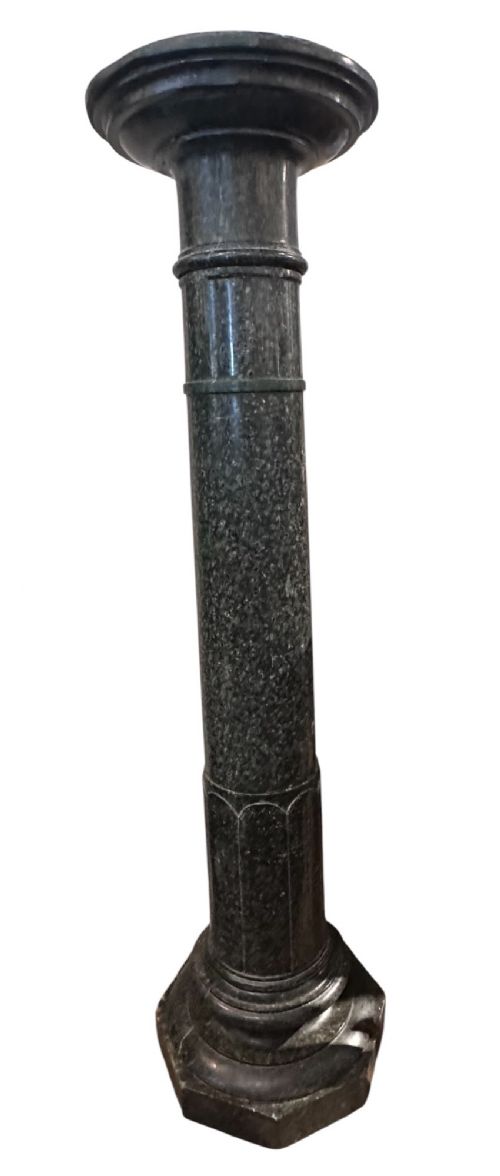

Green Marble Column
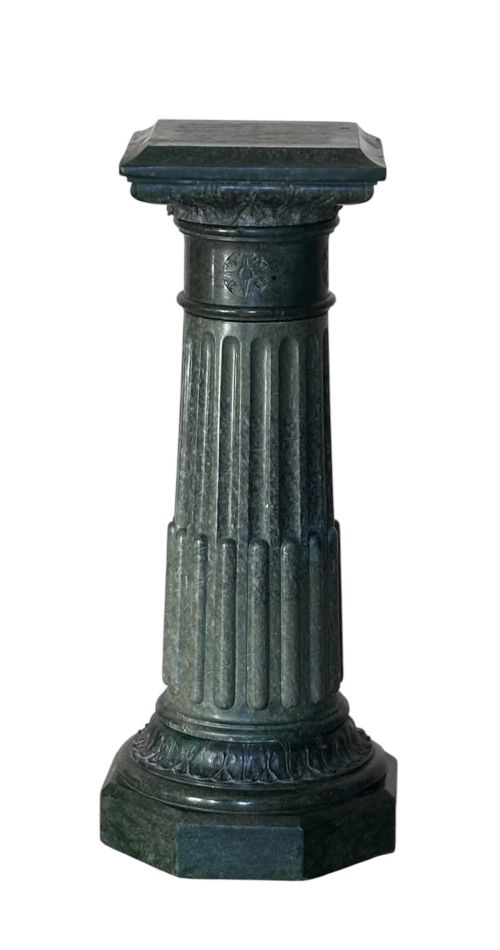
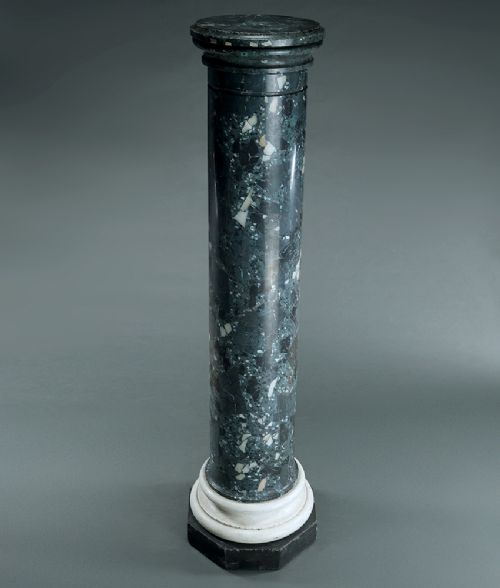
A green marble column brings undeniable classical presence to a room, serving as a striking architectural plinth or lamp base.
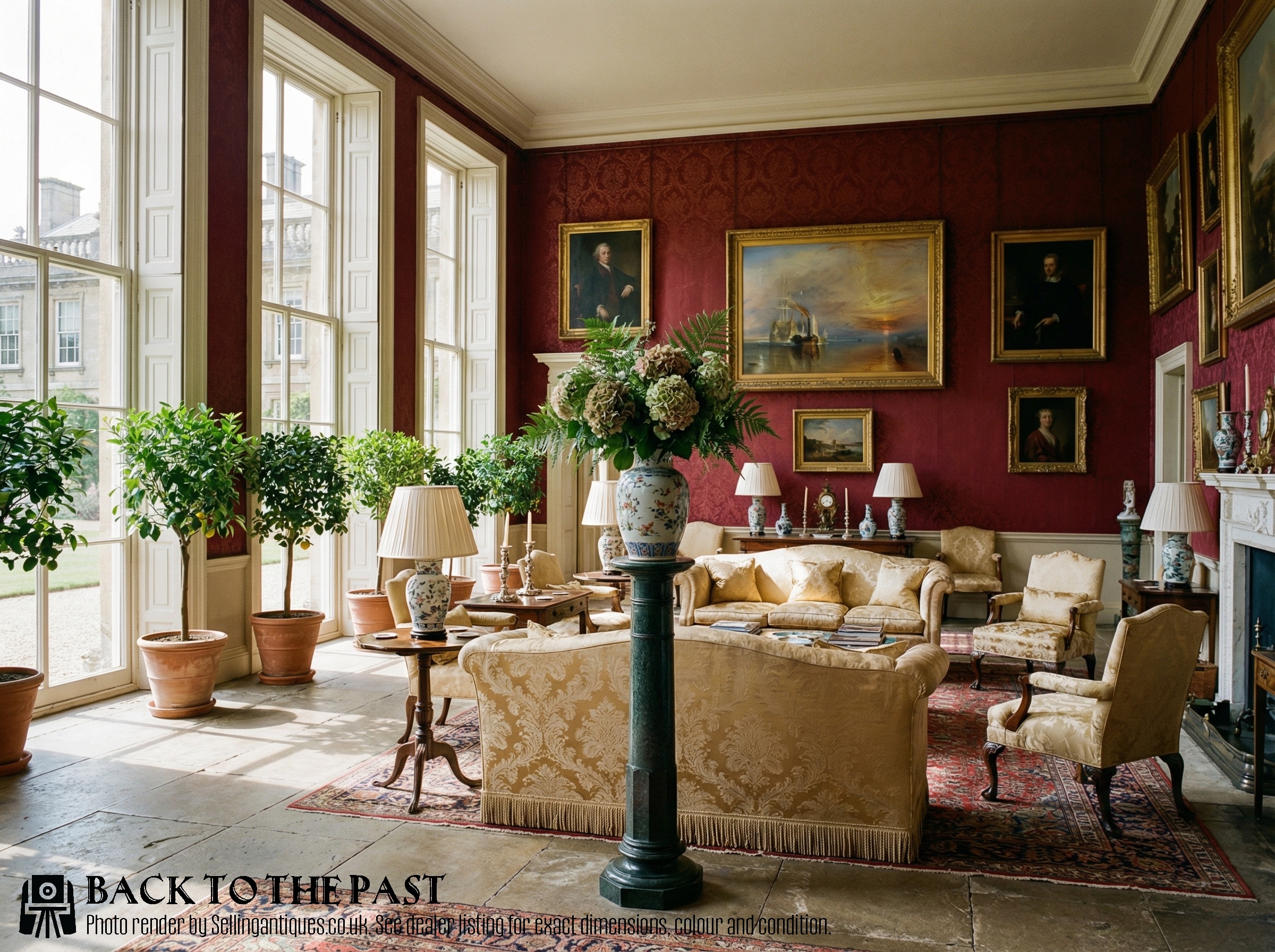
Green Marble Column
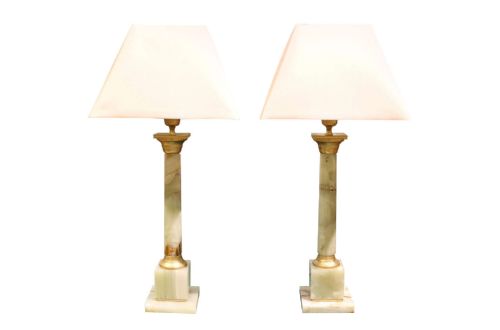
A green marble column functions primarily as a display pedestal, torchere, or table lamp, lifting sculpture and lighting to enhance a room. These pieces span the nineteenth century, including Victorian interpretations and Grand Tour souvenirs from Italy and France.
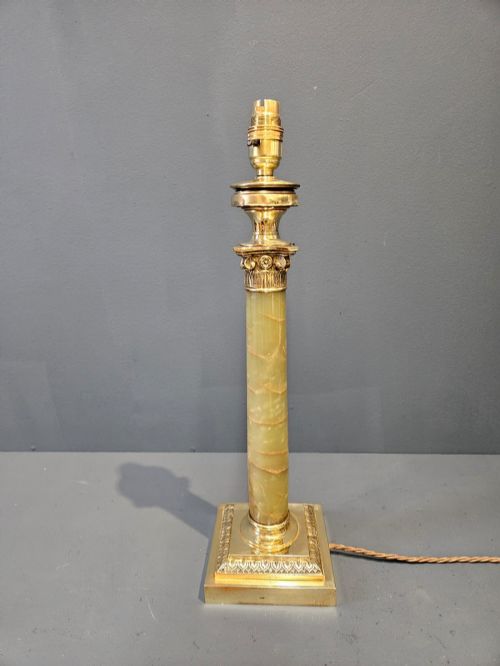
Most examples found here take the form of freestanding pedestals and plant stands, alongside occasional table lamps and centre tables incorporating stone elements. Neoclassical and Victorian classical revival designs dominate the selection, reflecting a sustained appetite for classical antiquity.
Origins stretch across British, French, and Italian workshops, capturing various shades from deep serpentine to mottled verde antico. Buyers encounter both solid stone construction and clever simulations, such as scagliola or painted wood designed to imitate rich mineral deposits.
Materials and methods
Masons shaped natural blocks of marble, serpentine, and onyx on lathes before polishing the stone to a high sheen. Workshops frequently mounted these shafts on brass or gilt bronze bases and capitals, adding structural support and decorative contrast.
Green Marble Column Retail Price Guide 2026
Typical asking prices for green marble column among the pieces listed under this phrase on Sellingantiques today, from the lower quarter to the upper quarter. They describe what is for sale here now, not the wider market.
Some nineteenth-century artisans painted ordinary wood with such skill that it fooled buyers into seeing solid antique marble.
Assessing quality and execution
Quality rests upon the geological richness of the stone and the precision of the turning work. Finer columns display seamless joins, subtle polychromatic veining, and substantial weight rather than superficial surface patterning.
The integration of metal mounts separates standard production from exceptional pieces. Cast brass or gilt bronze collars, capitals, and plinths executed with crisp botanical or classical detailing elevate the entire object.
The Green Marble Column Glossary
- Verde Antico
- A dark green serpentine marble heavily veined with white calcite, prized by classical and neoclassical makers. Roman and Italian quarries supplied much of this distinctive decorative stone.
- Scagliola
- A composite material made from pigmented selenite, glue, and plaster, applied to mimic the appearance of inlaid marble. Artisans polished the dried mixture to a durable, stone-like finish.
- Torchere
- A tall stand or pedestal originally designed to hold a candle or torch, later adapted for lamps and sculptural displays. These tall supports often feature slender fluted columns.
- Neoclassical
- An artistic movement drawing inspiration from the classical art and architecture of ancient Greece and Rome. This aesthetic heavily influences the clean lines and formal proportions of nineteenth-century pedestals.
- Serpentine
- A group of green hydrous magnesium silicate minerals often polished and used interchangeably with marble in decorative columns. It exhibits characteristic mottled patterns resembling serpent skin.
Green Marble Column: Frequently Asked Questions
What supported a green marble column?
These columns typically stand on heavy brass, bronze, or wooden plinths designed to distribute the substantial weight of the stone evenly across the floor.
Many examples feature stepped bases or pan feet that anchor the vertical shaft securely.
How do I style a column at home?
Place a single pedestal in an empty corner or frame a doorway with a matched pair to display bronze sculptures, urns, or table lamps.
Ensure the surrounding furniture remains relatively low to let the vertical lines of the stone draw the eye upward.
Are these columns solid stone?
While many consist of solid turned marble or serpentine, others utilise slate or wood cores wrapped in thin scagliola or painted finishes.
Checking the underside or weight often reveals whether the piece is carved from solid mineral or built using composite techniques.
How can I date a column?
Dating relies on combining the stylistic clues of the metal mounts, such as nineteenth-century brass castings, with the prevailing revival movements of the period.
Victorian and Grand Tour pieces frequently show specific turning patterns and patination associated with mid-nineteenth-century European workshops.