
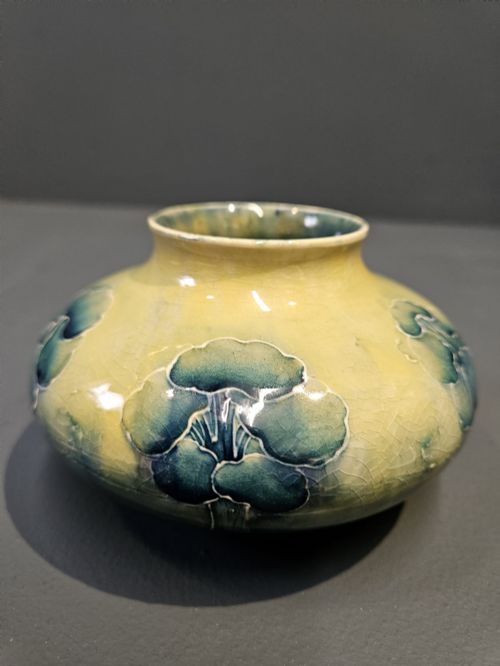
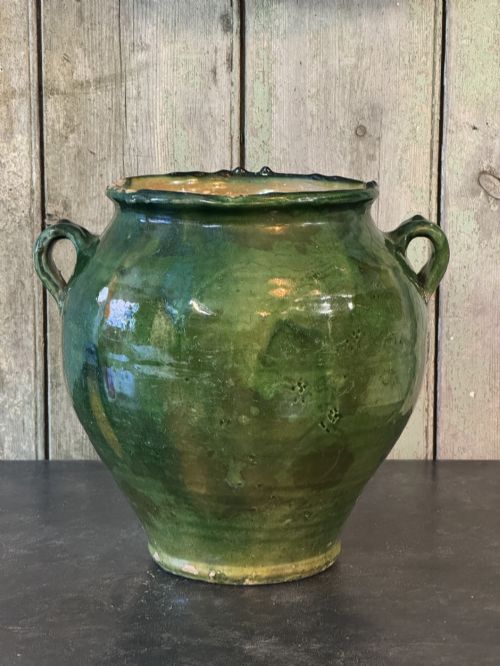
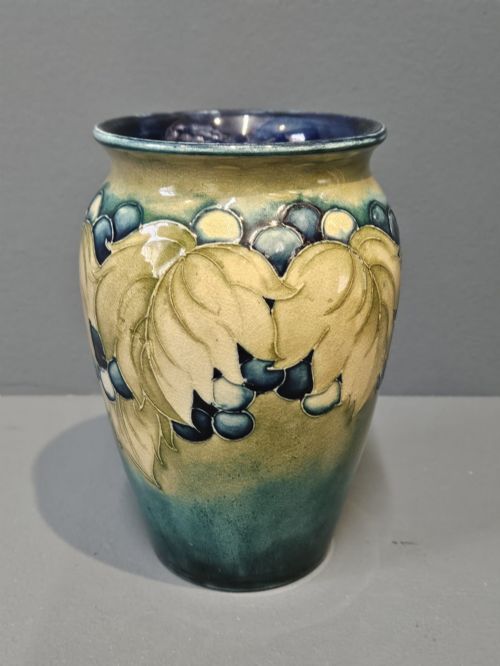
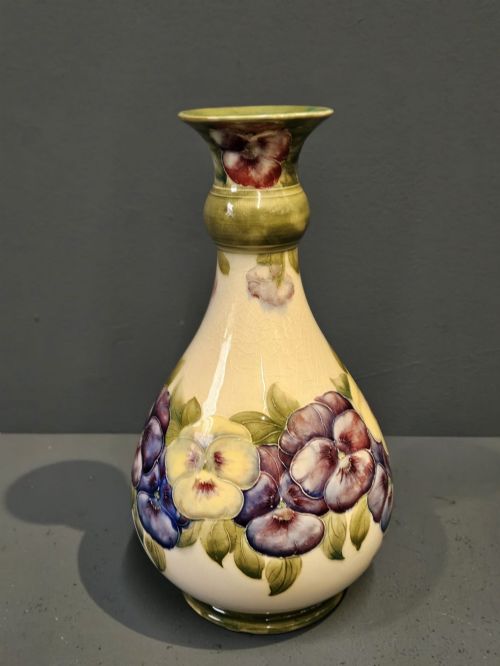
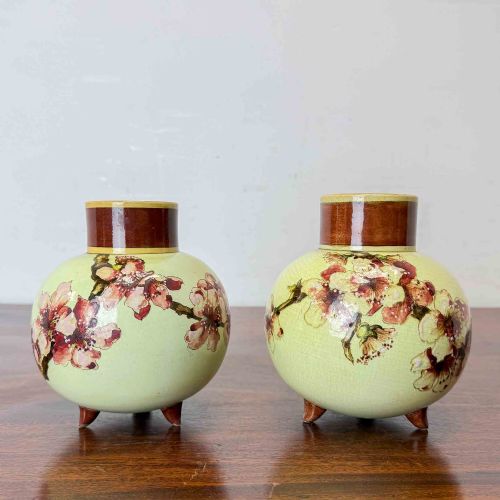


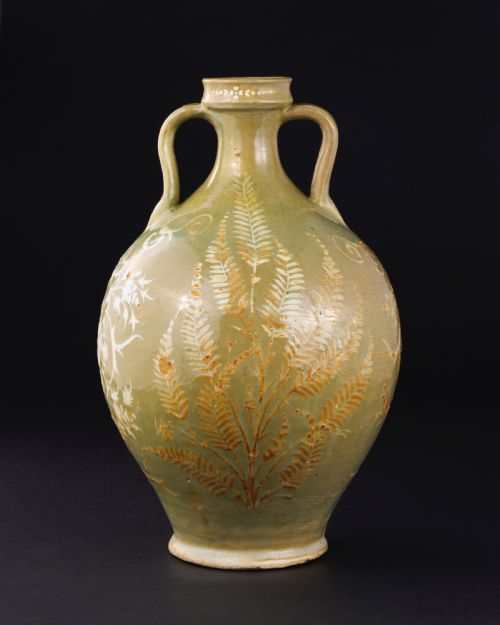


Green Earthenware Vase
These green earthenware vase examples bring together rich glazes and varied forms from the nineteenth and early twentieth centuries.
Green Earthenware Vase
A green earthenware vase encompasses decorative vessels produced across the nineteenth and early twentieth centuries, drawing on diverse regional traditions from English studios to French potteries.
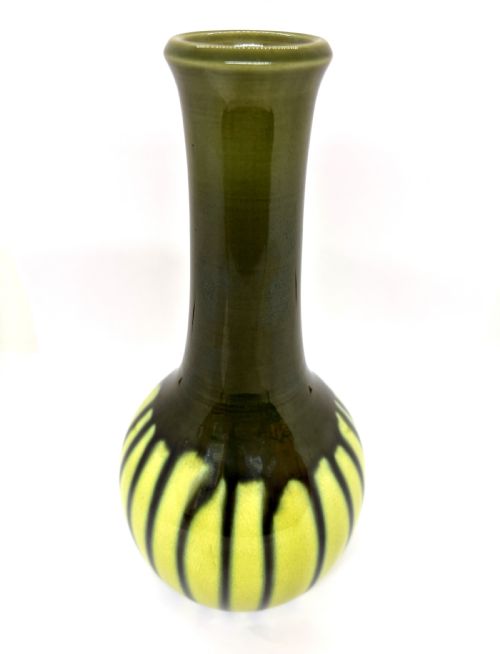
Collectors frequently encounter spill vases, confit pots, and studio pottery vessels displaying various shades of green glaze, originating from periods such as the Victorian era and the Arts and Crafts movement.
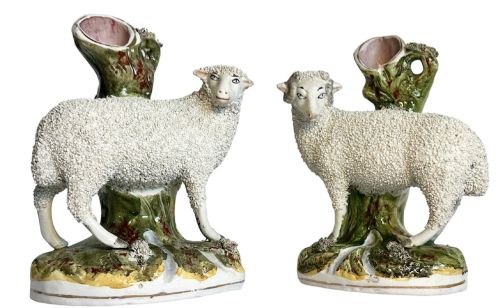
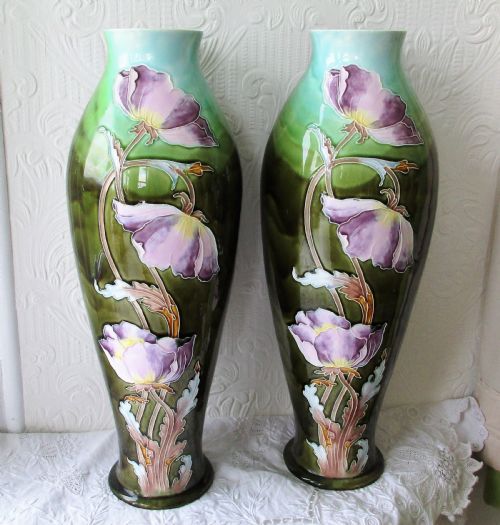
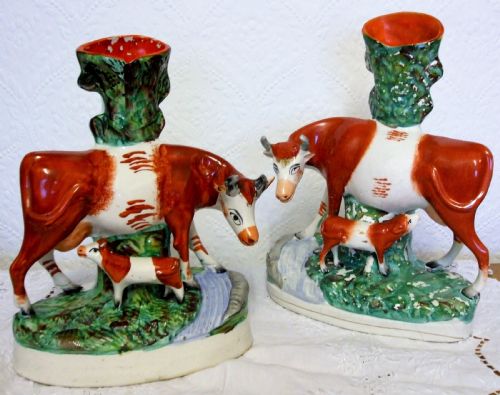
The selection ranges from Staffordshire animal figures designed as spill holders to taller bottle vases and majolica pieces created by notable European potteries.
Materials and production methods
Potters utilised earthenware, terracotta, and pearlware bodies, shaping them by hand or throwing them on a wheel before applying liquid clay slips.
Glaze application defined the final appearance, utilising rich green lead glazes, celadon tones, enamel, and majolica techniques to seal the porous ceramic body.
Firing took place in kilns where chemical reactions in the glazes produced characteristic crackle, pooling, and depth within the green surfaces.
The site listings feature nineteenth-century earthenware, terracotta, and pearlware spanning Victorian, Art Nouveau, and Arts and Crafts styles.
Judging quality in green ceramics
Quality rests in the control of the glaze and the crispness of the modelled form, distinguishing mass-produced items from studio pieces handled by master ceramists.
The depth and consistency of the green coloration reveal the skill of the potter, alongside the balance and proportion of handles, necks, and bases.
Moorcroft·Burmantoft's Pottery·Doulton Lambeth·Sir Edmund Harry Elton·Ulisse Cantagalli·Royal Winton·Brannam Art Pottery·Ernst Wahliss·Minton
The Green Earthenware Vase Glossary
- Earthenware
- Porous pottery fired at lower temperatures, requiring a glaze to hold liquids. It forms the structural base for most traditional green vases.
- Majolica
- Opaque tin-glazed earthenware decorated with brightly coloured metal oxides. This technique produced vivid green and botanical surfaces during the nineteenth century.
- Spill Vase
- A small cylindrical vessel designed to hold taper candles or wooden spills used for lighting pipes and fires. Many Victorian examples depict animals or figures.
- Confit Pot
- A utilitarian French storage jar featuring a partially or fully glazed earthenware body. These pots often display rich green lead glazes intended for preserving food.
- Celadon
- A transparent green glaze displaying jade-like qualities, achieved through iron oxide in a reduction kiln atmosphere. It appears on various antique ceramic vessels.
Green Earthenware Vase: Frequently Asked Questions
What is a green earthenware vase used for?
These vessels originally served both ornamental and practical household roles, from holding dried botanicals to acting as mantelpiece decoration.
Today, collectors use them to introduce rich historic colour and varied silhouettes into domestic interiors.
How do I date a green earthenware vase?
Dating relies on examining the ceramic body, glaze characteristics, and any impressed factory marks or registration numbers on the base.
Stylistic indicators such as Victorian moulded details or Art Nouveau flowing lines also help place a piece within its proper era.
Are these vases waterproof?
Many nineteenth-century earthenware and majolica pieces feature porous clay bodies beneath their glazes, which can slowly absorb moisture over time.
It is safest to use a discreet glass insert inside older vessels if displaying fresh flowers.
What is the difference between earthenware and majolica?
Earthenware is the underlying porous ceramic material made from fired clay, forming the body of the vessel.
Majolica is a specific type of tin-glazed earthenware decorated with colourful metallic oxide glazes.