
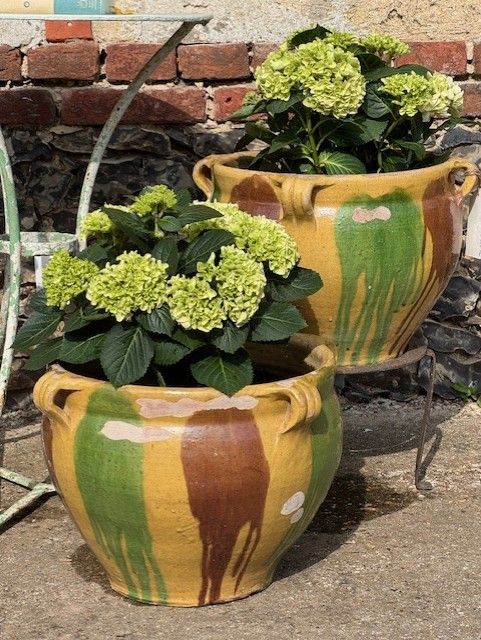


French Provincial Pottery
French provincial pottery brings rustic regional character to an interior through earthenware confit jars, tian bowls, and painted faience.
French Provincial Pottery
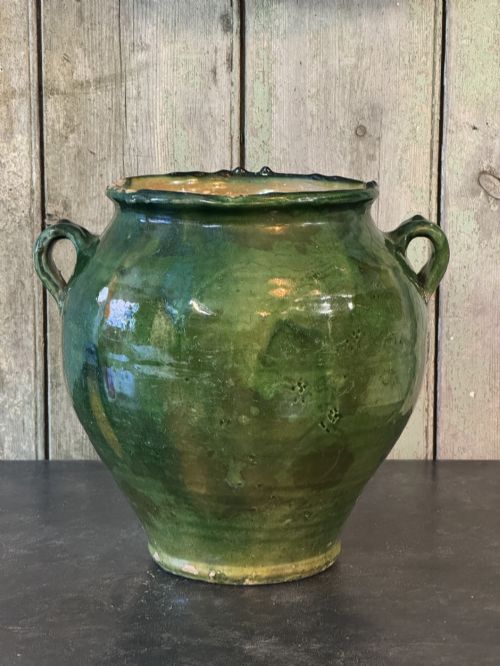
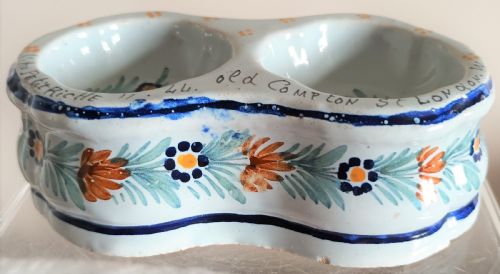
French provincial pottery comprises utilitarian and decorative domestic wares shaped by the distinct regional traditions of France. These pieces range from large green-glazed terracotta confit jars and tian bowls originating in the south of France to decorative Quimper faience salts, dishes, and sabots.
Buyers are most likely to encounter 19th-century earthenware vessels alongside early 20th-century regional pieces. Forms vary from practical olive and walnut oil jugs to small tabletop figures and planters.
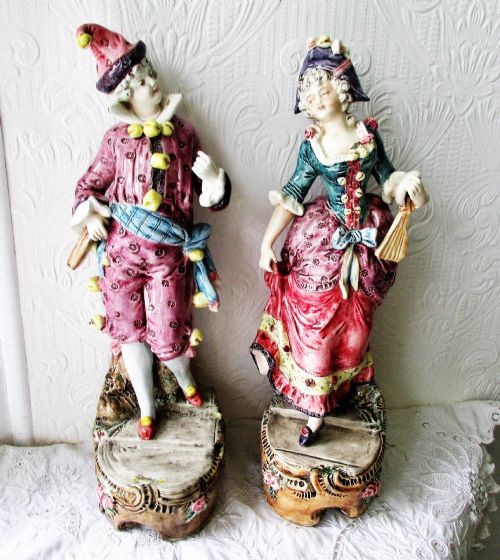
The style spans rustic provincial utility through to French Rococo Revival influences seen in glazed ceramic and tin-glazed items. Each object carries the practical markings of its rural or regional origin.
Materials and Techniques
Potters shaped these items from local terracotta and earthenware, building up dense clay bodies suited to holding oils, preserves, and water. Artisans applied tin glazes or rich green lead glazes over the clay base to seal the porous surface.
Many items display characteristic drip-glazed finishes or hand-painted regional designs executed in traditional workshops. The firing and glazing methods left subtle surface irregularities that reveal the handmade nature of each vessel.
Listings for this phrase include 19th-century earthenware, terracotta, and tin-glazed items spanning from the 18th century through to the mid-20th century.
Variations in Quality
Quality rests in the depth of the glaze, the balance of the thrown form, and the crispness of any hand-painted regional decoration. Richly poured green glazes and well-preserved surface finishes distinguish the finer domestic pieces from standard utility wares.
The integrity of the earthenware body and the survival of the original glazed surface define the character of an item. Stronger artistic execution in regional faience painting separates standard production items from more expressive workshops.
HB Quimper·Desvres·Rouen·Pornic
The French Provincial Pottery Glossary
- Faience
- Tin-glazed earthenware decorated with painted designs, commonly produced in regional French pottery centres such as Quimper and Desvres.
- Confit Pot
- A heavy earthenware jar traditionally used in rural France for storing preserved meats, typically featuring handles and partial or full glaze.
- Tian Bowl
- A large, wide earthenware basin used in the south of France for domestic food preparation and washing.
- Sabot
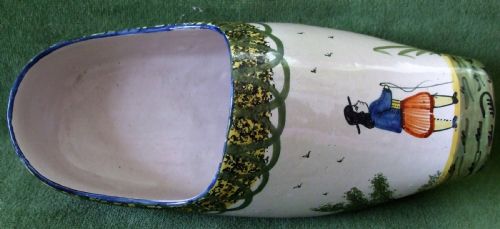
- A decorative or novelty ceramic shaped in the form of a traditional wooden clog, frequently found in Quimper faience.
- Terracotta
- Fired unglazed or glazed clay of a brownish-red hue, utilised widely across French provincial pottery for utility vessels.
French Provincial Pottery: Frequently Asked Questions
What were confit pots used for?
Confit pots served as practical storage vessels in rural French kitchens for preserving meats like duck or pork in fat.
The fully glazed interiors helped seal the earthenware, while the robust handles made lifting the heavy jars easier during daily use.
How do I identify Quimper faience?
Quimper faience is typically identified by its distinct hand-painted regional motifs, often featuring Breton figures in traditional dress surrounded by floral elements.
These pieces also bear specific factory marks such as HB on the base to indicate their origin in the French pottery town.
Are these pots waterproof?
Most of these vessels feature glazed earthenware interiors intended to hold liquids, oils, or food provisions securely.
However, age and historical hairline fractures mean that modern buyers should test older terracotta pieces before using them to hold water directly.
How do I style provincial pottery at home?
These ceramic forms work well grouped together on open shelving, sideboards, or kitchen worktables to display their varied green glazes and earthy tones.
Larger tian bowls and confit jars also function effectively as floor planters or standalone decorative accents.