
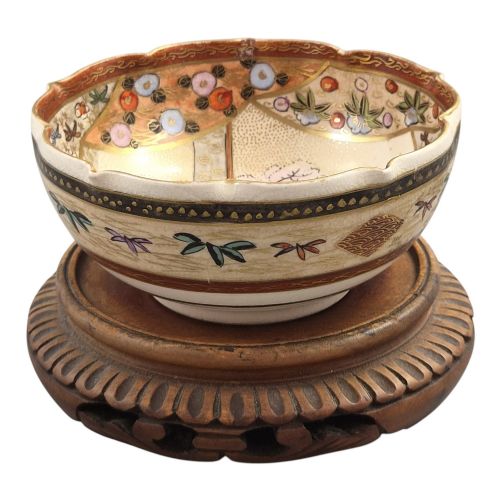
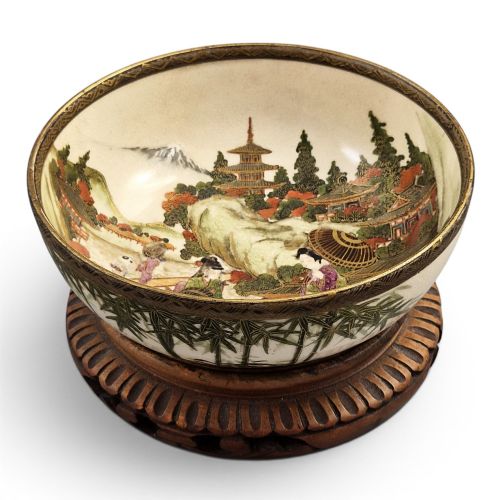
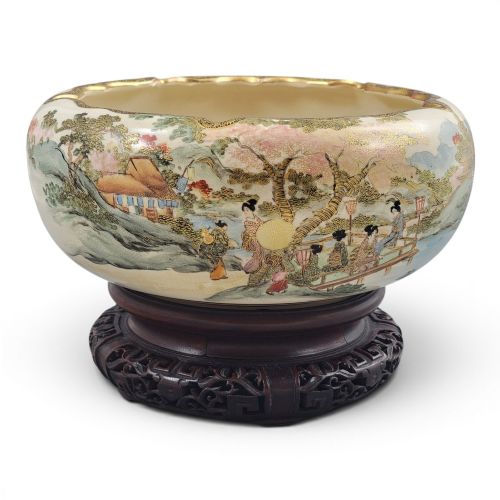


Crackle Glaze Ceramic Bowl
These crackle glaze ceramic bowl examples bring tactile depth and historic Japanese and Chinese artistry straight to your table.
Crackle Glaze Ceramic Bowl
A crackle glaze ceramic bowl collection brings together intricate earthenware vessels shaped by nineteenth-century Japanese and Chinese traditions. You will encounter decorative bowls, dishes, and incense burners originating from Kyoto studios and imperial kilns.
The pieces on this page lean heavily towards Japanese Satsuma ware from the Meiji and Taisho periods alongside Chinese Qing Dynasty celadon dishes. These forms range from small Hanami bowls to large footed vessels adorned with cobalt blue, enamel, and gold leaf.
How they were made
Potters shaped these vessels from earthenware and ceramic bodies before applying specialised glazes that produced intentional crazing across the surface. Artisans then hand-painted detailed scenes using enamel colours and highlighted specific motifs with gold leaf and gilt.
Kiln workers controlled firing temperatures to achieve the distinct celadon glaze effects seen on Qing Dynasty pieces. Kyoto studios employed precise brushwork, resulting in signed works that reflect the signature style of individual makers.
Listings feature items spanning the eighteenth century through the Taisho period, predominantly utilising ceramic, earthenware, and celadon glaze.
What varies in quality
The refinement of the craquelure pattern and the precision of the hand-painted enamel work separate standard items from masterworks. Finer pieces demonstrate superior control over the glaze shrinkage and show crisp application of gold leaf.
Signatures by renowned makers elevate a vessel, indicating studio production from celebrated Meiji period artists or imperial Chinese kilns. The clarity of the ceramic body and the preservation of the delicate gilt details also determine the standing of each bowl.
Shizan·Ryuzan·Kinkozan·Shozan
The Crackle Glaze Ceramic Bowl Glossary
- Celadon glaze
- A transparent green glaze over a pale grey or green clay body that often displays subtle crackles.
- Satsuma ware
- Japanese earthenware featuring a crackled ivory glaze decorated with polychrome enamel and gilt.
- Craquelure
- The network of fine cracks intentionally created in the glaze layer during the firing process.
- Meiji period
- The era of Japanese history lasting from eighteen sixty-eight to nineteen twelve, known for detailed export ceramics.
- Qing dynasty
- The final imperial dynasty of China, spanning the seventeenth to the early twentieth century.
Crackle Glaze Ceramic Bowl: Frequently Asked Questions
How do I care for a crackle glaze bowl?
Wash these ceramic pieces gently by hand using warm water and mild soap to protect the delicate glaze and gold leaf highlights. Avoid soaking them, as moisture can penetrate the fine network of cracks over time.
Display the bowl away from direct sunlight and sudden temperature shifts to preserve the integrity of the earthenware body and enamel decoration.
What is Satsuma ware?
Satsuma ware refers to a distinct type of Japanese pottery featuring a warm ivory earthenware body covered in a finely crackled glaze. Artisans traditionally decorated these surfaces with elaborate enamel paintings and gilt highlights.
These pieces were produced primarily in Kyoto and Satsuma province during the nineteenth century, gaining significant popularity for export markets.
How can I tell Chinese celadon from Japanese Satsuma?
Chinese celadon pieces typically display a jade-green glaze over a sturdy ceramic base, often featuring carved motifs or twin fish designs beneath the surface. They originate from historical periods like the Qing Dynasty.
Japanese Satsuma items show an ivory-coloured crackled glaze densely painted with colourful enamels and gold leaf, frequently bearing artist signatures from Kyoto studios.
Are these bowls safe for food?
Most antique crackle glaze ceramic bowl examples are intended for decorative display rather than daily dining use. The historic earthenware and craquelure surfaces can absorb liquids and harbour bacteria over time.
Enjoy them as centrepieces, decorative dishes, or incense burners to preserve their delicate hand-painted enamels and historic materials.