


Gothic Revival Shelves
Gothic revival shelves bring structural ambition and architectural weight to a room through pointed arches, heavy timber, and carved detail.
Gothic Revival Shelves
When you search for gothic revival shelves, you encounter wall-mounted tiers, open bookcases, and bracketed ledges that adapt medieval architectural forms for domestic Victorian interiors. Oak forms the backbone of these pieces, alongside rosewood and mahogany, often enriched with ebonised finishes.
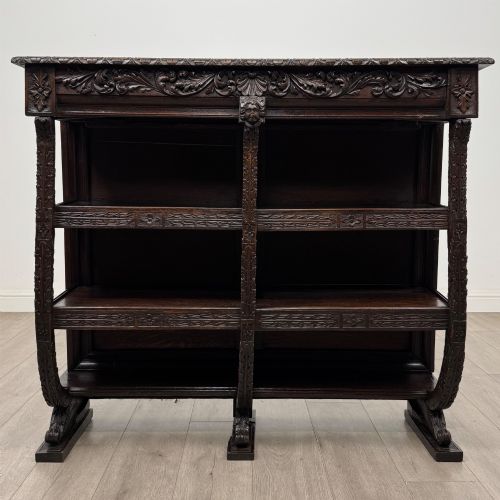
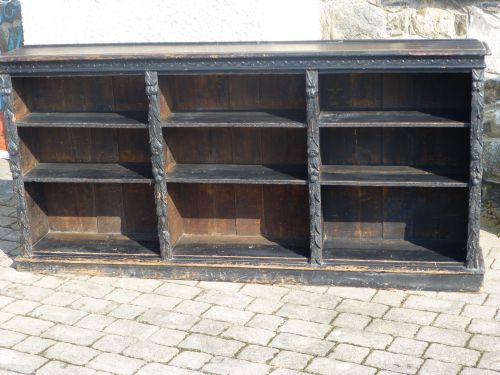
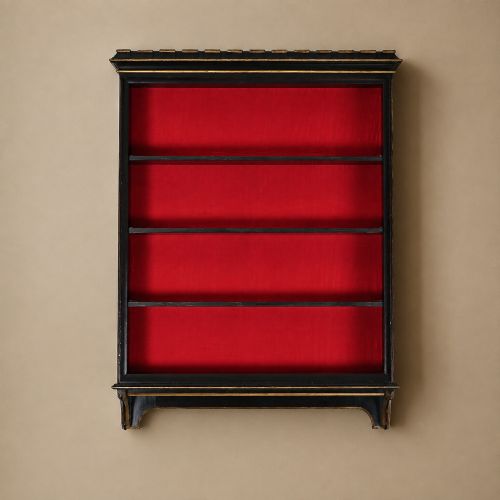
The version you meet most frequently on this page is the Victorian oak open bookcase or hanging wall shelf, displaying pointed arches, cusping, and carved foliage. Makers of the period translated stone tracery and cathedral vaulting into timber furniture designed to hold books or display ceramics.
How they were made
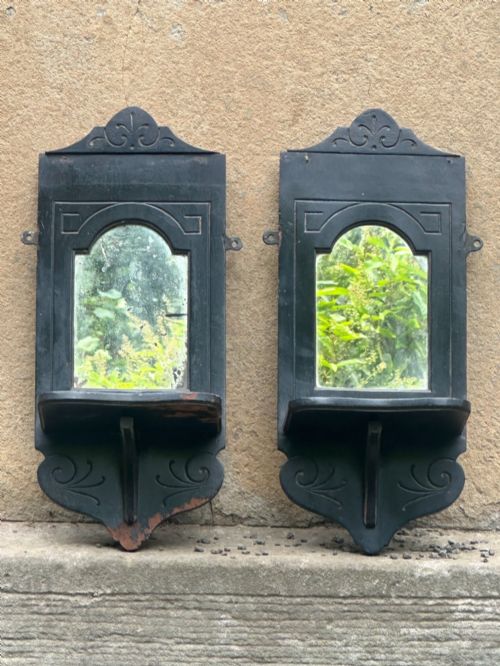
Cabinetmakers worked predominantly in solid oak, mahogany, and rosewood, applying deep relief carving to create the characteristic shadows and architectural profiles of the style. Ebonised wood appears frequently to mimic heavier, more solemn timbers and contrast with brass fittings or glazed panels.
Construction relies on traditional joinery such as mortise and tenon, supporting the considerable weight of heavy timber shelves and architectural pediments. Wall-mounted variants utilise sturdy brackets and backplates to secure the structural load against plaster.
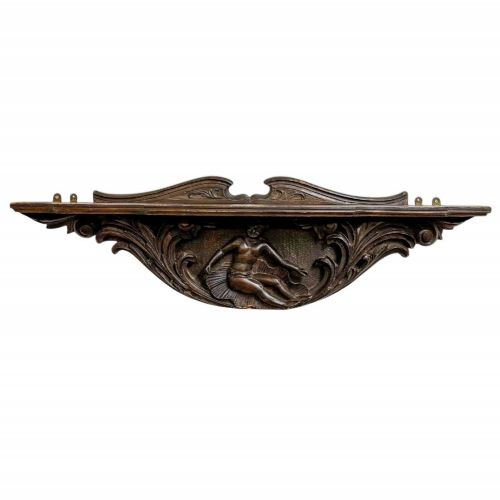
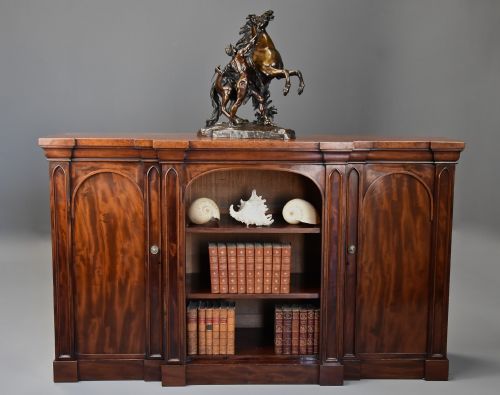
Form variations range from dwarf bookcases and hanging wall brackets to architectural overmantels and elaborate display cabinets.
What varies in quality
The depth and crispness of the carving separate standard commercial production from exceptional pieces attributed to named designers or skilled workshops. Sharp undercut foliage and well-defined tracery show the hand of a master carver rather than mechanical replication.
Timber selection dictates the longevity and visual authority of the piece, with dense, figured oak and richly grained rosewood commanding greater presence. Original brass hardware, intact glazed sections, and sound structural integrity preserve the authentic character of the period.
George Edmund Street·Cottier & Co.·John Moyr Smith·Luigi Frullini·Richard Bridgens
The Gothic Revival Shelves Glossary
- Gothic Revival
- An architectural and decorative style that draws inspiration from medieval design, using pointed arches, trefoils, and heavy vertical lines. It dominated nineteenth-century architecture and furniture production.
- Ebonised
- Wood treated with a chemical stain or black finish to imitate ebony. This technique was popular in Victorian and aesthetic movement pieces to create stark visual contrast.
- Tracery
- Architectural stonework ornamentation adapted by cabinetmakers for wooden panels and glass doors. It mimics the delicate intersecting stone ribs found in Gothic cathedral windows.
- Green Man
- A sculptural motif depicting a human face carved from or entwined with leaves and vines. It appears frequently as a decorative flourish in nineteenth-century oak furniture.
- Bracket Shelf
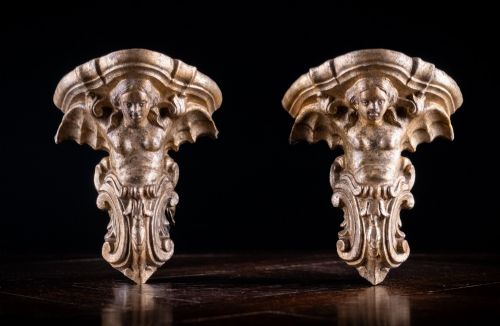
- A small shelf supported by projecting architectural brackets rather than side uprights. These pieces often feature carved corbels or moulded edges.
Gothic Revival Shelves: Frequently Asked Questions
How do I mount heavy wooden wall shelves safely?
Heavy oak and mahogany shelves require direct fixing into masonry walls or solid timber studs using appropriate heavy-duty brackets. The substantial weight of Victorian timber demands fixings that distribute the load securely.
Avoid relying solely on standard plasterboard plugs, as the combination of dense wood and books creates significant downward leverage over time.
Were these shelves always used for books?
While many examples served as open bookcases or library fixtures, smaller wall brackets and hanging shelves were designed for ornaments and ceramics. Domestic interiors of the period utilised these ledges to display decorative plates and cabinet porcelain.
Display cabinets and overmantels similarly combined storage with visual display, reflecting the Victorian taste for filling interior spaces with curated collections.
How do I distinguish Gothic Revival from Jacobean style?
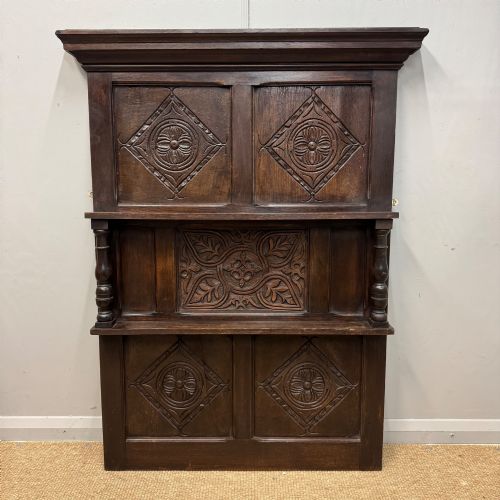
Gothic Revival relies on medieval ecclesiastical motifs such as pointed arches, quatrefoils, and architectural tracery. Jacobean revival pieces lean toward seventeenth-century vocabulary, featuring geometric moulding, strapwork, and bulbous column turnings.
While both styles use dark oak extensively, the silhouette and carved ornament reveal whether the maker drew inspiration from thirteenth-century cathedrals or seventeenth-century manor houses.
What is ebonised wood and how should I care for it?
Ebonised wood is timber, often beech or fruitwood, stained or painted black to achieve the dense, dark appearance of ebony. Maintain the finish by dusting with a soft dry cloth and avoiding harsh modern chemical polishes.
Keep these pieces away from direct sunlight and excessive moisture to prevent the black surface from fading or lifting over the underlying timber.