
Nineteenth Century Shelves
Nineteenth century shelves offer practical storage built with traditional timber and decorative mounts, making them useful for organising books or displaying ornaments.
Nineteenth Century Shelves
When you search for nineteenth century shelves, you encounter a variety of forms designed for storage and display, ranging from hanging wall units to multi-tiered freestanding whatnots and bookcases.
The material record on this page shows a strong presence of mahogany, walnut, and rosewood, alongside lighter woods like satin birch and bamboo, reflecting the diverse interior tastes of the Victorian and Regency periods.
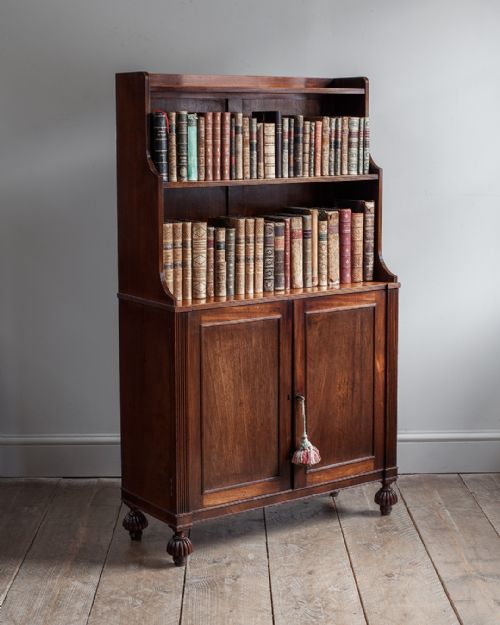
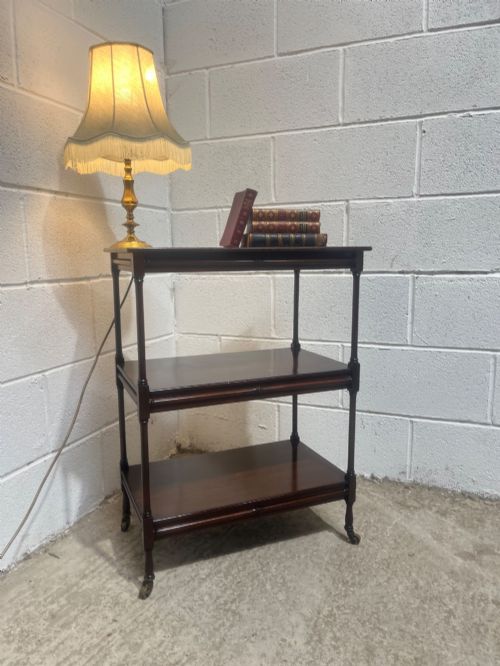
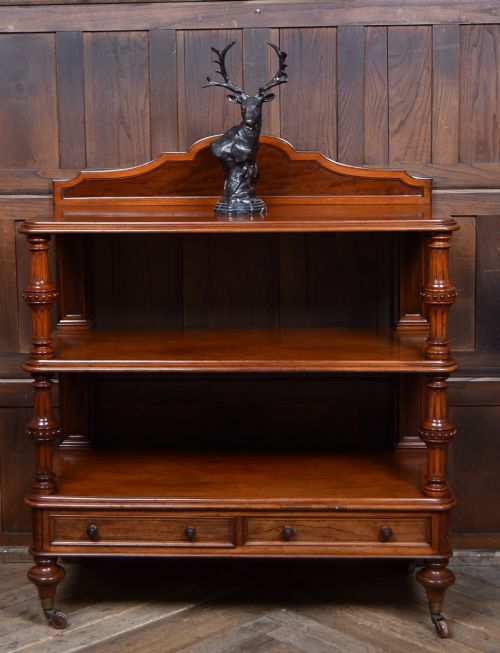
You will frequently meet tiered whatnots, corner shelves, and open bookcases that served specific domestic functions in nineteenth century libraries, parlours, and drawing rooms.
How they were made
Cabinet makers utilised dense native and exotic timbers such as mahogany, walnut, and rosewood, often pairing them with marquetry inlay, brass stringing, or carved details to enrich the plain surfaces of the wood.
Wall shelves and hanging units often incorporated turned supports, delicate fretwork, or giltwood mouldings, while larger bookcases relied on sturdy oak or mahogany frames to support heavy volumes.
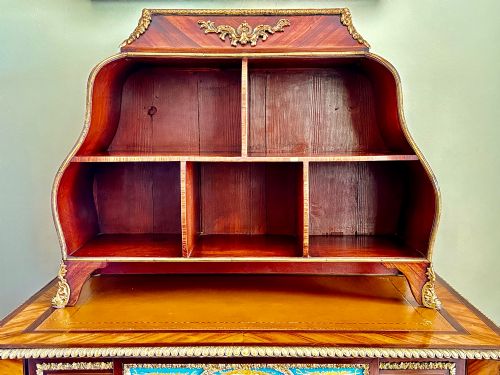
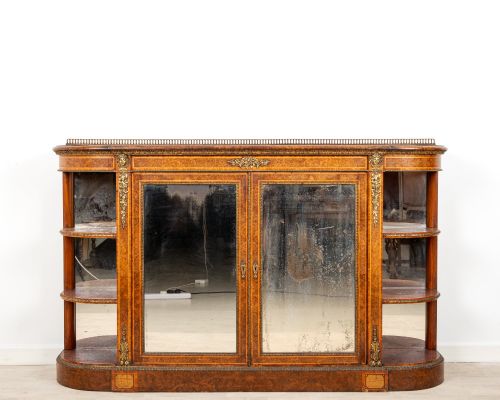
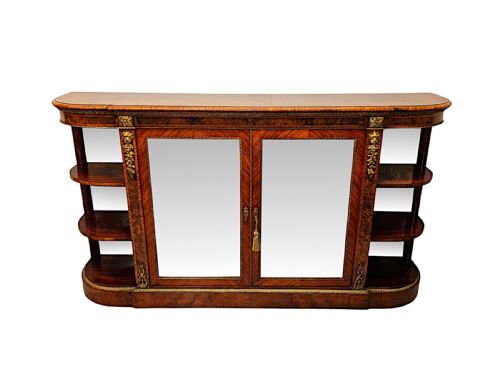
Decorative elements like ormolu mounts, ceramic plaques, and mirrored doors appear on more elaborate pieces, combining timber construction with cast bronze and porcelain components.
The listings combine walnut, mahogany, rosewood, and oak with decorative brass and ormolu mounts across various periods.
What varies in quality
The standard of a piece depends heavily on the selection of timber veneers and the precision of the joinery, where finely figured burr walnut or rosewood signifies a superior grade of construction.
Makers who incorporated cast ormolu mounts, intricate marquetry, or detailed carving achieved a higher level of decorative finish than those producing plain utilitarian shelving.
Original architectural proportions and structural integrity separate workshop-produced furniture from simpler domestic items, particularly in larger bookcases and elaborate tiered whatnots.
Gillows·Maison Giroux·Japy Freres·Achille Brocot·Samuel Marti
The Nineteenth Century Shelves Glossary
- Whatnot
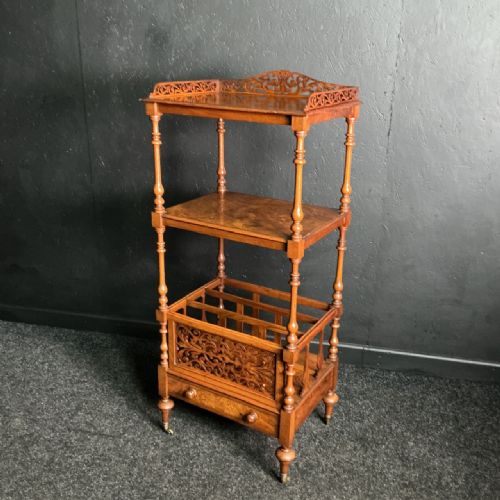
- A multi-tiered piece of furniture with open shelves designed for displaying ornaments, books, or small decorative objects. These items typically feature three or more levels supported by slender uprights.
- Bookcase
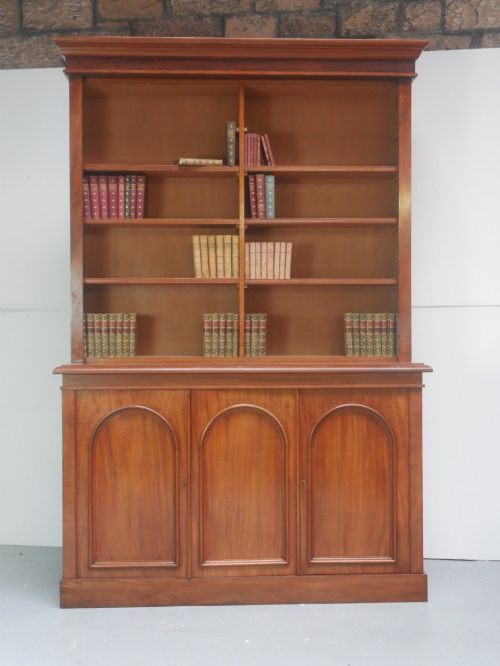
- A piece of furniture containing horizontal shelves utilised for storing books and manuscripts. Versions from this era range from low dwarf bookcases to large breakfront library pieces.
- Ormolu
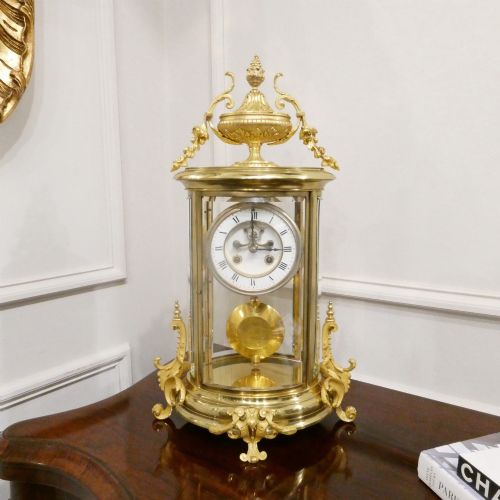
- Gilded bronze used as a decorative mount on furniture and clocks. This technique was popular in French-influenced nineteenth century cabinet making.
- Marquetry
- The art of applying pieces of veneer to a structure to form decorative patterns and pictures. It frequently decorates the doors and surfaces of walnut and rosewood cabinets.
- Aesthetic Movement
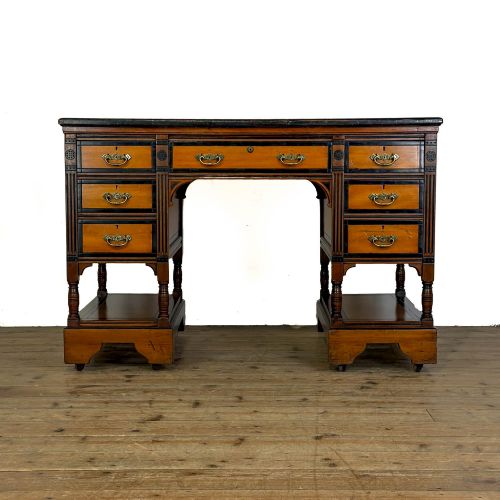
- A late nineteenth century design style emphasising visual and decorative qualities over narrative or moral content. Furniture from this movement often utilises ebonised wood or bamboo.
Nineteenth Century Shelves: Frequently Asked Questions
How do I hang antique wall shelves?
Antique wall shelves usually require secure fixings screwed directly into wall studs or solid masonry using appropriate wall plugs. Ensure the weight of the timber is properly supported by the original brackets or hanging loops provided on the back.
Because nineteenth century woods can be heavy, especially walnut or carved oak, verify that the hanging points are structurally sound before loading them with books or heavy decorative objects.
Can I adjust the shelf heights?
Many nineteenth century bookcases and larger shelving units feature fixed shelves held by traditional joinery rather than modern adjustable tracks. Some examples in the archive record adjustable shelves, but this depends entirely on the original maker's design.
When evaluating a piece for a specific collection of books, check whether the internal vertical clearance accommodates your volumes without damaging the antique timber.
How do I care for nineteenth century wood?
Maintain nineteenth century timber by keeping it away from direct sunlight and sudden temperature changes, which can cause rosewood, mahogany, or walnut veneers to dry out and split. Apply a microcrystalline wax polish occasionally to nourish the surface.
Avoid using modern liquid silicone sprays or harsh chemical cleaners, as these strip the aged patina and damage the traditional French polish or wax finish.
How do I date a set of shelves?
Dating relies on examining the timber species, construction methods, and stylistic cues such as Regency brass inlay or Aesthetic Movement ebonised finishes. Maker stamps or labels, when present, provide a direct link to specific workshops and production years.
Compare the hardware, such as screws and hinges, and look for hand-cut dovetailing or tool marks that indicate nineteenth century hand-tool production techniques.