

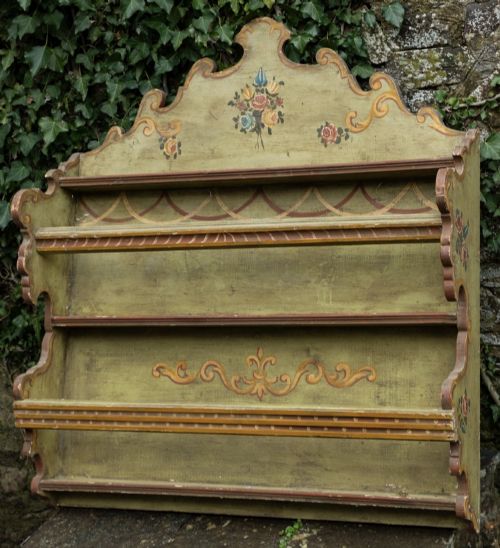


Decorative Wall Shelving
These decorative wall shelving pieces bring architectural character to a room while holding small objects or books.
Decorative Wall Shelving
Decorative wall shelving encompasses wall brackets, wall shelves, plate racks, and overmantel mirrors designed to mount directly onto a wall surface. These pieces range from simple functional ledges to ornate carved supports and multi-tiered displays.
The selection on this page draws from varied periods, including the seventeenth century, Regency, Victorian, Edwardian, and nineteen-thirties. Forms appear in styles such as Rococo, Baroque Revival, Arts and Crafts, and Chippendale Revival.
Buyers encounter items intended to display ceramics, books, or small ornaments while adding distinct period style to an interior space. The formats span single carved wooden brackets, pairs of gilded ledges, and larger mirrored display assemblies.
Materials and construction methods
Makers utilised solid timbers such as mahogany, oak, and carved wood to build the foundational structures of these shelves and brackets. Detail work often involved intricate hand carving and fretwork.
Gilded finishes appear frequently through the application of gold leaf, giltwood, and painted wood surfaces. Glass elements also feature in mirrored display versions and overmantel designs.
Decorative Wall Shelving Retail Price Guide 2026
Typical asking prices for decorative wall shelving among the pieces listed under this phrase on Sellingantiques today, from the lower quarter to the upper quarter. They describe what is for sale here now, not the wider market.
Several pairs of cherub brackets stand ready to hold your smallest treasures aloft.
Distinctions in quality
Quality rests in the depth and precision of the hand carving, where crisp architectural detail distinguishes finer work from simpler production. The finesse of the surface finish, whether original gilding or hand-painted decoration, shapes the character of the piece.
The integrity of the timber joints and the weight of the materials used dictate how securely a bracket or shelf holds its form over time.
The Decorative Wall Shelving Glossary
- Wall Bracket
- A projecting support fixed to a wall to hold a shelf, bust, or ornament. These often feature elaborate carved decoration.
- Giltwood
- Timber that has been coated with gold leaf or gold paint. This technique creates a reflective, luminous surface on decorative frames and brackets.
- Fretwork
- Ornamental design created by cutting patterns through thin wood using a scroll saw or piercing tools. It appears frequently in lighter revival shelving.
- Overmantel Mirror
- A large mirror designed to hang specifically above a fireplace mantel, sometimes incorporating integrated display brackets.
Decorative Wall Shelving: Frequently Asked Questions
How do I hang heavy wall brackets?
Wall brackets require secure fixings into wall studs or solid masonry to support the weight of the timber and any objects placed upon them. Using appropriate wall plugs and screws ensures stability.
Heavier carved wood and giltwood pieces benefit from professional installation to distribute the load safely across the wall surface.
Where should I place decorative shelves?
These shelves suit living rooms, hallways, and studies where they provide compact display space for small ceramics, books, or framed pictures. Placing them at eye level draws attention to the detail of the carving.
They also function effectively above mantelpieces or flanking larger mirrors to create a balanced wall arrangement.
How do I clean gilded wood?
Gilded surfaces require gentle dusting with a soft, dry cloth to prevent damage to the delicate gold leaf layer. Moisture and abrasive cleaners should be avoided entirely.
Regular maintenance preserves the original metallic sheen without stripping the historical finish.
What is the difference between brackets and shelves?
Wall brackets function primarily as structural supports that project from the wall, sometimes holding a small integrated surface. Wall shelves consist of a horizontal board designed specifically for storage or display.
Many antique examples combine both terms, using carved brackets to support one or more tiers of shelving.