

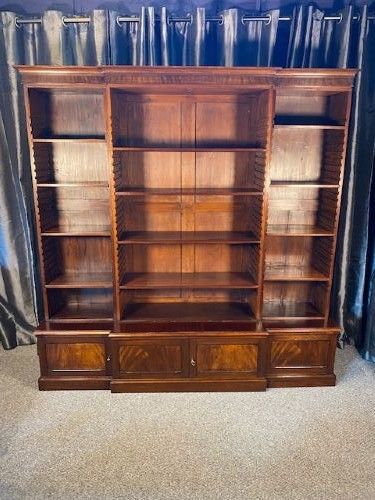
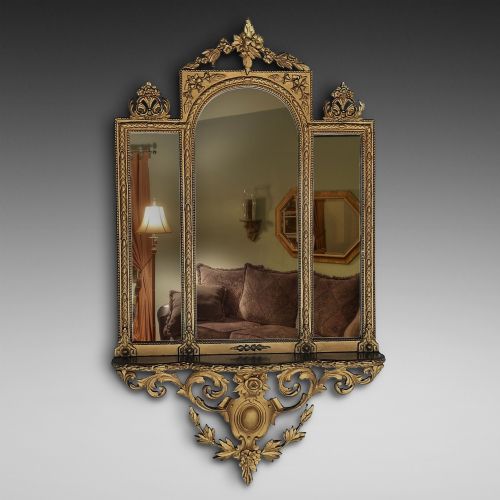
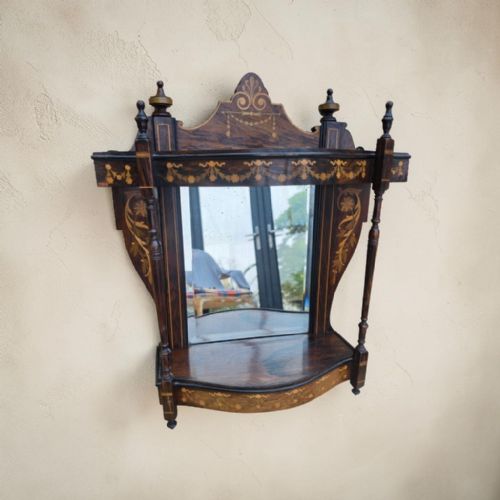
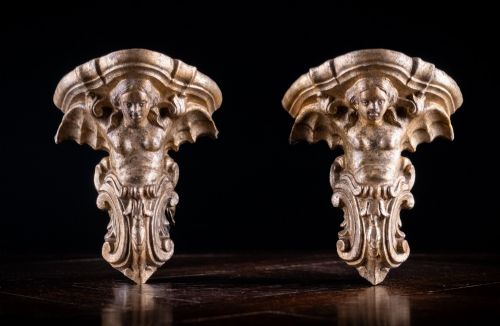
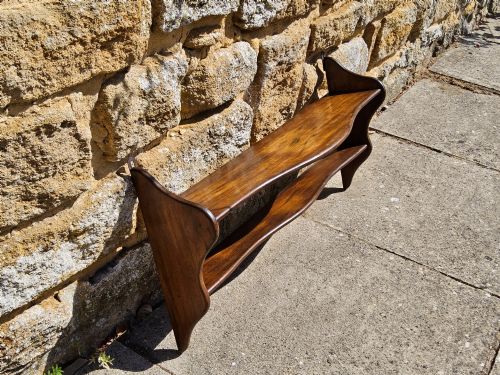
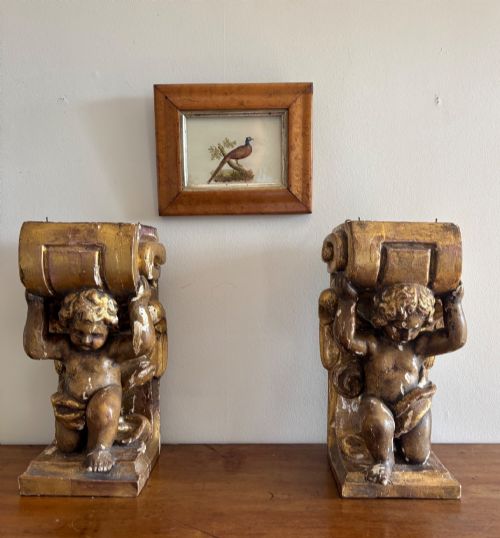
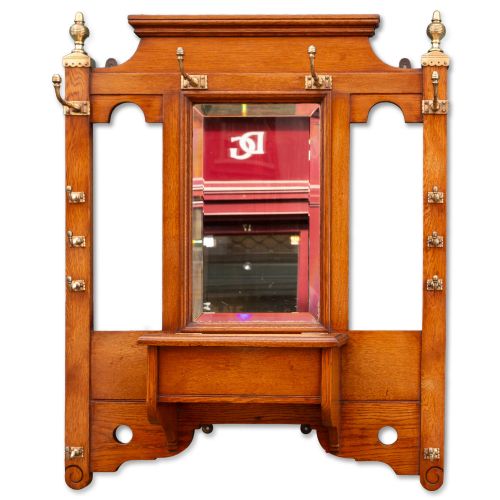
Carved Wall Shelves
Carved wall shelves bring practical tiered storage and tactile ornament to domestic interiors, spanning centuries of regional cabinet-making.
Carved Wall Shelves
Carved wall shelves comprise hanging tiers, corner brackets, and display ledges designed to mount directly onto vertical surfaces. They originate across the eighteenth, nineteenth, and early twentieth centuries, reflecting changing domestic requirements for display and storage.
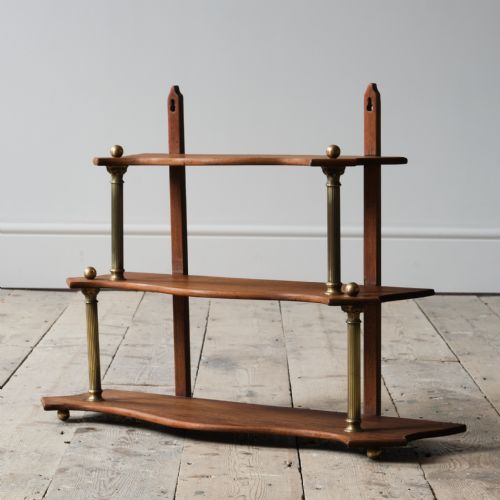
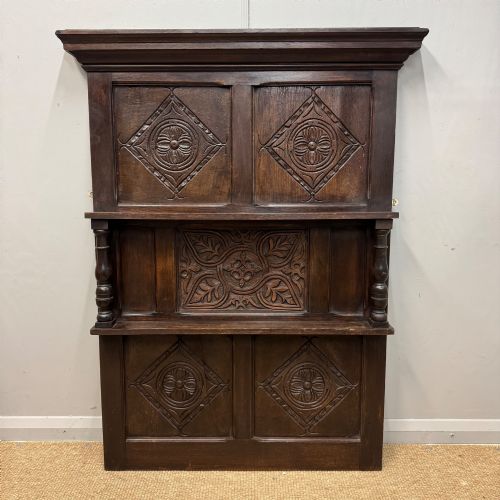
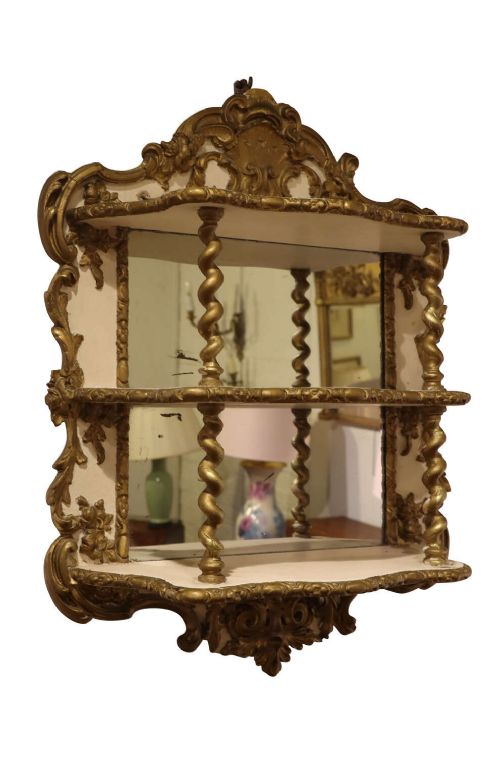
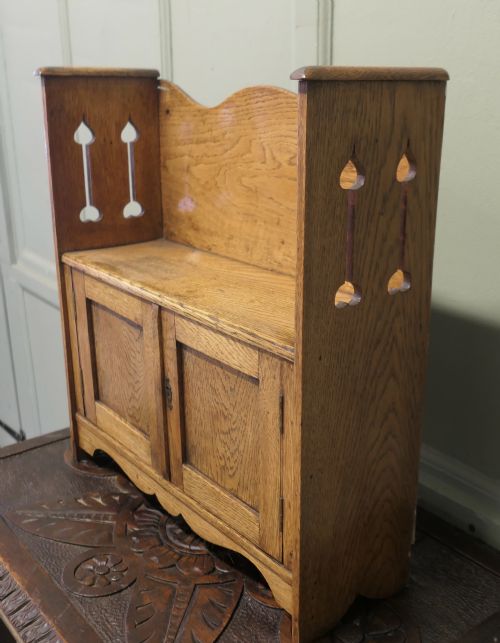
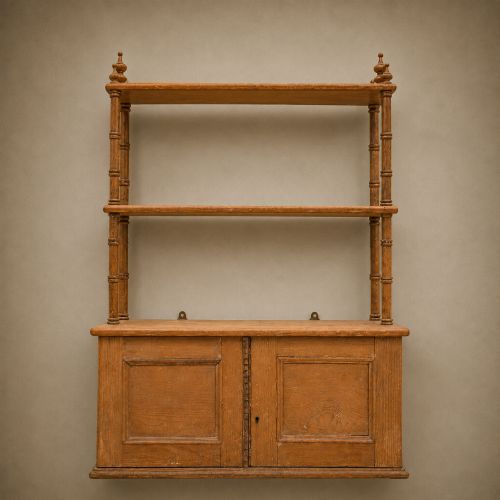
The most common examples encountered here are nineteenth-century pieces executed in oak or mahogany, often bearing the influence of the Victorian or Edwardian periods. These range from simple hanging plate racks to elaborate carved brackets and tiered étagères.
Makers utilised diverse regional timbers and decorative motifs, resulting in forms that serve as both functional furniture and architectural wall decoration.
How They Were Made
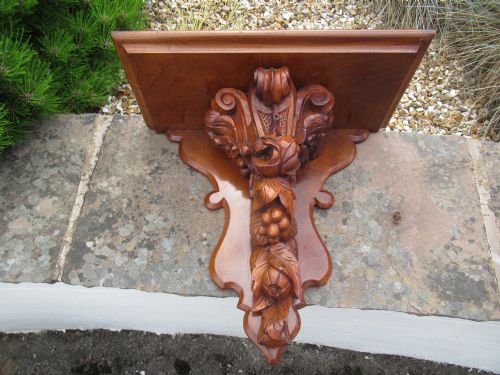
Carpenters and cabinet-makers built these pieces using solid timbers such as oak, walnut, mahogany, and pine, frequently employing hand-carving for foliage, scrollwork, and figurative details. Joinery typically involved traditional housing joints, dovetails, and pegged tenons to support the weight of books, ceramics, or ornaments.
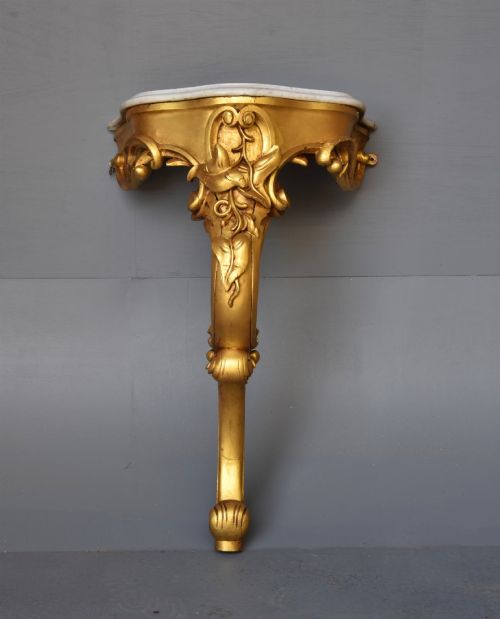
Surface treatments varied according to period and style, including clear wax finishes on natural hardwoods, giltwood applications, hand-painting, and occasional brass or glass fittings. Carved elements were either worked directly into the structural timber or applied as separate mouldings.
The recorded periods span the eighteenth, nineteenth, and early twentieth centuries, encompassing Victorian, Edwardian, and Arts and Crafts styles.
What Varies in Quality
The standard of a piece rests on the crispness of the hand-carving and the selection of timber, where closely figured grains and dense hardwoods outlast softer woods. Depth of relief and undercut detailing separate standard production work from exceptional studio output.
Structural integrity also dictates worth, depending on how cleanly joints meet and how securely hanging points are integrated into the backplates or brackets.
Arthur Simpson of Kendal·John Moyr Smith·Liberty and Co
The Carved Wall Shelves Glossary
- Bracket
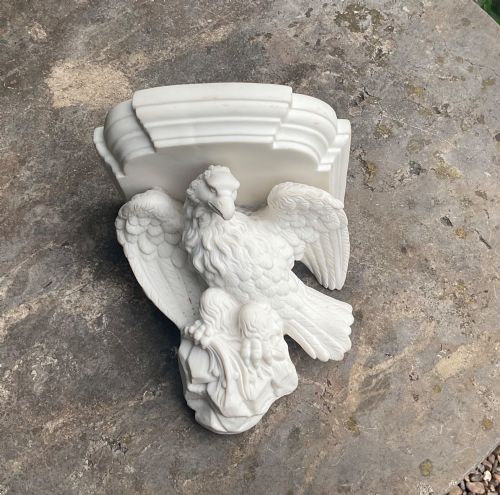
- A projecting architectural support fixed to a wall to carry a shelf or heavy ornament. These often take the form of scrolled consoles or carved figurative corbels.
- Étagère
- A piece of furniture consisting of a set of open shelves for displaying small objects or ornaments. They frequently incorporate mirrors or painted finishes.
- Corbel
- A structural member projecting from a wall to support a weight, usually carved in stone or timber. In wall shelving, they act as decorative load-bearing brackets.
- Overmantel
- A decorative structure placed above a fireplace mantelpiece, frequently incorporating mirrors, panels, or integral display shelves. They anchor the visual weight of a chimney breast.
- Fretwork
- Ornamental design created by piercing thin wood with a fretsaw to produce flat, openwork patterns. This technique appears on the friezes and sides of lighter hanging shelves.
Carved Wall Shelves: Frequently Asked Questions
How do I hang antique wall shelves safely?
Most hanging shelves utilise original brass mounting eyes or rear brackets secured directly to the timber frame. Ensure fixings engage wall studs or employ heavy-duty wall anchors appropriate for the weight of the timber.
Distributing weight evenly across the tiers prevents undue strain on historical joints and mountings.
Were these shelves meant for books or display?
Function depended entirely on the depth of the ledges and the robustness of the backplate. Heavier oak and mahogany examples often supported books or kitchen plateware.
Lighter giltwood, walnut, and étagère variants were designed specifically for porcelain, figurines, and decorative ornaments.
How do I tell Victorian shelves from Edwardian ones?
Victorian pieces generally favour heavier timbers, darker finishes, and dense Gothic or Rococo revival carving motifs. Oak and mahogany dominate this earlier era.
Edwardian and later pieces frequently introduce lighter satin birch, painted surfaces, or simpler Arts and Crafts structural lines.
Can I place these shelves on any wall type?
Historic wall furniture requires solid backing to support both the dead weight of the hardwood and the objects placed upon it. Plasterboard alone rarely suffices without proper internal bracing.
Checking the existing fixing points on the reverse reveals how the maker intended the piece to bear load.