
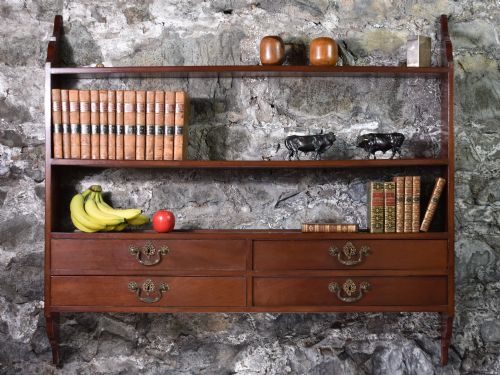
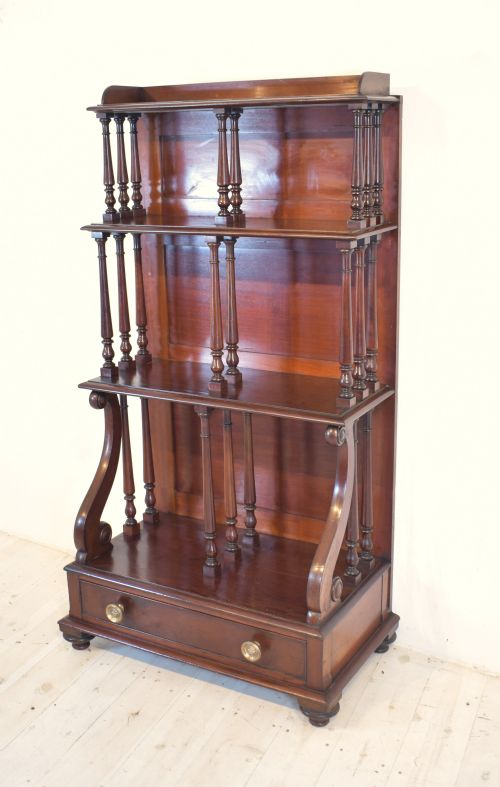
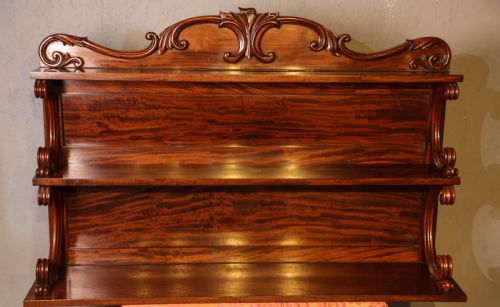

Mahogany Display Rack
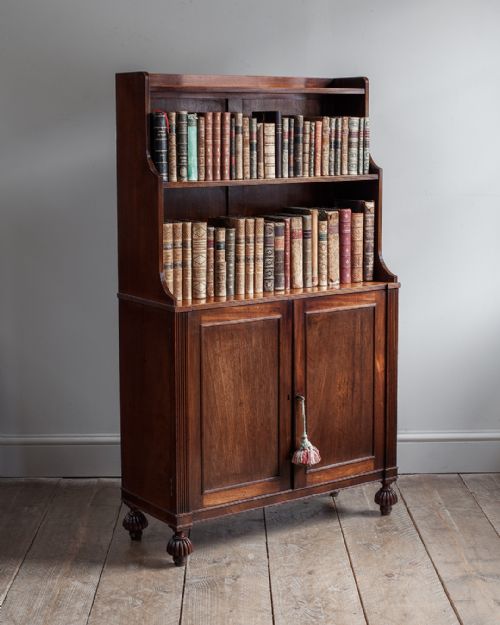
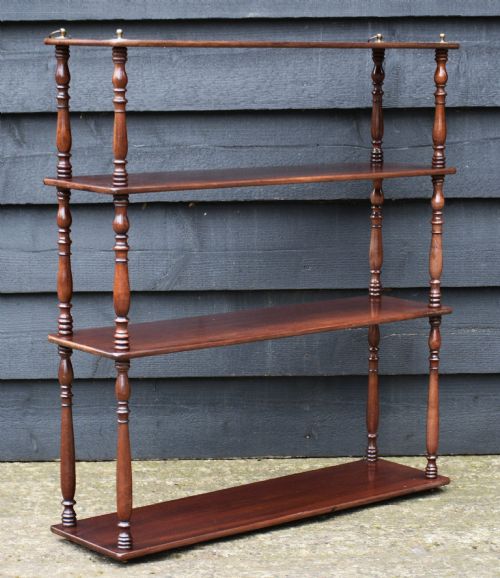
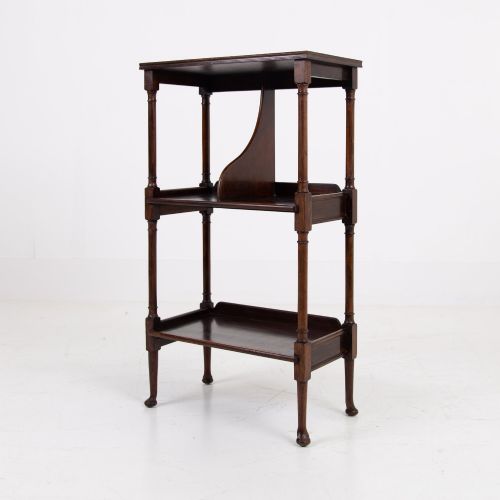
A mahogany display rack organises books, folios and decorative plates using timber shaped during the Georgian, Regency and Victorian periods.
Mahogany Display Rack
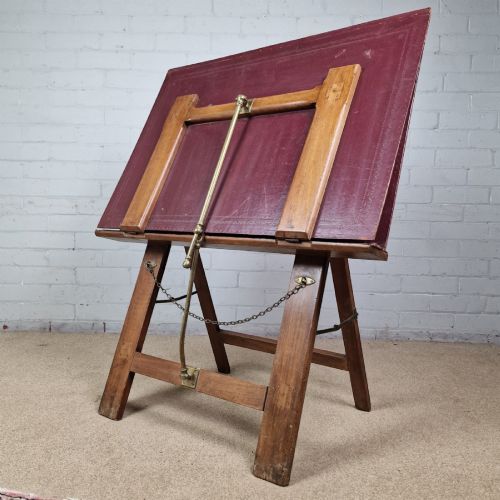
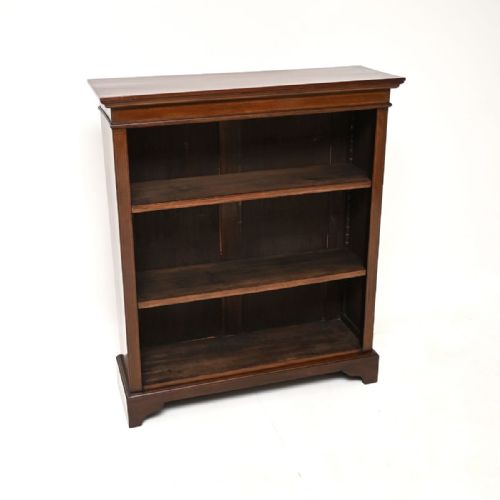
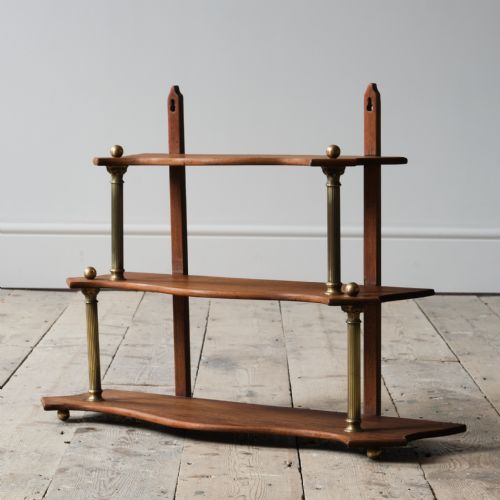
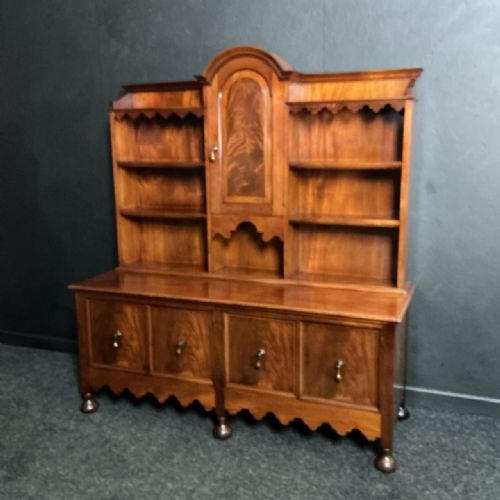
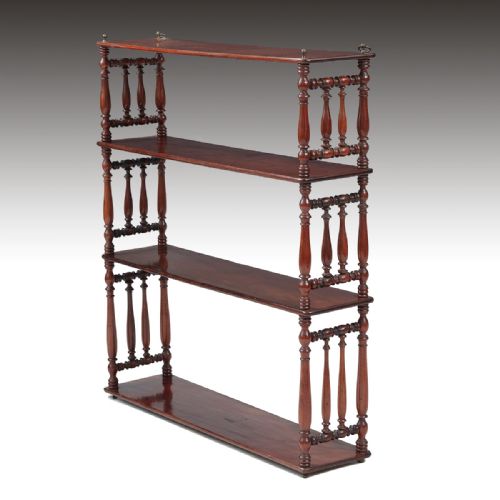
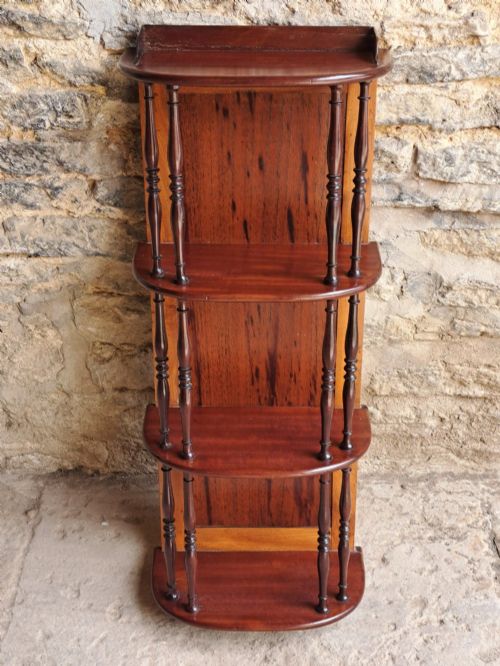
When you search for a mahogany display rack, you encounter wall-mounted shelves, open bookcases, folio stands and hanging whatnot shelves dating from the eighteenth century to the early twentieth century. These pieces serve to exhibit books, sheet music, plates and pictures within domestic rooms.
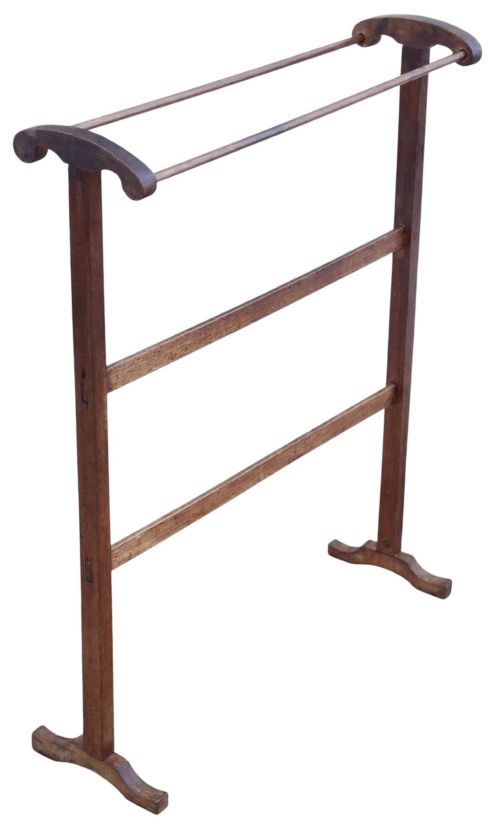
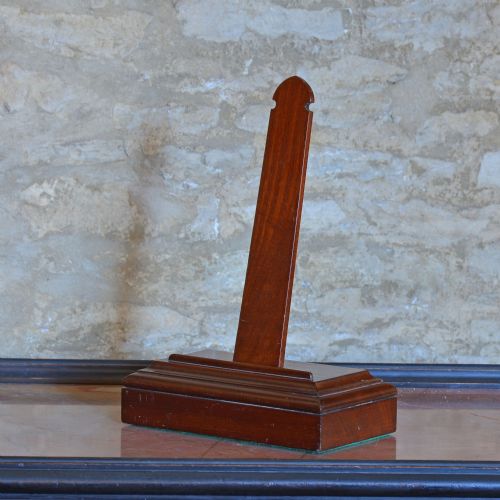
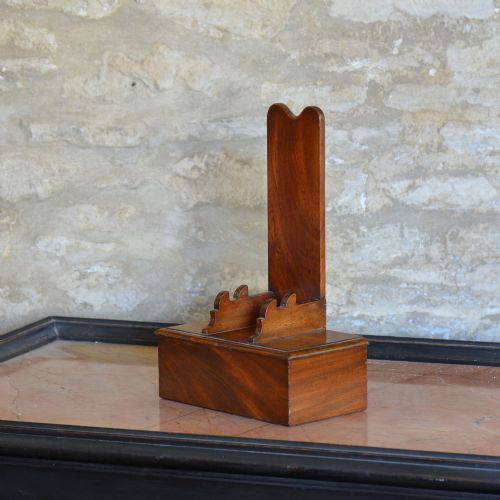
The most common forms on this page include wall hanging shelves, freestanding bookcases and floor-standing folio stands or racks. Styles span simple Georgian utility, graceful Regency curves, ornate Victorian carving and Edwardian inlay work.
How they were made
Cabinet makers constructed these pieces primarily from solid mahogany and flame mahogany veneers, often incorporating secondary timbers such as oak, pine and satinwood for internal elements. Timber selection dictated how well the grain caught the light on visible display surfaces.
Metal components appear in brass brackets, hinges and adjustable mechanisms on music stands and folio racks. Felt linings and leather details occasionally protect books and plates resting within the compartments.
Listings feature mahogany, oak, satinwood, pine and brass, spanning Georgian, Regency, Victorian and Edwardian eras.
What varies in quality
The distinction between standard and superior pieces lies in the choice of timber figure, such as richly grained flame mahogany, and the crispness of fretwork or inlaid details. Better examples show refined proportions and harmonious joining rather than purely utilitarian construction.
Makers who incorporated solid brass fittings and functional adjustable mechanisms elevated a simple wall shelf or folio stand into an exceptional furnishing. The integration of secondary woods also reveals the care taken in hidden structural areas.
The Mahogany Display Rack Glossary
- Whatnot
- A multi-tiered piece of furniture designed for displaying ornaments, books or small items. These structures feature open shelves supported by slender columns.
- Folio Stand
- A freestanding rack designed to hold large books, prints, maps or artist portfolios. They often include adjustable folding frames.
- Flame Mahogany
- A veneer cut from timber where the branch meets the trunk, producing a distinctive flickering flame pattern. Cabinet makers used this on prominent display surfaces.
- Fretwork
- Openwork ornamentation carved or pierced through thin timber in geometric or scrolling patterns. This technique appears on decorative wall shelves.
Mahogany Display Rack: Frequently Asked Questions
Where should I place a hanging wall shelf?
Wall-mounted display pieces suit living rooms, studies or hallways where floor space remains limited. They require secure fixing to wall studs or masonry to support the weight of books and ceramics.
Positioning them at eye level allows you to view collections of plates or small volumes comfortably. Ensure the surrounding wall space balances the proportions of the timber frame.
How do I care for mahogany furniture?
Keep wooden display racks away from direct heat sources and strong sunlight to prevent the timber and veneer from drying out or fading. Dust the surfaces regularly with a soft, dry cloth.
A light application of traditional beeswax helps nourish the grain without building up heavy chemical residues. Avoid using silicone sprays that can penetrate and damage historic finishes.
What is the difference between a bookcase and a whatnot?
Bookcases feature enclosed or open shelving primarily sized for storing books vertically in rows. They focus on linear storage capacity for reading materials.
Whatnots consist of open, multi-tiered platforms specifically designed to showcase decorative objects, plates and curiosities from all angles. Their open framework emphasises display over heavy book storage.
How do I identify a Regency period piece?
Regency items date from the early nineteenth century and frequently incorporate classical architectural motifs, brass inlay and sabre legs. The design language draws inspiration from ancient Greece and Rome.
Look for clean architectural lines, dark mahogany tones and restrained brass mounts. Pieces from this era often balance functional utility with refined decorative restraint.