



Fretwork Wall Shelves
Fretwork wall shelves combine delicate open woodwork with practical display space, offering collectors a striking piece of period wall furniture.
Fretwork Wall Shelves
Fretwork wall shelves appear across several periods, most notably in Victorian and Edwardian iterations alongside earlier Georgian and Regency designs. These pieces range from three-tier hanging shelves and corner units to elaborate display bookcases with intricate pierced wooden panels.
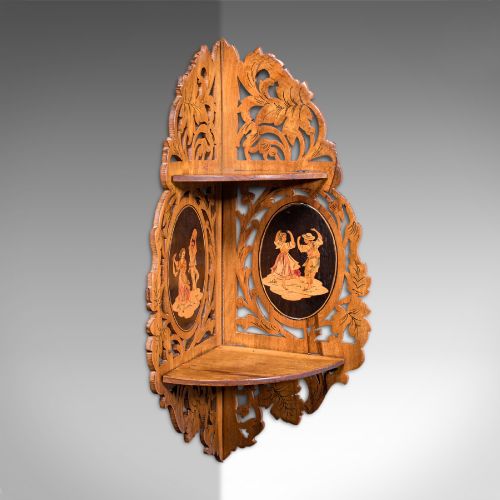
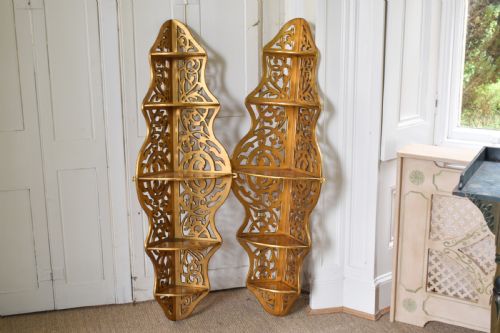
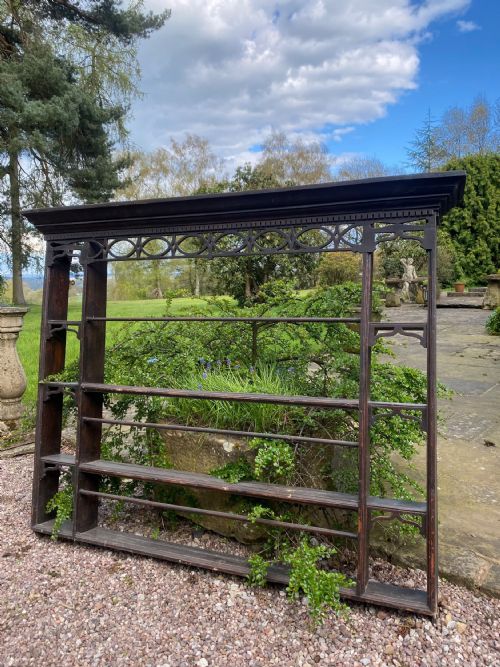
The selection on this page demonstrates varied forms, including wall brackets, plate racks, and small hanging whatnots. Mahogany and rosewood form the core of these listings, accompanied by occasional examples in pine, oak, and giltwood.
Buyers encounter styles spanning from Chippendale revival fretwork to Victorian Sorrento inlay and Gothic Revival details. Each piece provides wall-mounted display surfaces while showcasing the decorative pierced woodwork characteristic of the type.
How they were made
Cabinetmakers utilised dense timbers like mahogany and rosewood, which held fine pierced details without splitting. Softer woods such as pine and oak served utilitarian plate racks and country furniture.
Makers cut intricate patterns into thin boards using fretsaws to create the characteristic openwork friezes and brackets. Inlaid examples incorporate contrasting woods, while giltwood pieces rely on gesso and gold leaf applied to a wooden base.
Fretwork Wall Shelves Retail Price Guide 2026
Typical asking prices for fretwork wall shelves among the pieces listed under this phrase on Sellingantiques today, from the lower quarter to the upper quarter. They describe what is for sale here now, not the wider market.
The listings span multiple centuries, uniting 18th Century country pine plate racks with ornate Victorian mahogany fretwork mirrors and Edwardian whatnots.
What varies in quality
The crispness of the pierced fretwork separates standard production from superior craftsmanship. Sharp internal corners and smooth interior curves in the open woodwork indicate skilled hand execution rather than mechanical mass production.
Timber selection and grain matching across multiple tiers dictate visual harmony in mahogany and rosewood specimens. Integrated decorative elements, such as inlaid motifs or turned columns, further elevate the distinction between simpler hanging shelves and elaborate display pieces.
The Fretwork Wall Shelves Glossary
- Fretwork
- Ornamental openwork pattern created by cutting designs through thin wood. This technique defines the visual lightness of hanging display shelves.
- Whatnot
- A piece of furniture consisting of a set of open shelves for displaying small objects. Edwardian and Victorian makers adapted this form for wall mounting.
- Gesso
- Plaster-based compound applied to wood surfaces before gilding. It provides a smooth base for gold leaf on giltwood brackets.
- Sorrento inlay
- Woodworking technique involving intricate mosaic patterns of various coloured woods. This decoration appears on late nineteenth-century Italian export pieces.
- Plate rack
- Wall-mounted shelving designed specifically to display plates upright. Georgian examples frequently feature shaped side supports and fretwork friezes.
Fretwork Wall Shelves: Frequently Asked Questions
How do I hang wall shelves safely?
Most antique wall shelves feature original hanging loops or brackets fixed to the structural uprights. Assess the weight of the timber and use appropriate wall fixings suited to your plaster or brickwork.
Distribute weight evenly across the tiers, placing heavier items on the lowest shelf. Ensure the fixings anchor securely into wall studs or masonry rather than unsupported plasterboard.
What is the difference between brackets and shelves?
Wall brackets are single structural supports designed to hold a small projection or shelf board independently. They often feature carved or pierced scrolling profiles.
Shelves comprise multiple tiers connected by uprights or backboards to form a complete hanging unit. Brackets serve smaller display roles, while shelves offer greater surface area.
How do I date an antique shelf?
Examine the timber species, construction joints, and decorative style to determine the period. Mahogany and rosewood predominate in nineteenth-century pieces, while oak and pine suggest earlier country origins.
Revival styles like Chippendale or Gothic Revival indicate later nineteenth-century manufacturing dates rather than original Georgian production. Tool marks and screw types provide additional clues to age.
Can these shelves hold heavy books?
Fretwork shelves are primarily designed for decorative ornaments, ceramics, and small display items. The pierced wooden brackets are delicate and may not support heavy volumes.
Heavier items risk straining the hanging joints and the thin timber uprights. Stick to displaying lighter collectibles, plates, and small curiosities on these pieces.