
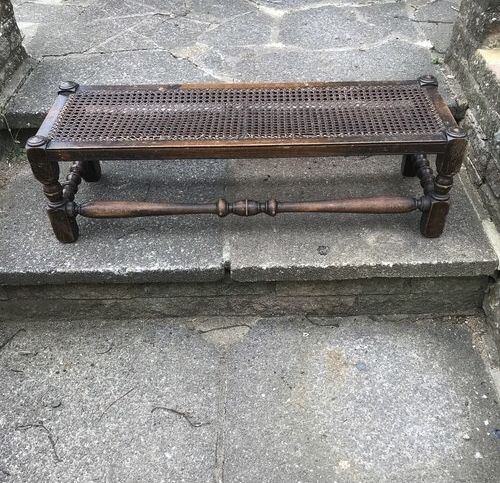


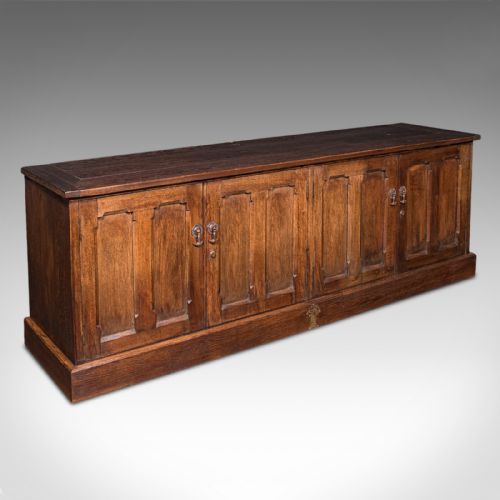


Gothic Revival Oak Bench
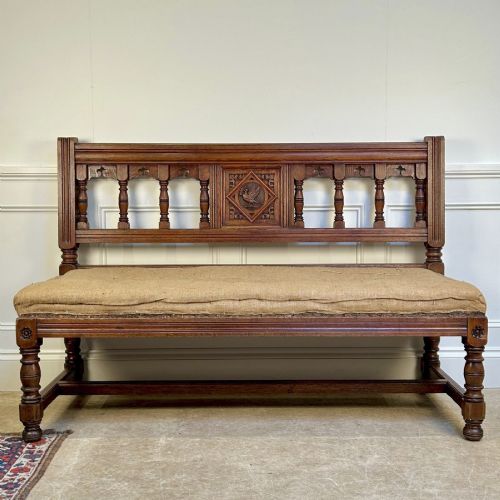
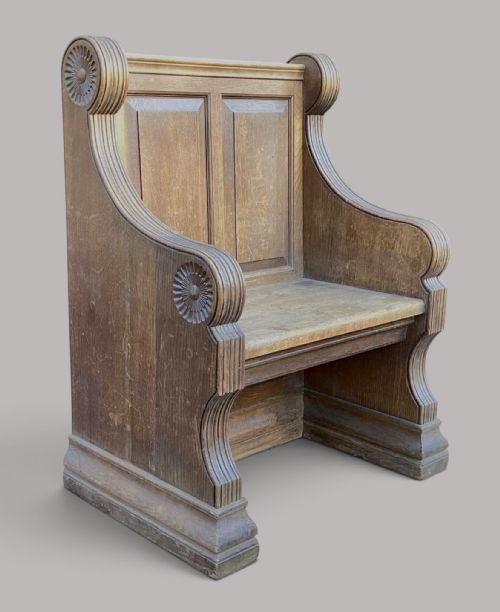
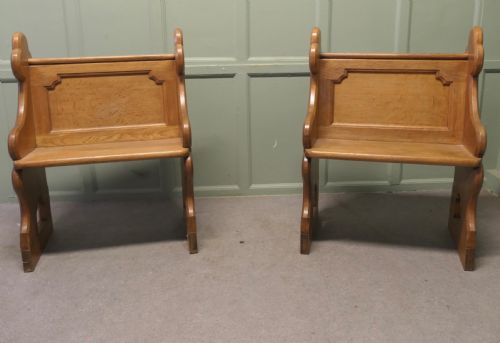
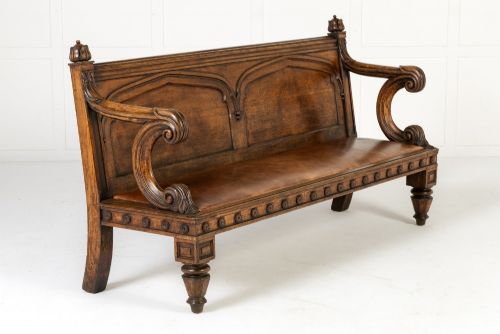
A gothic revival oak bench brings architectural presence to a hallway, utilising solid timber and pointed arch motifs.
Gothic Revival Oak Bench
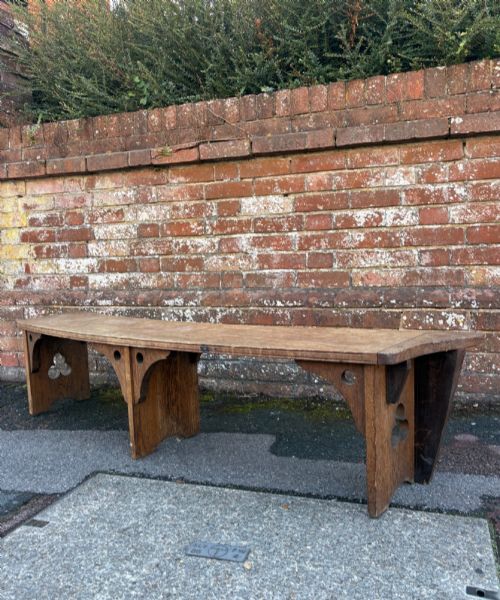
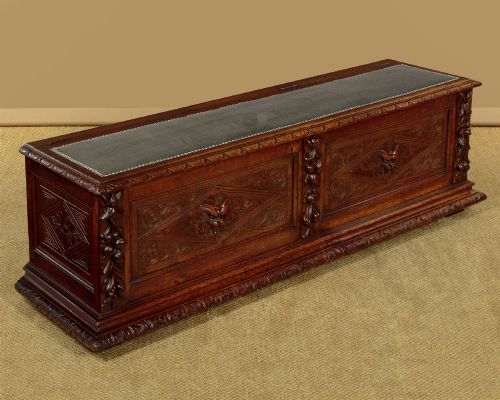
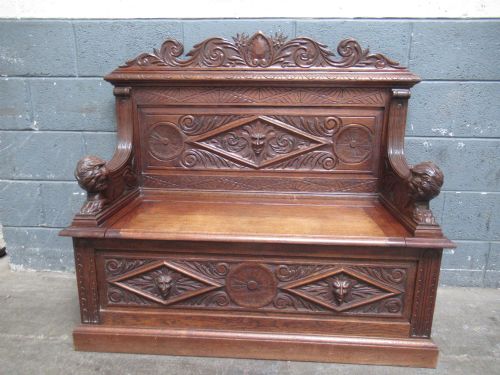
A gothic revival oak bench takes several architectural forms across the nineteenth century, including settles, monks benches, and hall seats with lift-up lids. You will most frequently meet these pieces grounded in Victorian design, often bearing trefoil carvings, panelled backs, or trestle supports.
Makers drew heavily upon medieval ecclesiastical design, translating choir stalls and screenwork into domestic furniture for entrance halls and reception rooms. These seating pieces served practical duties for putting on boots while establishing a stern, historicist aesthetic in the home.
Materials and Technique
Carpenters constructed these benches primarily from solid oak, sometimes combining it with elm or burr elm for seats and structural framing. Joinery relied on heavy pegging, mortise and tenon joints, and board construction to support the substantial weight of the timber.
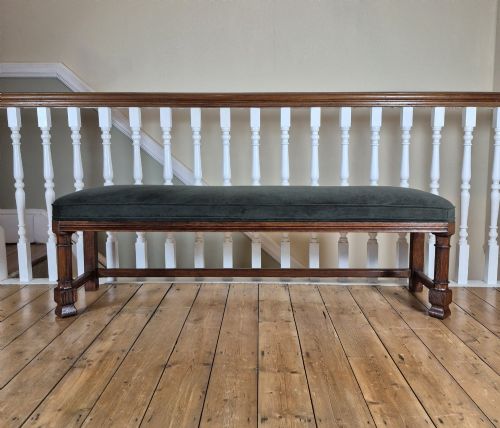
Decoration relied on deep chip carving, linenfold panelling, and applied brass or iron hardware such as hinges and brackets. Upholstery, where present, utilised leather, velvet, fabric, or hessian pinned over stuffing to cushion the seat.
Some nineteenth-century hall benches hide secret compartments beneath their hinged seats for stashing muddy boots.
Assessing the Workmanship
Quality rests upon the crispness of the hand-carved detailing, particularly on figures such as green men or tracery panels, which separates bespoke workshop output from mass-produced factory work. The weight and selection of the solid oak timbers, along with robust architectural proportions, dictate the structural integrity of each piece.
Integration of secondary materials also marks the tier of a bench; superior examples incorporate quality brass fixtures, neatly turned legs, or well-figured burr elm panels rather than plain secondary woods.
GIllows
The Gothic Revival Oak Bench Glossary
- Settle
- A wooden wooden bench with a high back, solid arms, and often a storage compartment beneath the seat. This form kept draughts away from people sitting in cold hallways.
- Monks bench
- A convertible piece of furniture featuring a hinged top that folds down to form a table. It served dual purposes in smaller or multi-use spaces.
- Trefoil
- A three-lobed ornamental design resembling clover leaves, frequently pierced through the wooden splats or carved in relief on Gothic woodwork.
- Prie-dieu
- A devotional kneeling desk or chair equipped with a sloping shelf for prayer books. These pieces share the ecclesiastical oak construction seen on many Gothic benches.
- Reformed Gothic
- A nineteenth-century design movement promoting simpler, structural honesty and flat ornamentation rather than elaborate ecclesiastical revivalism.
Gothic Revival Oak Bench: Frequently Asked Questions
Where should I place a gothic revival oak bench?
These benches suit entrance halls, reception rooms, and large corridors where their architectural frames and high backs create a strong visual anchor.
They also function well against plain walls in living spaces, providing both sturdy seating and practical internal storage for boots or blankets.
How do I care for nineteenth-century oak furniture?
Maintain the timber by applying natural beeswax occasionally to nourish the dry oak and preserve the historic patina built up over generations.
Keep the bench away from direct heat sources and radiators to prevent the solid wood from splitting or warping at the joints.
What is a green man carving?
A green man depicts a human face surrounded by or sprouting from foliage, vines, or leaves, symbolising rebirth and spring.
Carvers frequently hid these expressive botanical faces within the tracery and armrests of Victorian Gothic seating.
How do I distinguish Victorian Gothic from Arts and Crafts?
Victorian Gothic pieces lean heavily into ecclesiastical symbolism, pointed arches, and elaborate architectural tracery inspired by medieval stone buildings.
Arts and Crafts examples emphasise plain construction, visible joinery, and simpler forms that highlight the natural grain of the oak.