


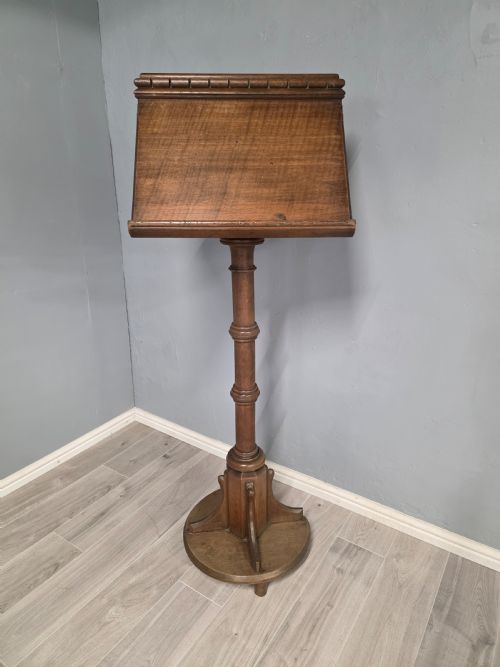
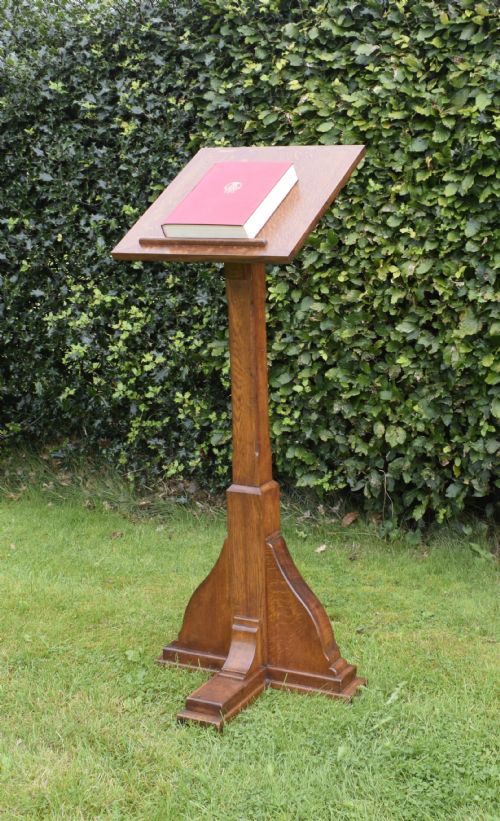


Gothic Revival Lectern
These gothic revival lectern pieces bring ecclesiastical architectural motifs into domestic and public spaces, offering sturdy platforms for reading and display.
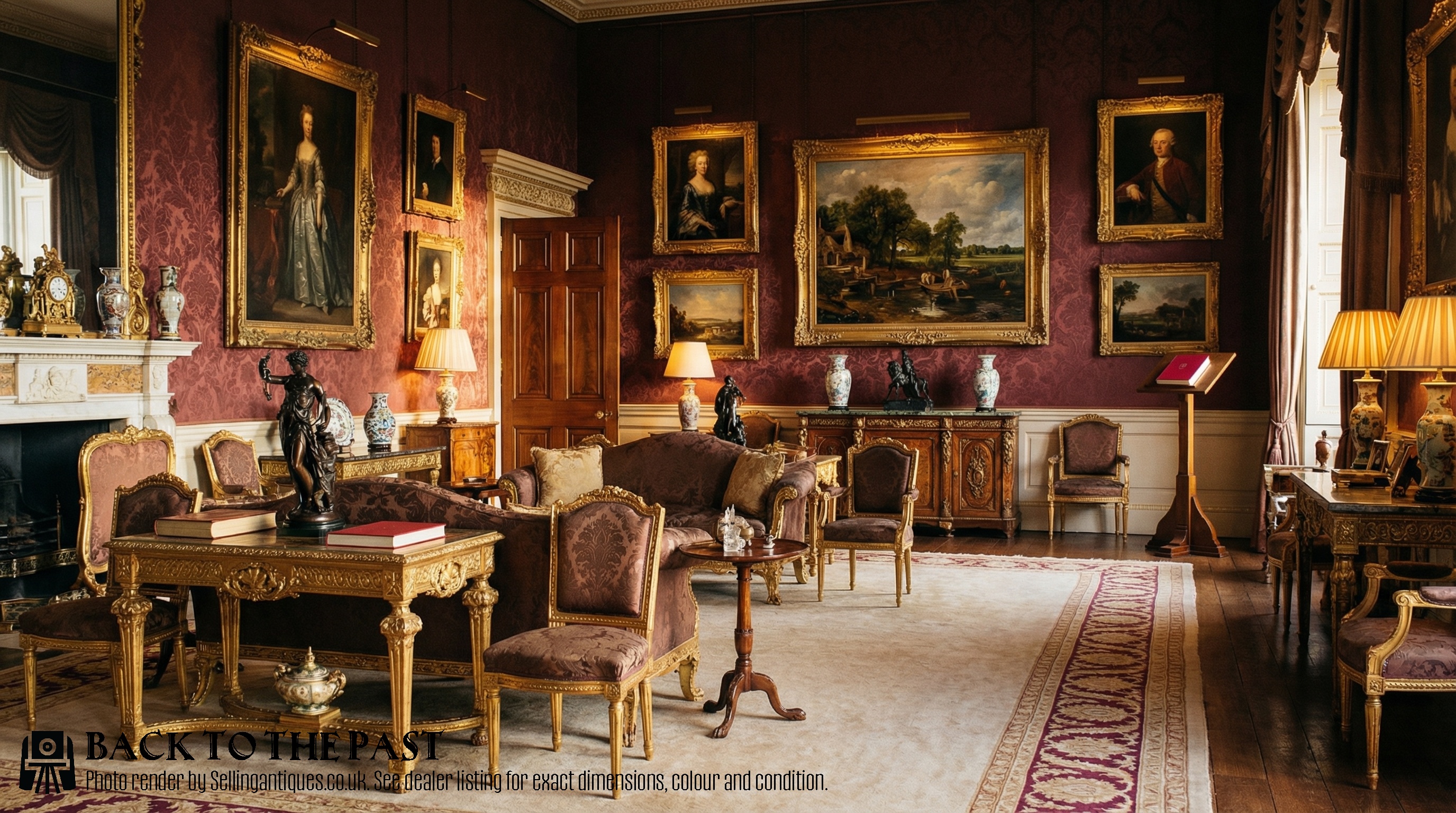
Gothic Revival Lectern
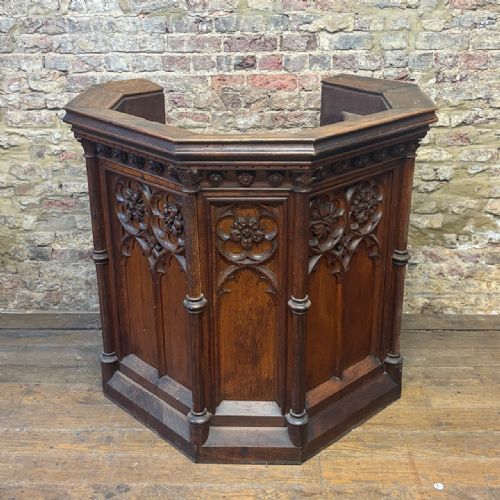
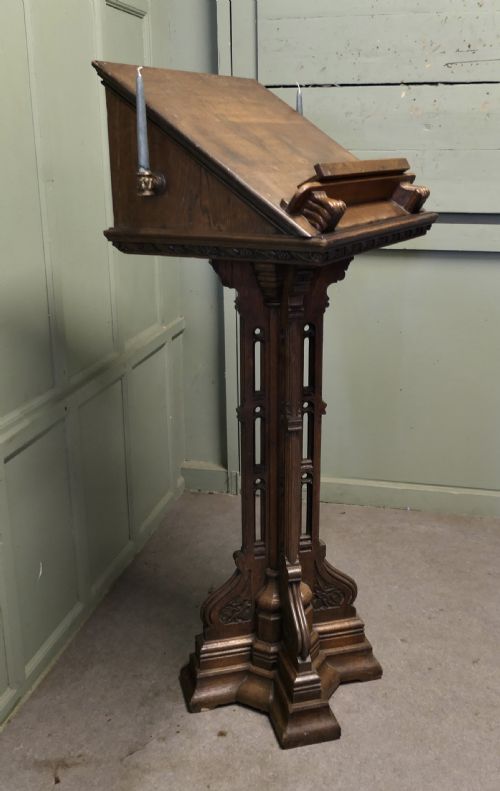
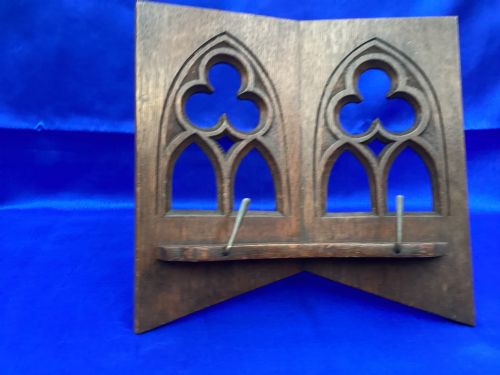
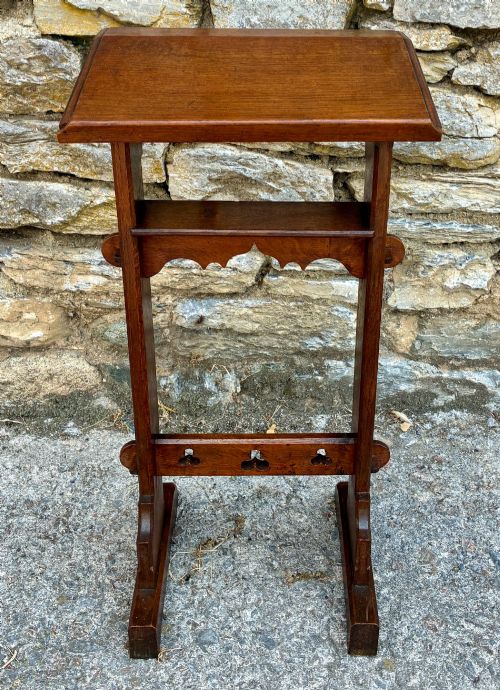
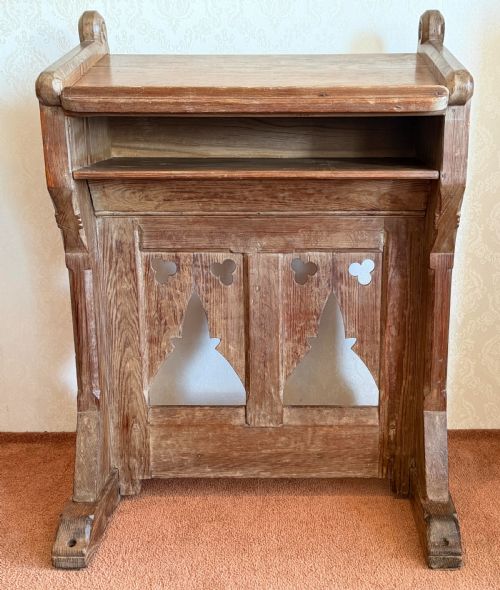
A gothic revival lectern is a piece of ecclesiastical or secular furniture designed to support books, papers, or folios during reading. These stands borrow heavily from medieval stone architecture, translating pointed arches, tracery, and quatrefoils into timber and metal.
The versions most commonly met on this page date from the nineteenth century and the early twentieth century. They range from small tabletop book stands to substantial freestanding church pulpits and prayer desks.
Makers drew on Gothic forms for both sacred use in churches and secular reading tasks in libraries and studies. Oak forms the most frequent material, often accompanied by brass and pine.
How they were made
Carpenters and joiners relied primarily on solid oak, pine, and mahogany for timber pieces, utilising mortise and tenon joinery to build rigid frames capable of supporting heavy folios. Carving appears frequently on panels and friezes, depicting linenfold patterns, foliage, and architectural arcading.
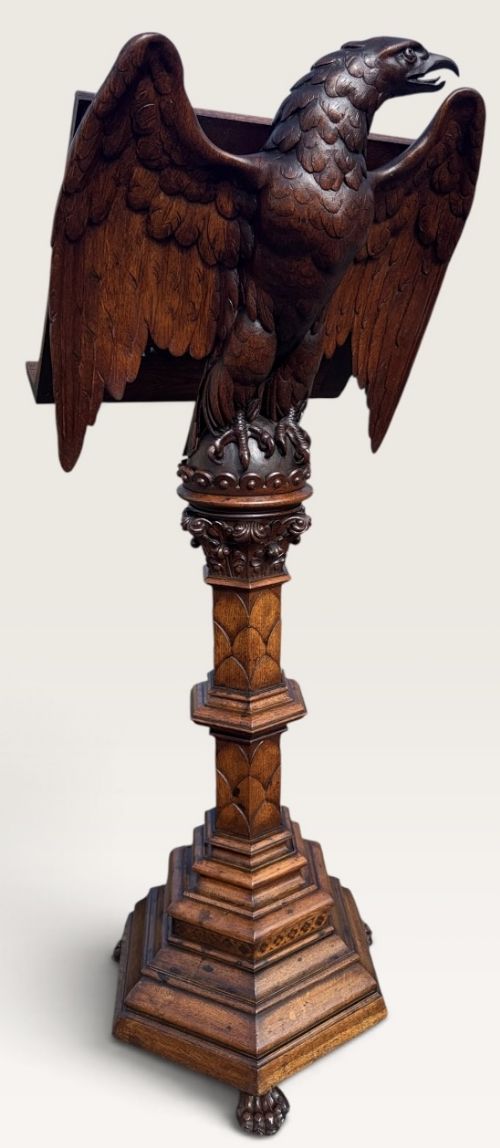
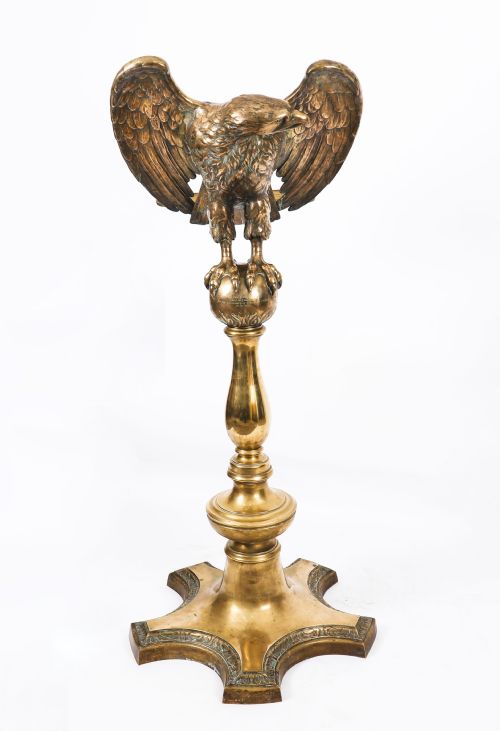
Metalworkers fabricated structural and decorative elements in brass and iron, casting eagles with outstretched wings or forging scrolling brackets. These metal components often combine with wooden standards to create stable pedestals.
Gothic Revival Lectern Retail Price Guide 2026
Typical asking prices for gothic revival lectern among the pieces listed under this phrase on Sellingantiques today, from the lower quarter to the upper quarter. They describe what is for sale here now, not the wider market.
The listings span the nineteenth and early twentieth centuries, featuring oak, brass, pine, and iron across various lectern and prayer desk forms.
What varies in quality
The depth and crispness of the hand carving separate simpler stands from ambitious ecclesiastical commissions. Crisp undercut tracery and well-modelled animal figures indicate skilled workshop production rather than routine batch manufacture.
Choice of materials also dictates standing, with dense native timbers and heavy cast brass outweighing lighter softwoods or thin veneers. Structural integrity in the joints and the pivoting mechanisms of revolving stands determine daily utility.
Hart and Son
The Gothic Revival Lectern Glossary
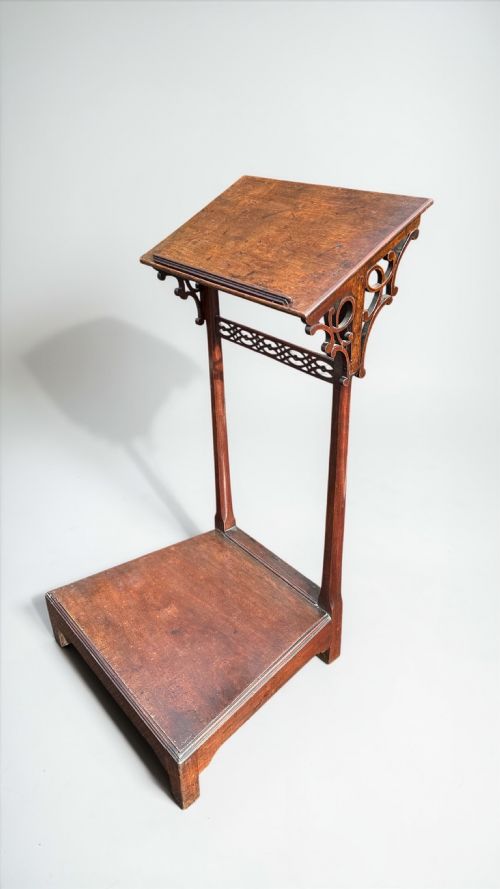
- Prie Dieu
- A small desk or prayer kneeler designed for private devotion, combining a slanted desktop for books with a padded lower shelf.
- Tracery
- Openwork ornamental stonelike patterns in stone or wood, commonly used in Gothic architecture and replicated on lectern panels.
- Folio
- A large book format or a flat stand designed to hold loose papers and large volumes securely.
- Ecclesiastical
- Relating to the Christian Church or its clergy, describing pieces originally commissioned for chapels and cathedrals.
Gothic Revival Lectern: Frequently Asked Questions
Where were these lecterns originally used?
Many examples served in nineteenth century churches, chapels, and cathedrals as pulpits or reading desks for scripture. Others functioned in private domestic libraries and studies.
Secular versions also adapted the ecclesiastical design language for holding menus, folios, or reception greetings in public buildings.
How do I care for an antique oak lectern?
Keep wooden surfaces away from direct heat sources and sudden humidity shifts to prevent timber splitting. Regular dusting with a dry cloth maintains the finish without needing harsh polishes.
Wax can be applied sparingly to nourish dry oak surfaces when necessary.
Are brass eagle lecterns heavy?
Cast brass eagle stands carry significant weight to provide a stable base for large service books. The metal components are often mounted on substantial wooden or iron pedestals.
Moving these pieces requires care due to their solid construction and protruding wings.
How do I distinguish Victorian Gothic Revival from Arts and Crafts pieces?
Victorian Gothic Revival pieces lean heavily on strict historical architectural details like pointed arches and intricate religious iconography. They often feature heavier carved ornamentation.
Arts and Crafts variants simplify these forms, focusing instead on visible construction methods and honest material treatment.