



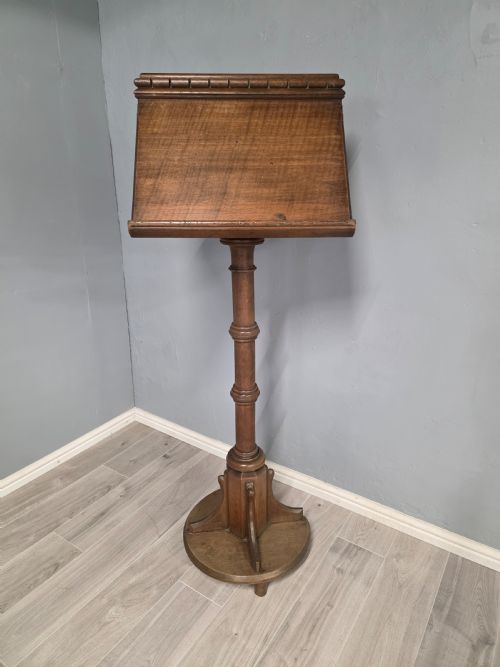
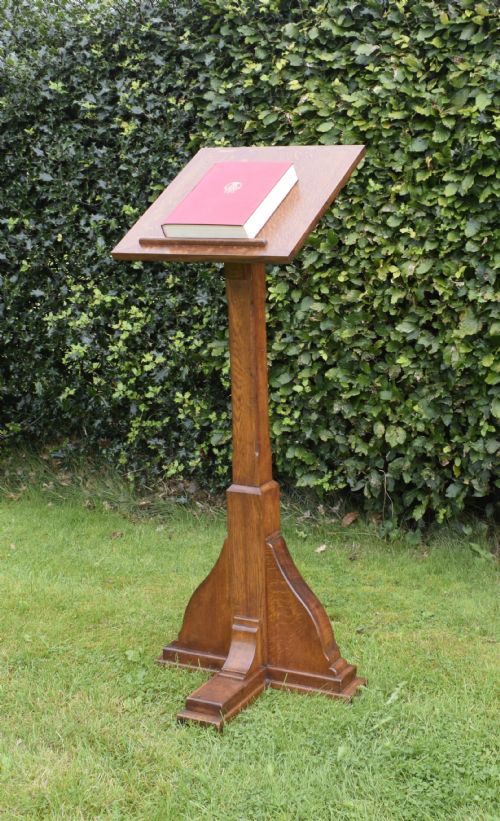


Church Reading Stand
A church reading stand brings ecclesiastical history straight into a home or study, offering solid oak build quality and stately architectural presence.
Church Reading Stand
A church reading stand serves as a sturdy platform for sacred texts, holding heavy volumes at a comfortable angle for public or private recitation. Buyers searching this phrase encounter substantial ecclesiastical furniture designed to command attention in a room.
The pieces on this page span several centuries, with nineteenth-century examples and Victorian Gothic revivals appearing most frequently alongside twentieth-century iterations. Oak dominates the selection, appearing in both simple pine combinations and heavily carved formats.
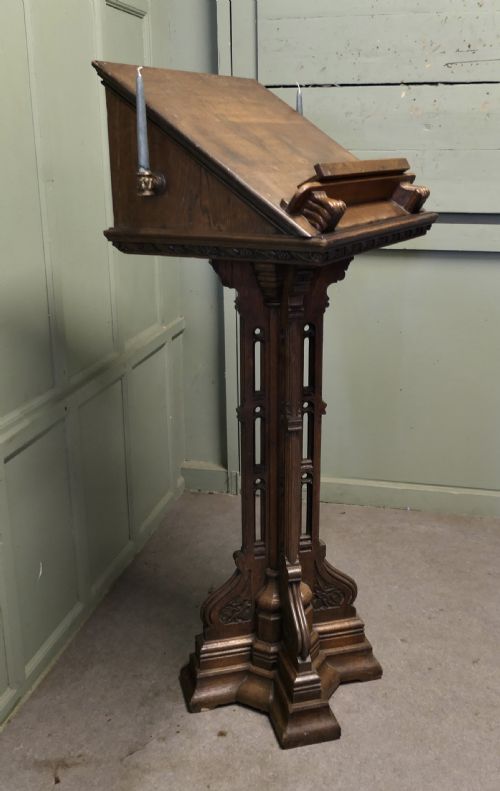
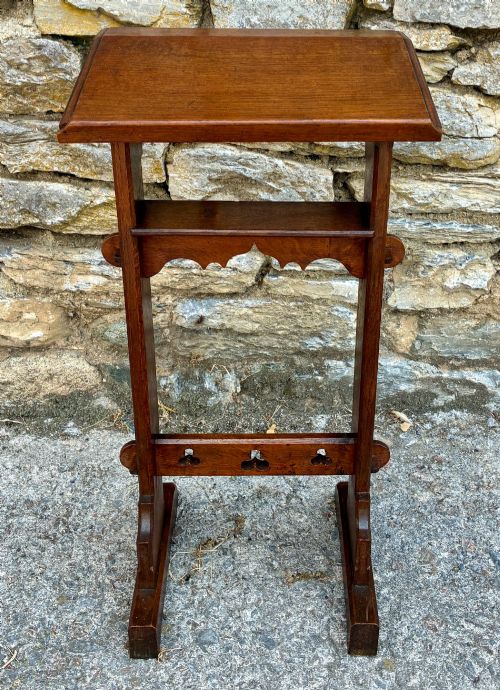
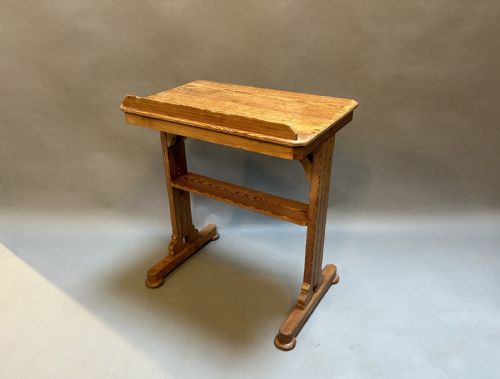
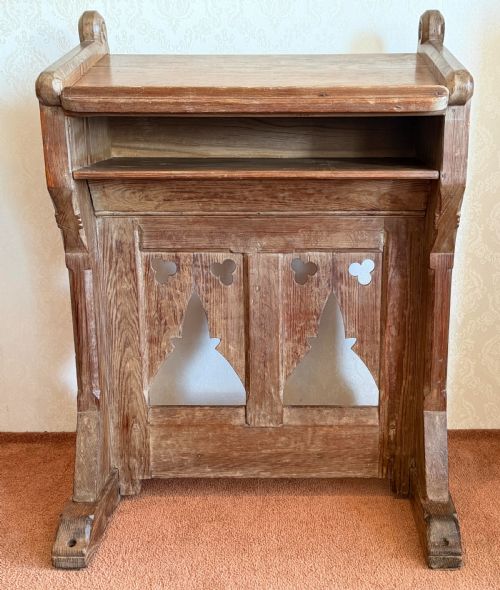
Forms range from compact table stands and book rests to monumental floor-standing podiums and desks. Many incorporate architectural motifs rooted in ecclesiastical design traditions, such as pointed arches and structural tracery.
How they were made
Carpenters relied heavily on solid oak and pine for the structural framework of these stands, utilising traditional joinery to support heavy loads of paper and leather. Timber surfaces often display deep carving work, particularly on eagle motifs and panels.
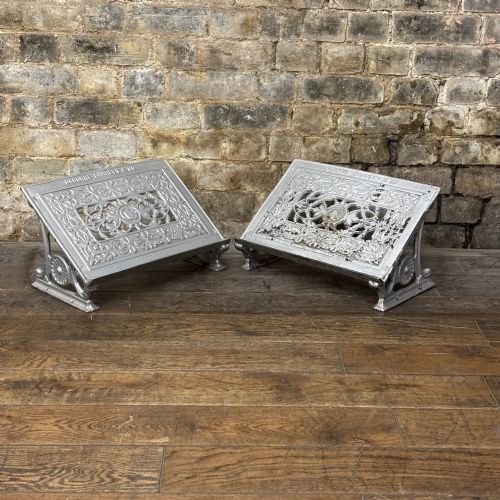
Metal components introduce contrasting textures through cast iron and brass work, utilised for structural stability, book rests, and decorative mounts. Gilt highlights occasionally accent the metalwork to catch candlelight or natural illumination.
Church Reading Stand Retail Price Guide 2026
Typical asking prices for church reading stand among the pieces listed under this phrase on Sellingantiques today, from the lower quarter to the upper quarter. They describe what is for sale here now, not the wider market.
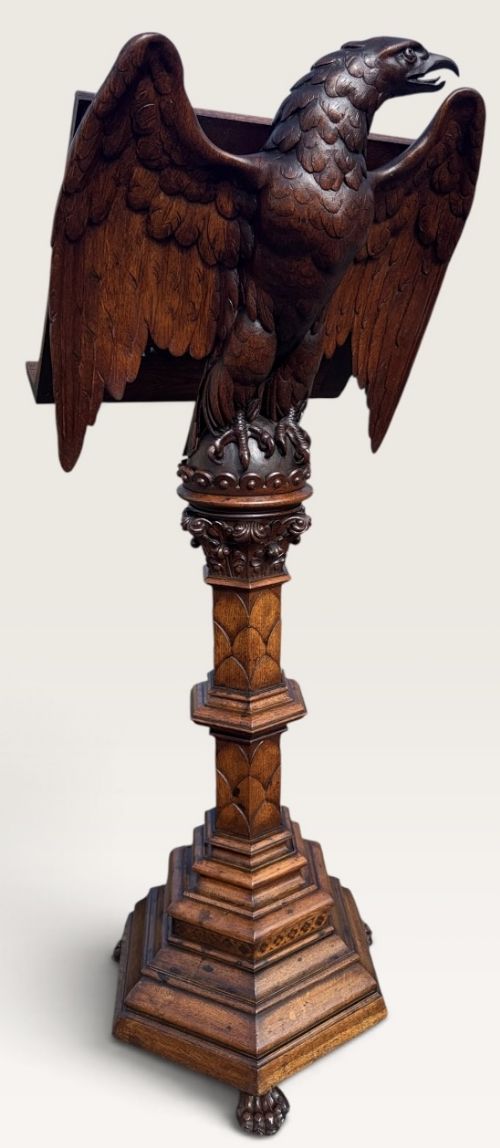
Several Victorian eagles hold heavy theological texts on their backs with expressions of intense concentration carved into their wooden faces.
What varies in quality
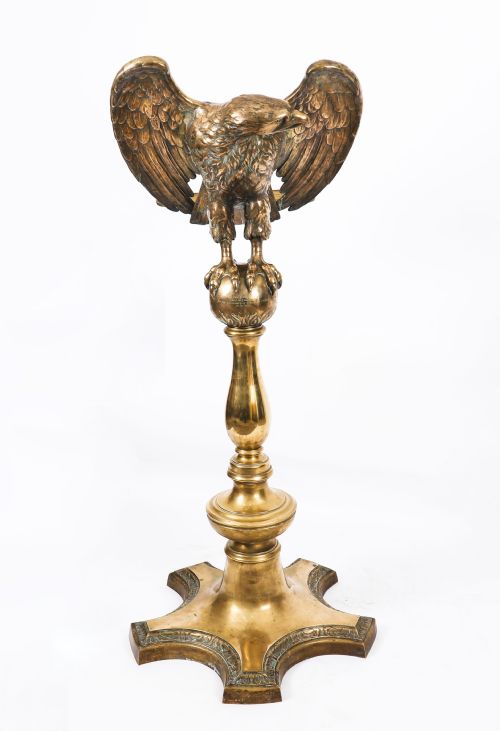
The depth and execution of the carving separate standard workshop output from exceptional examples, particularly in the rendering of feathered wings on eagle lecterns and the crispness of Gothic tracery. Timber selection also dictates grade, with dense, figured oak commanding greater visual weight than utility pine.
Integrity of the original brass and iron hardware influences the overall standard, as replacement screws or missing hinges alter the historical cohesion of the stand. Proportions and stability under weight determine how successfully a stand functions in daily use.
Osborne Garrett & Co
The Church Reading Stand Glossary
- Lectern
- A tall stand with a slanted top used to hold a book for reading aloud. These often feature adjustable book rests.
- Gothic Revival
- An architectural and decorative style popular during the nineteenth century that mimics medieval forms. It employs pointed arches, quatrefoils, and heavy vertical lines.
- Ecclesiastical
- Relating to the Christian Church or its clergy. Pieces bearing this description typically originate from chapels, cathedrals, or parish halls.
- Book Rest
- The inclined surface or ledge on a stand that prevents heavy volumes from sliding downward. They frequently incorporate pierced brass or carved wooden galleries.
Church Reading Stand: Frequently Asked Questions
How do I use a church reading stand at home?
These stands function well as practical book holders for large folios, cookbooks, or family Bibles in a study or living space. Their angled ledges reduce neck strain when reading standing up or seated nearby.
Position a floor-standing model in a corner as a sculptural focal point, or place a smaller table version on a desk for everyday reference use.
Are these stands suitable for heavy books?
Most pieces utilise solid oak and robust joinery specifically engineered to support heavy ecclesiastical service books without sagging. The base structures provide a wide footprint designed to handle significant downward weight.
Check the stability of the central shaft and the angle of the book ledge before loading particularly heavy volumes onto nineteenth-century examples.
How do I date an antique reading stand?
Dating relies on identifying stylistic markers such as Victorian Gothic revival motifs, Edwardian utility minimalism, or eighteenth-century proportions. Tool marks, wood shrinkage, and the composition of metal hardware also offer clues to age.
Comparing the carving techniques against documented church furniture from the same decade helps narrow down the period of manufacture.