




19th Century Lectern
A 19th century lectern brings serious architectural presence and functional book-holding to a room, ranging from soaring church eagles to compact mahogany desk stands.
19th Century Lectern
A 19th century lectern serves as a dedicated stand for holding books, music, or papers at a readable angle, encompassing everything from heavy ecclesiastical pedestals to adaptable household tables. Buyers searching this phrase encounter a rich mix of ecclesiastical church furnishings and domestic reading furniture designed for private studies and music rooms.
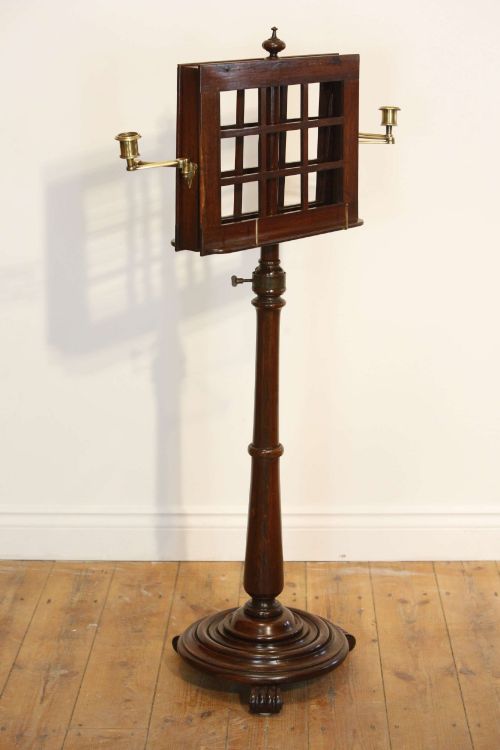
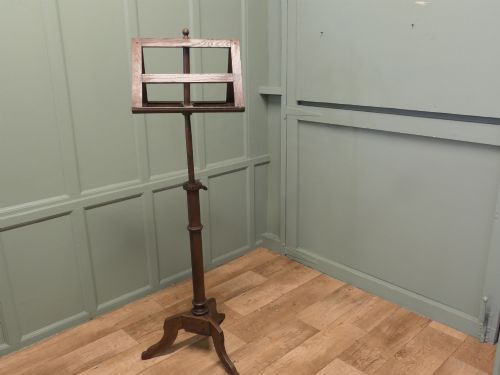
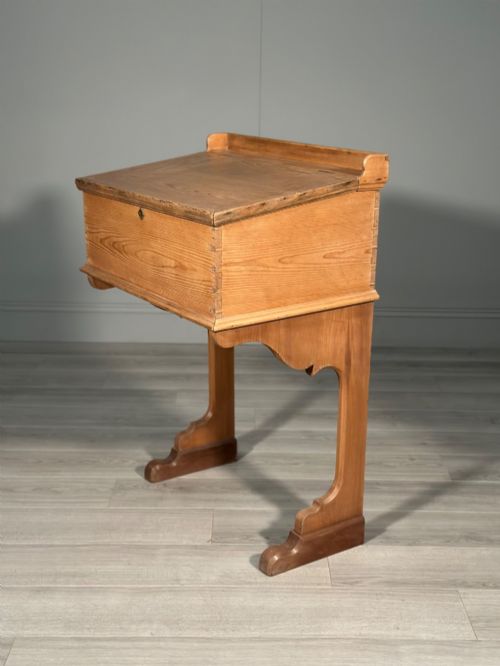
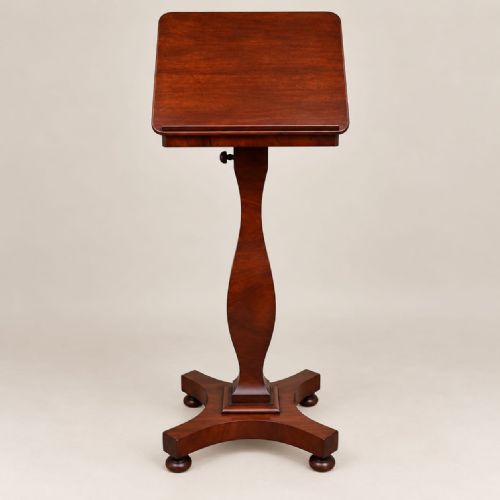
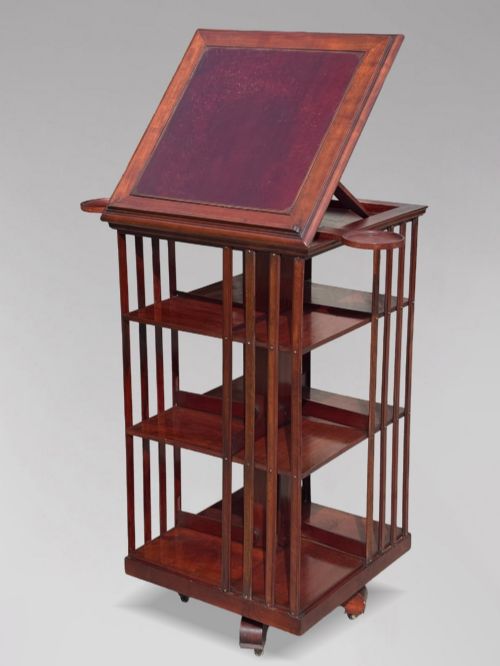
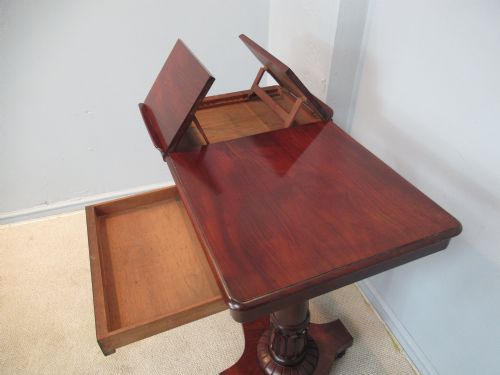
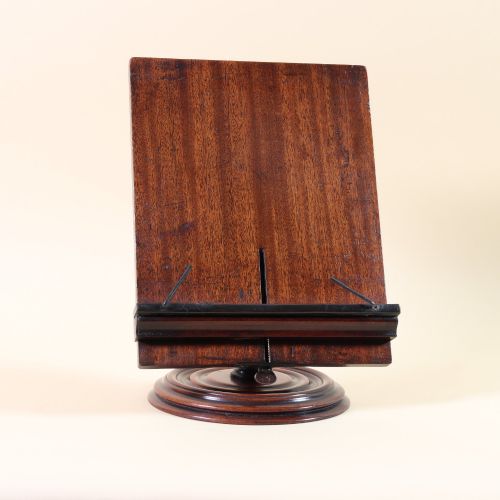
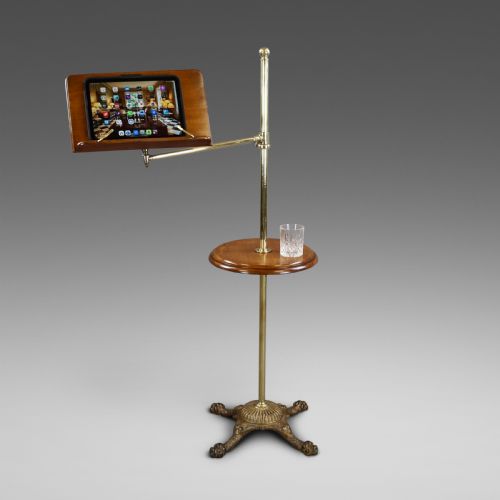
Domestic versions appear most frequently on this page as mahogany or oak reading tables, music stands, and desk-top book rests equipped with adjustable mechanisms. These pieces reflect the nineteenth-century passion for ergonomic reading, whether standing, sitting at a desk, or resting in bed.
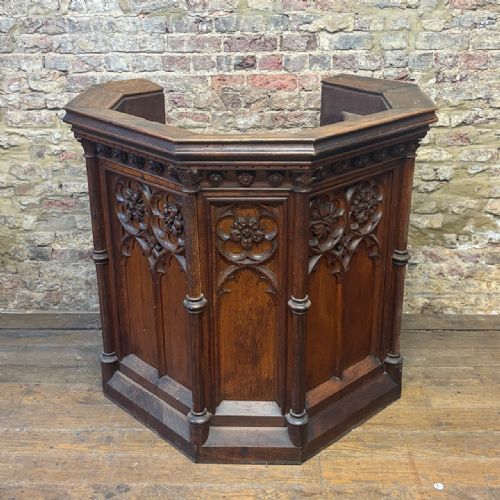
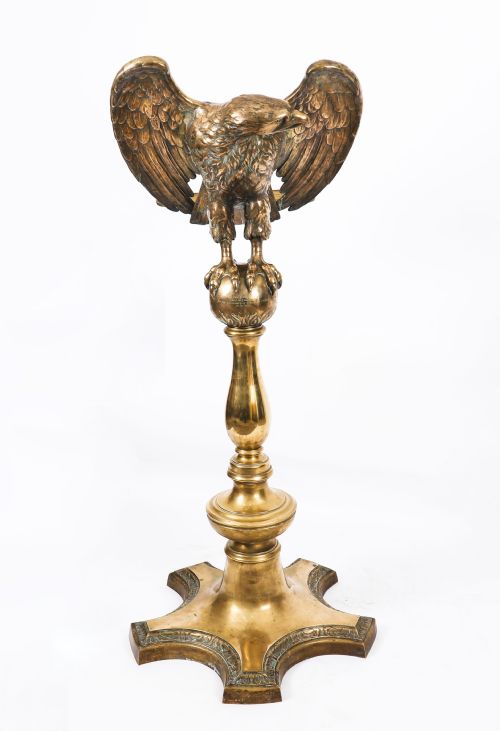
Ecclesiastical examples stand apart through their ambitious scale and sculptural form, often taking the shape of carved oak pulpits or striking brass eagles with outspread wings. These church pieces bring dramatic Gothic Revival character into secular spaces.
The materials and styles span the entire century, moving from Regency and George IV elegance through heavy Victorian Gothic Revival to late nineteenth-century oak and brass production.
What varies in quality
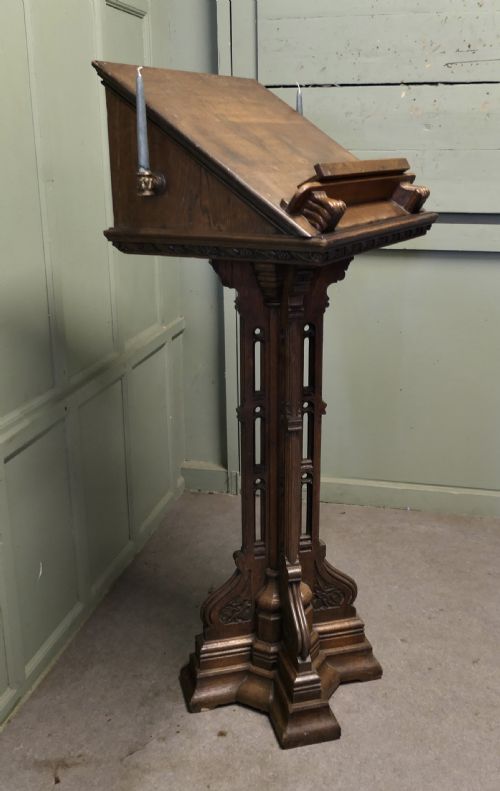
The distinction between ordinary utility pieces and exceptional stands lies in the ambition of the carving and the complexity of the mechanism. Hand-carved oak details, such as winged cherubs and intricate Gothic tracery, elevate a standard pedestal into a piece of fine sculpture.
Mechanical sophistication separates standard book rests from patented reading machines, where adjustable brass arms, folding ledges, and patent maker stamps demonstrate superior ingenuity. The choice of timber grain, from figured mahogany to rich golden oak, further defines the standing of individual examples.
19th Century Lectern Retail Price Guide 2026
Typical asking prices for 19th century lectern among the pieces listed under this phrase on Sellingantiques today, from the lower quarter to the upper quarter. They describe what is for sale here now, not the wider market.
Listings feature oak, mahogany, walnut, and gonçalo alves alongside cast iron and brass, reflecting both domestic comfort and ecclesiastical permanence.
John Carter·Hart and Son
The 19th Century Lectern Glossary
- Lectern
- A stand with a sloping top designed to hold a book or speech at a height and angle convenient for a standing reader. These range from simple desk-top rests to monumental church pedestals.
- Gothic Revival
- An architectural and decorative style popular through the nineteenth century that revived medieval forms. Pieces in this style feature pointed arches, quatrefoils, and heavy carved tracery.
- Duet Stand
- A music or reading stand wide enough to accommodate two musicians sharing a single score or two readers comparing texts. They often feature double reading desks mounted on a shared pillar.
- Campaign Table
- Portable furniture designed for easy dismantling and travel, fitted with brass corners and recessed carrying handles. In reading stands, this translation meant folding trestles and removable tops.
- Folio
- A large book size requiring a substantial support surface, which directly influenced the generous dimensions of many nineteenth-century reading stands and display tables.
19th Century Lectern: Frequently Asked Questions
How do brass eagle lecterns function?
Brass eagle lecterns use the outspread wings of the bird as a natural sloping desk to support large church Bibles or heavy service books. The heavy brass body provides a stable counterweight to keep the large volumes steady during readings.
These monumental pieces usually mount on a central knop and stepped base, allowing the entire upper section to rotate.
Where were these pieces used originally?
Church lecterns stood in chancels and pulpits for public scripture readings, while domestic versions populated libraries, music rooms, and private studies. Adjustable tables often served invalids or scholars reading heavy folios for hours.
Music stands found places beside pianos and chamber groups for holding orchestral scores and song sheets.
How do I date a nineteenth-century reading stand?
Dating relies on stylistic markers, timber choices, and mechanical complexity, moving from Regency brass inlay and gonçalo alves to mid-century patent mechanisms and late Victorian Gothic oak carving. Regency pieces lean toward linear elegance and lighter woods, while Victorian examples favor heavier proportions and deep relief carving.
Patent stamps and registration marks can pinpoint exact years of manufacture for specialised reading machines.