



Gothic Revival Casket
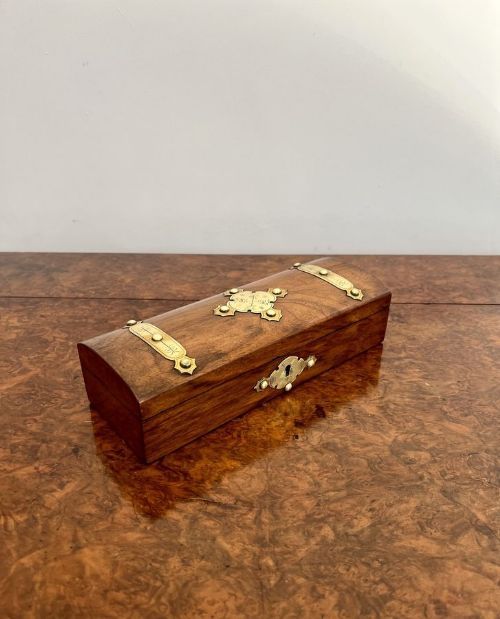
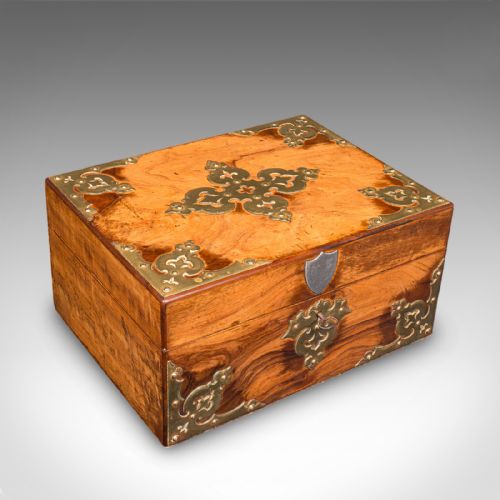
These gothic revival casket examples bring medieval architectural mass to Victorian desks, offering heavy timber and strapwork built to hold letters and jewellery.

Gothic Revival Casket
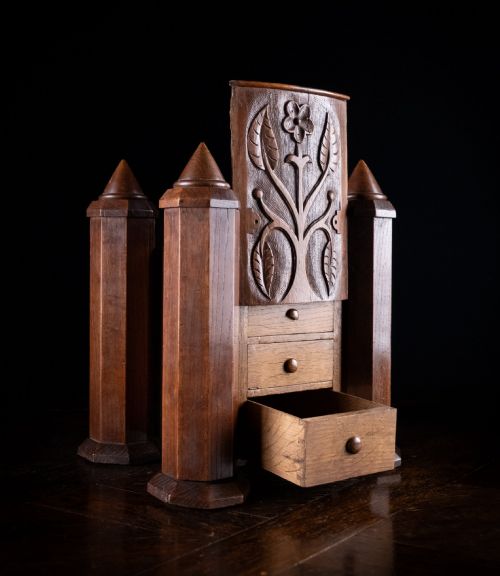
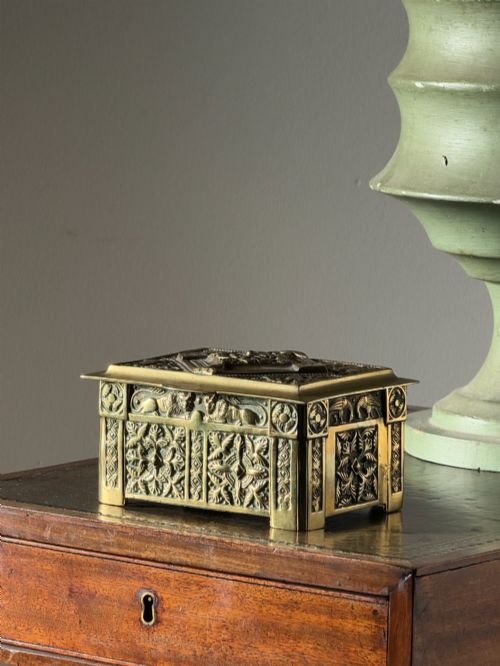
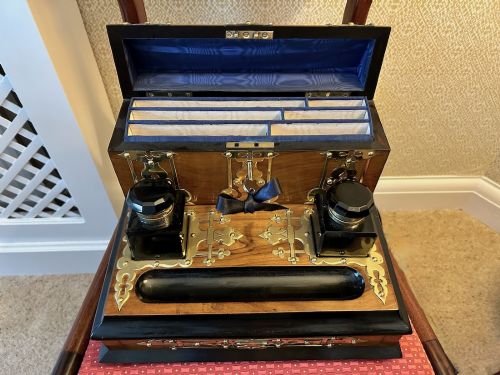
A gothic revival casket takes its visual cues from medieval architecture and church ironwork, translated into desk accessories and storage boxes during the nineteenth century. You will find stationery boxes, writing desks, and jewellery caskets built with steeply pitched roofs, dome tops, and architectural mouldings.
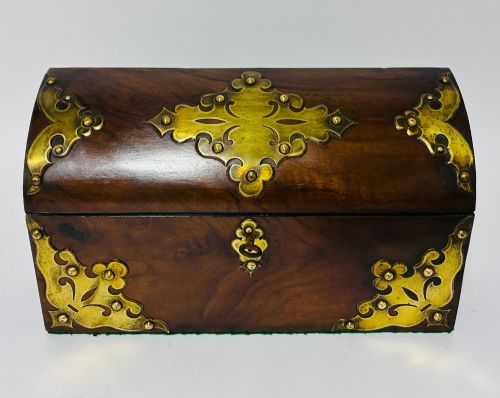
Most examples date from the Victorian period, spanning walnut, oak, and exotic timbers heavily reinforced with brass strapwork and mounts. The smaller desk pieces hold letters and stamps, while larger variants serve as games boxes, decanter cases, or secure receptacles for valuables.

Materials and construction
Cabinet makers utilised dense native timbers like oak and walnut alongside imported exotics such as coromandel, amboyna, and burr walnut for the core structure. These woods were chosen for their rich grain patterns and durability under heavy handling.
The timber frames are joined with brass mounts, strapwork, and hinges, often secured by rivets or cast metal elements. Interior compartments are frequently lined with velvet or silk to protect stationery, jewellery, and glassware.
Gothic Revival Casket Retail Price Guide 2026
Typical asking prices for gothic revival casket among the pieces listed under this phrase on Sellingantiques today, from the lower quarter to the upper quarter. They describe what is for sale here now, not the wider market.
Listings feature oak, walnut, coromandel, and amboyna woods paired with brass, steel, glass, and malachite mounts.
Distinctions in quality
Quality rests in the weight of the metal mounts and the selection of the timber veneer. Better pieces utilise solid brass work, hand-beaten steel, or inset stones such as malachite and agate rather than lightweight stamped alternatives.
Construction detail separates standard items from finer works, visible in the precision of the mitred joints, the thickness of the coromandel or burr walnut, and the integration of functional locking mechanisms.
Pugin
The Gothic Revival Casket Glossary
- Casket
- A small decorative box or chest used for storing valuables, jewellery, or letters. These items often feature hinged lids and secure locking mechanisms.
- Stationery box
- A desk accessory designed to hold writing paper, envelopes, and stamps. They often incorporate sloping front panels or tiered interior dividers.
- Strapwork
- Ornamental metal bands or strips applied to the surface of a box for reinforcement and decoration. This technique mimics medieval ironwork found on church chests.
- Cabochon
- A gemstone polished to a convex, rounded surface rather than faceted. These stones are frequently mounted directly into the brass work of desk sets.
Gothic Revival Casket: Frequently Asked Questions
What fits inside a gothic revival casket?
These boxes accommodate a range of personal items depending on their specific internal layout. Smaller versions hold letters, stamps, and trinkets, whilst larger desk variants secure jewellery or glass decanters.
Many examples feature fitted interiors with velvet linings, partitions, or dedicated slots designed for specific nineteenth-century writing implements and stationery.
How do I identify a Victorian piece?
Nineteenth-century construction is typically identified by the timber choice, such as burr walnut or coromandel, combined with heavy brass mounts. The locks, screws, and hinges often display period manufacturing traits.
Architectural motifs like dome tops, pointed arches, and strapwork reflect the nineteenth-century revival of medieval design tastes popularised during the Victorian era.
Where should I place a casket at home?
These pieces suit placement on desks, sideboards, or mantelpieces where their architectural silhouettes and polished timber surfaces remain visible. They function effectively as sculptural objects as well as storage containers.
Keep them away from direct sunlight and radiators to prevent the timber veneers and exotic woods from drying out or splitting over time.
Are keys usually included with these boxes?
Original working keys are occasionally present with surviving caskets, though many nineteenth-century boxes lose their keys over generations of use. The absence of a key is standard for antique storage pieces.
A specialist locksmith can often fit a replacement key if the internal mechanism requires operation, though many owners simply display the box unlocked.