
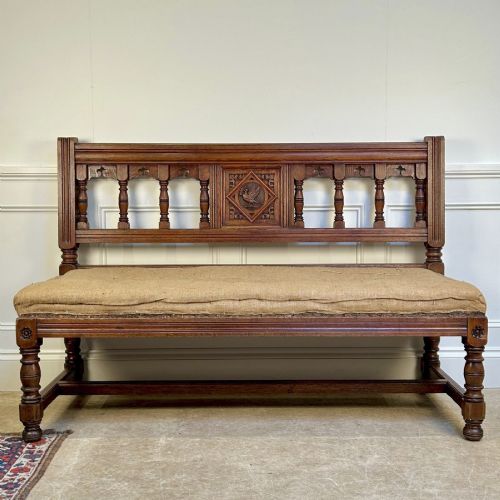
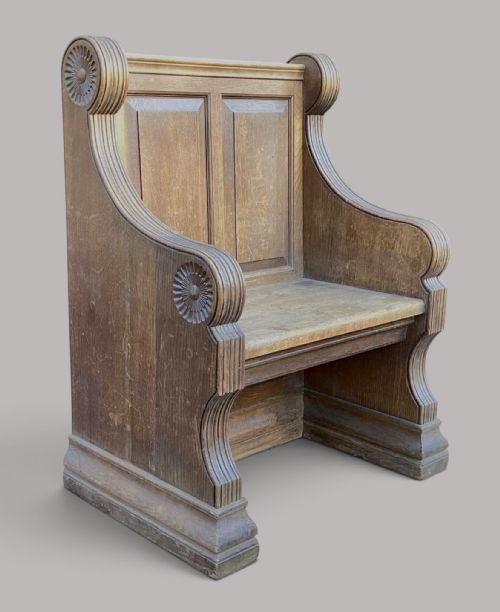
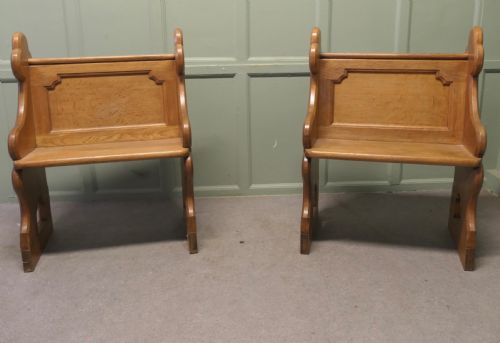
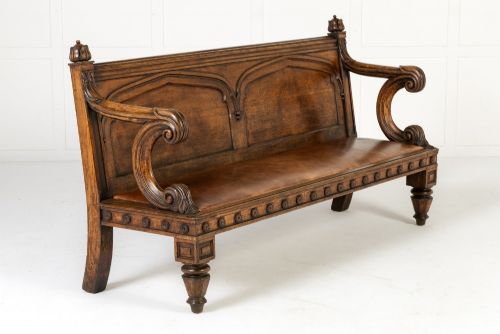


Gothic Oak Bench
A gothic oak bench brings heavy architectural presence and period character to a hallway, landing or reception room through pointed arches and rich carving.
Gothic Oak Bench
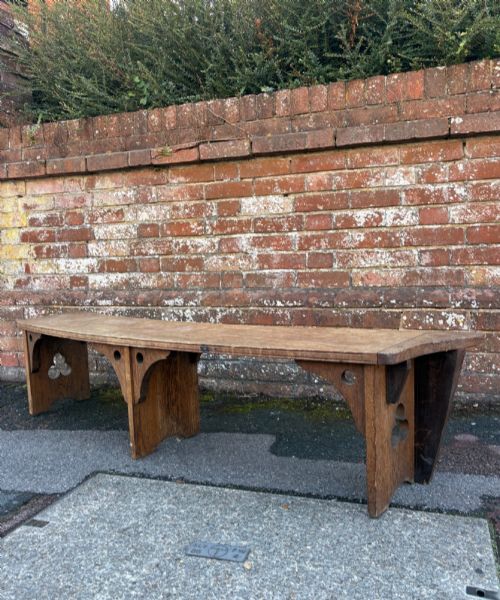
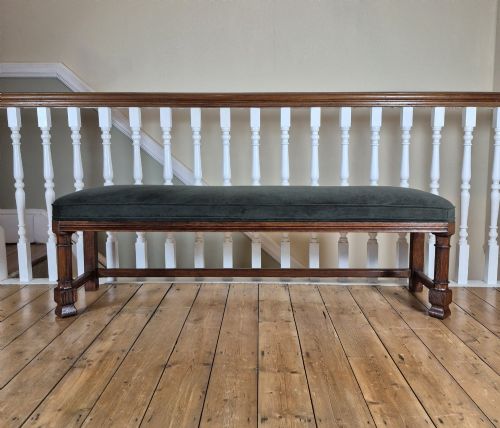
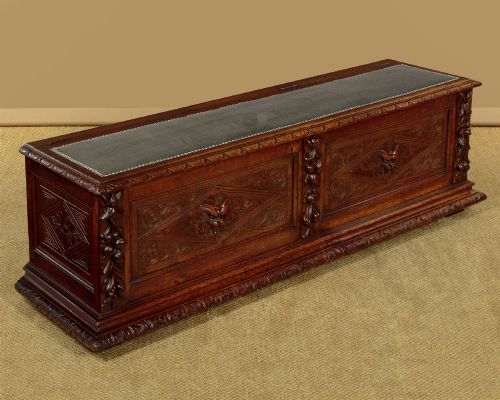
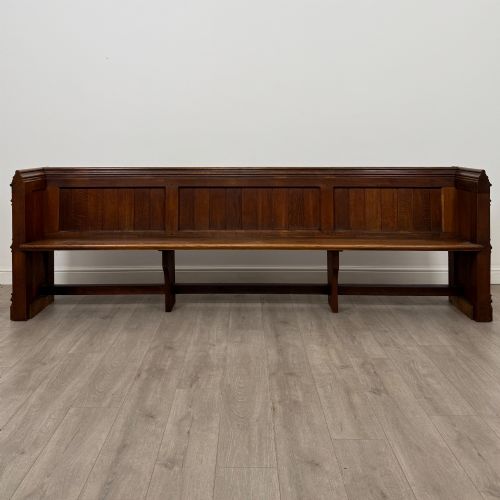
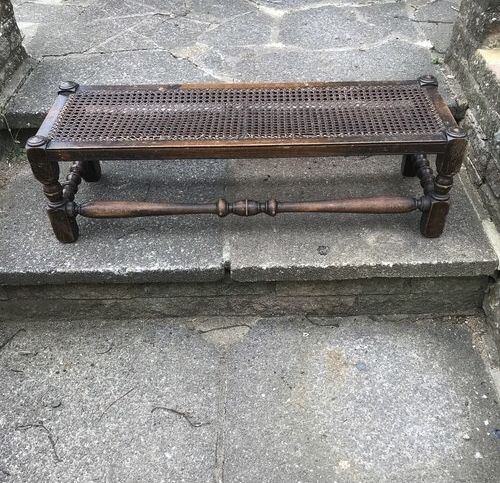
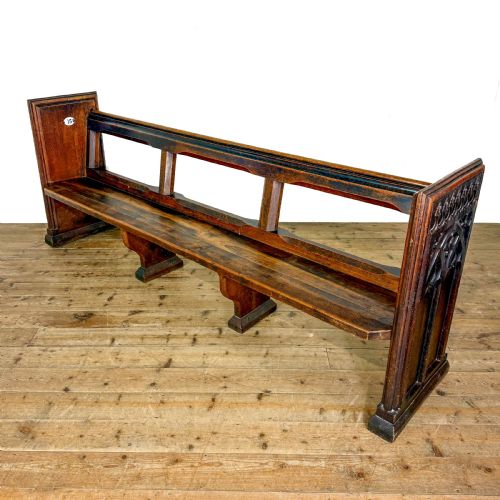
A gothic oak bench spans various domestic and ecclesiastical seating forms, most frequently appearing as Victorian hall benches, settles, window seats and church pews originating from the nineteenth century. These pieces draw heavily upon Gothic Revival, Arts and Crafts and Jacobean Revival movements, often displaying architectural framing, panelled backs and hinged lift-up seats for storage.
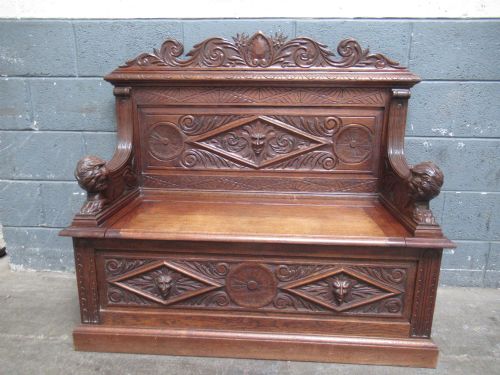
The domestic hall bench or monk's bench is the version most commonly encountered on this page, alongside sturdy window seats and larger settles. Pieces frequently incorporate characteristic design details such as trefoil piercings, linenfold panelling or Green Man carvings within solid timber structures dating primarily between 1850 and 1900.
Materials and Construction
Construction relies heavily upon solid oak, sometimes combined with secondary timbers like elm or walnut, alongside structural ironwork, brass fittings and occasionally upholstered pads in leather, velvet or fabric. Joinery methods of the period utilise traditional mortise and tenon joints to bear the weight of heavy timber frames and deep storage boxes.
Carving and surface ornamentation form an integral part of the manufacturing process, executed directly into the dense grain of the oak rather than applied as separate mouldings. Makers employed architectural motifs, turned legs and chamfered supports that reflect the design principles associated with figures like Pugin and the broader Gothic Revival.
Gothic Oak Bench Retail Price Guide 2026
Typical asking prices for gothic oak bench among the pieces listed under this phrase on Sellingantiques today, from the lower quarter to the upper quarter. They describe what is for sale here now, not the wider market.
Listings feature solid oak construction predominantly from the nineteenth century, spanning Victorian and Arts and Crafts design movements.
Assessing Craftsmanship
Quality in a gothic oak bench reveals itself in the crispness and depth of the timber carving, where hand-tooled details on linenfold panels, tracery or figural supports show deliberate artistry rather than mechanical uniformity. The choice of stock also matters, as superior examples utilise quartersawn oak displaying strong medullary rays that enhance both the structural stability and the visual texture of the piece.
Integrity of construction separates finer examples from simpler workshop output, particularly in how effectively the joinery accommodates the natural movement of solid timber over decades of use. Well-balanced proportions, original hardware such as hinges and brackets, and harmonious integration of architectural elements dictate the standing of any given piece within the range.
GIllows
The Gothic Oak Bench Glossary
- Gothic Revival
- An architectural and decorative style popular during the nineteenth century that revived medieval forms such as pointed arches, quatrefoils and heavy timber framing. This aesthetic defines the primary decorative vocabulary found across these benches.
- Settle
- A high-backed wooden bench with solid arms and an enclosed base that often functioned as a storage box or coffer. They were traditionally placed near hearths to block draughts in large halls.
- Pugin style
- Design work following the principles of Augustus Pugin, champion of the Gothic Revival who advocated for structural honesty and medieval ecclesiastical motifs. Pieces in this manner feature rigorous architectural proportions and precise ornamental tracery.
- Monk's bench
- A multi-functional seating form featuring a hinged back that tilts forward to transform the seat into a table or desk. These items combine utility with heavy period carving.
- linenfold panelling
- Woodcarving style imitating folded vertical linen fabric, frequently utilised on the backrests and panels of nineteenth century seating. It provides a subtle textural contrast to plain structural framing.
Gothic Oak Bench: Frequently Asked Questions
Where were gothic oak benches placed historically?
These benches were typically positioned in entrance halls, reception rooms and long corridors where their substantial timber frames and architectural styling created a formal impression for visitors.
In ecclesiastical or large domestic settings, similar pews and settles stood against walls or within communal areas to provide rigid, upright seating alongside integrated storage.
How do I identify a Victorian Gothic piece?
Victorian Gothic examples generally display characteristic nineteenth-century construction methods alongside distinct revival motifs such as pointed archways, trefoils and heavy chamfered edges.
Makers working in this period frequently drew inspiration from medieval architecture, incorporating structural elements like panelled backs and pegged mortise and tenon joints into dense oak frames.
Can I use a hall bench for daily seating?
These sturdy oak benches are built from dense timber and robust joinery, making them well-suited for everyday utility in modern hallways or seating areas.
Many variants also incorporate hinged lift-up seats or enclosed box bases, offering concealed storage space for household items while functioning as stable furniture.